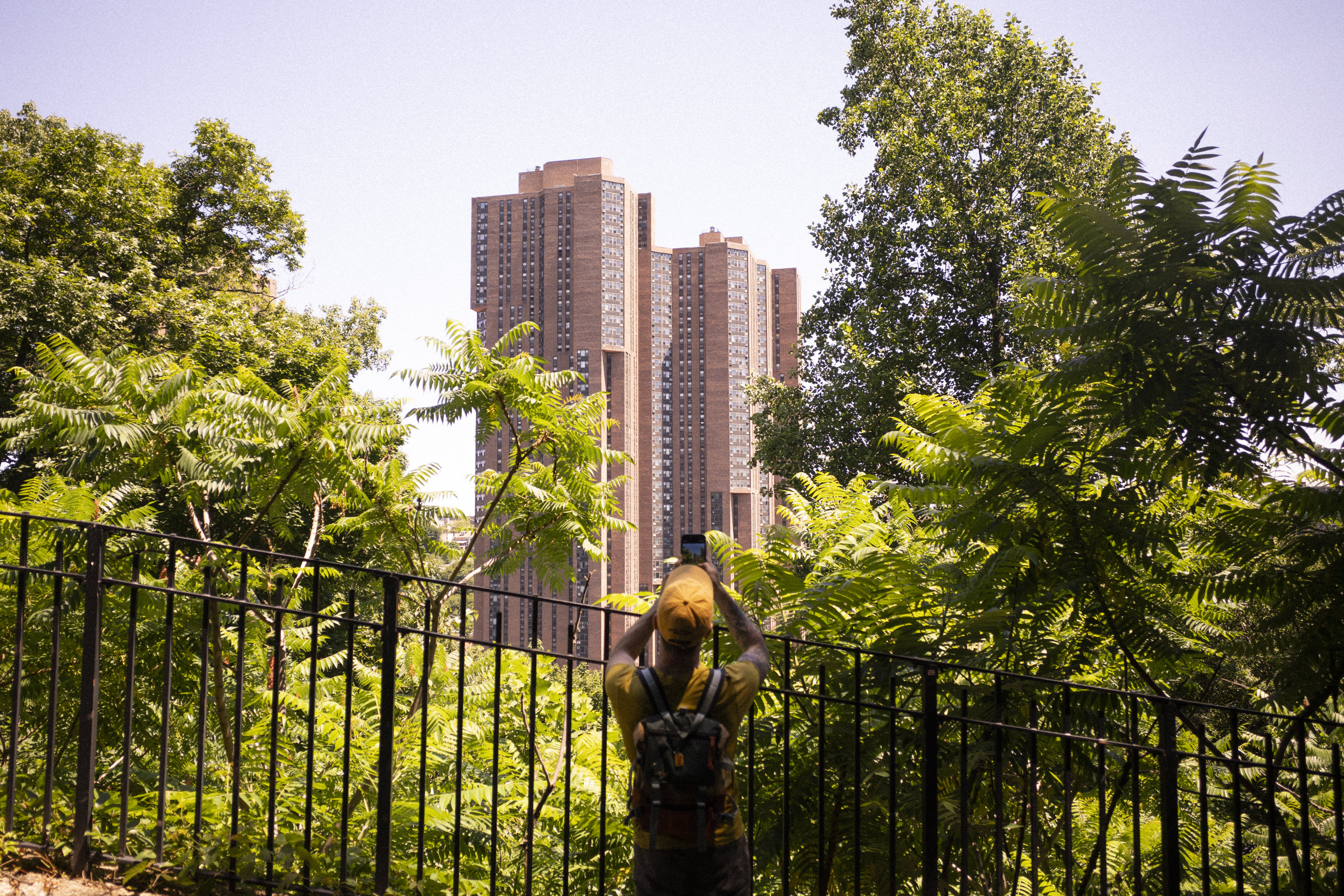
Ridgeline subscribers —
Hi, I’m Craig Mod and this is Ridgeline, a newsletter about walking — mostly in Japan, but this time in NYC.
Elsewhere:
- The Things Become Other Things fine art reprint is now in stock.
- And I’ve been using Claude to do weird blood sleuthing.
Back in May, my original NYC plan was to do five or six days of huge walks while running a pop-up newsletter — basically go walk bananas in the city. But then I stopped for a second and thought: What if I just … enjoyed NYC? And so I did. I did the thing I have a hard time doing — simply enjoying a place or trip instead of turning it into a project.
Of course I did micro walks, micro projects. I walked the Brooklyn Bridge, I sped-walked the Met, and I walked around some POPS (privately owned public spaces). Naturally, I couldn’t keep the walks entirely tiny. Buddy, and National Geographic photographer extraordinaire Michael George sent me a text: Wanna walk Manhattan top to bottom? Of course I did.
I arrived at Marble Hill–225th St. Station in not shorts. You’re not wearing shorts?! Michael screamed at me from across the street. I am a self-respecting adult male, so no — I wasn’t wearing shorts. He couldn’t believe it. He was convinced I’d die fifteen steps into the walk. I was less interested in my pants and more interested in the world’s worst-rated Starbucks around the corner. The indignation of Starbucks fanatics was off the review charts. Should we go see? I asked. Go see how terrible it could be? I was nibbling an egg-on-English muffin sandwich from a nearby Dunkin’ Donuts, also admirably terrible. When I gave my order it was as if I had defecated directly onto the cash register. The muffin was all but thrown at me. Ahh, America. I loved it.
We did not go to the world’s worst Starbucks because we had a lot of walking to do. In the end: 24.4 kilometers. Not too shabby. Knocked out in six hours. We were fairly militant about keeping the route direct since we wanted to get to Battery Park by sunset.
We began at Marble Hill to make our walk fully official — crossing the Historic Broadway Lift Bridge connecting the island of Manhattan to the wider continent.
I always forget Manhattan is technically an island. For many years I didn’t know. It feels non-islandy in the mind and myth, and given the demure nature of Spuyten Duyvil Creek, I’m shocked nobody has connected the two landmasses issometime in the last 400 years, ending Manhattan’s islandic status.
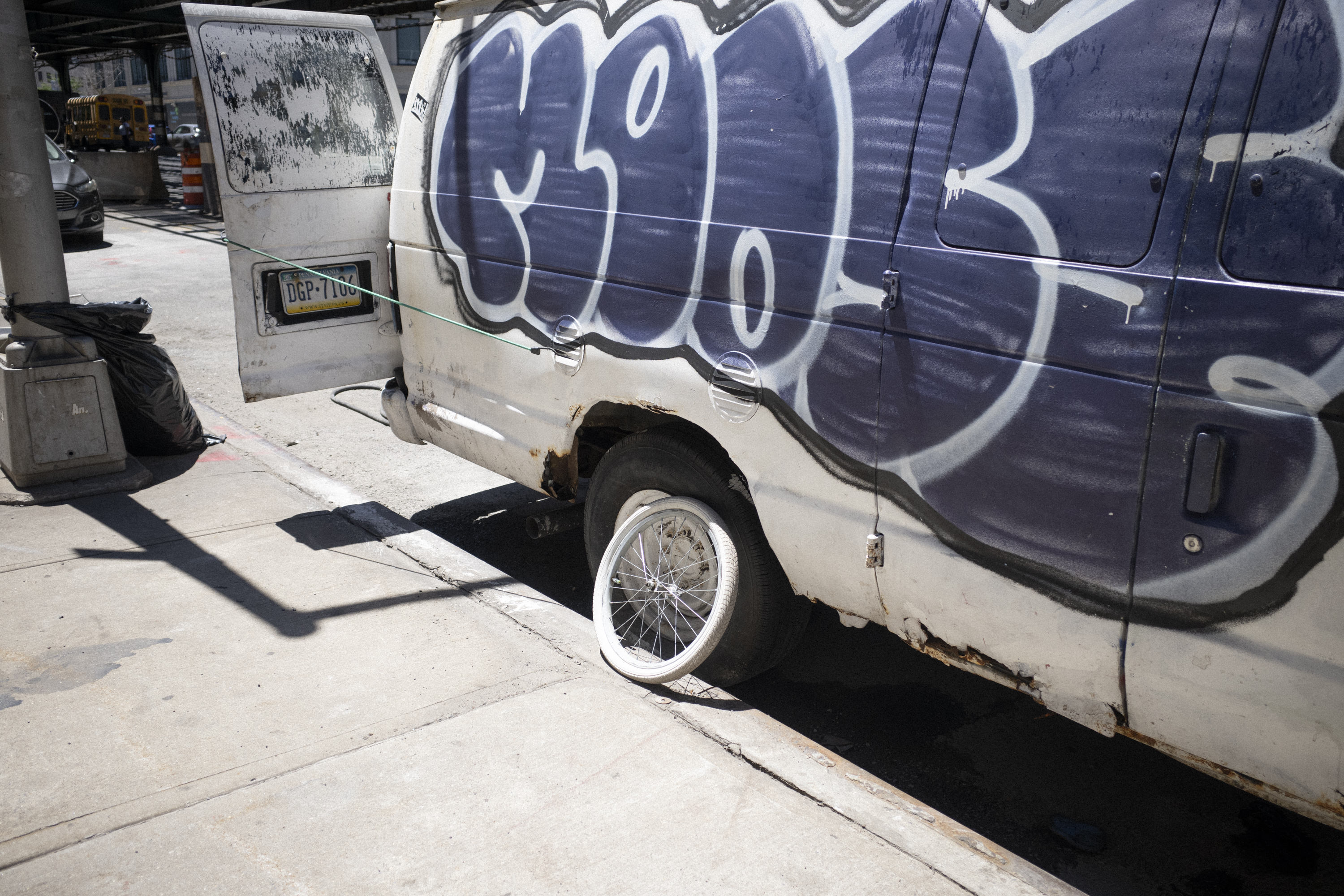
Step by step, we made our way “down” Manhattan. There were many detours we did not take. I had never been to the utterly beloved Met Cloisters (so beloved, it’s almost as if the Starbucks back across the bridge was the natural antipode to the Cloisters, as if it existed simply to balance out Cloister goodness), and going there would have made me happy, but it was also way too early in the walk for such a big stop. So the Met Cloisters stays on my “To Visit One Day” list.
Instead we strolled Highbridge Park abutting the Harlem River. In it we saw nary another human. The path gained more elevation than you’d expect, and some of the rock formations were downright Paleolithic. We did not walk the namesake High Bridge (the city’s oldest standing bridge (1848)) itself, but we walked near it.
By this point, none of the other people we had seen were white. Michael and I were like two fireflies — extremely white fireflies — dressed like dorks for a hike (one even in — gasp — not shorts), radiating a blinding whiteness, flitting through this working-class part of Manhattan, broadcasting our presence with every step forward. We stood out. Everyone gave us What the hell you guys doing here looks. A few steps later we found ourselves walking past an active meth community. A bearded white man in a trench coat (nude underneath??) nodded ominously in our direction.
We were making a beeline for the Morris-Jumel Mansion. Michael had planned these little stops. I was just along for the ride. The mansion was closed for renovation. Still, it was impressive from the outside — a lovely little garden out back. Built in 1765, it brought a certain bizarre countryside gravitas to the nearby meth community. You could imagine it 200 years ago, surrounded not by billions of tons of concrete but by rolling meadows. A woman was pushing a stroller around the grounds and her daughter, maybe seven or eight, was walking beside her. Nice house, huh! I said, amplifying my whiteness to a hitherto unseen degree. She just frowned and pointed to her AirPods — she was on a call, she wasn’t here for the house. I was a moron. The grounds were just a good place to walk your kid.
Directly across from the mansion was a cute block: Sylvan Terrace. New York City does this — inserts little blocks of goodness like prizes in the Cracker Jack box of ugly life. Pomander Walk is another. Emma Straub’s lovely novel, This Time Tomorrow, hinges on literal magic found on Pomander Walk. This is what these cute low-rise nooks do: They inspire awe that such things have survived the march of time, the relentless verticality of the rest of the city.
Having now seen a place of historical import, and having walked some six kilometers, I felt I was owed a good coffee. So it was that we popped into Manhattanville Coffee, which delivered the goods. The day was hot, so I ended up with three drinks before me, much to Michael’s astonishment. Three?? he said, taking a photo to memorialize the liquid opulence on which I blew my cash. Hey, I had experienced a kidney stone last year, and hydration had shot up on the list of things on which never to compromise.
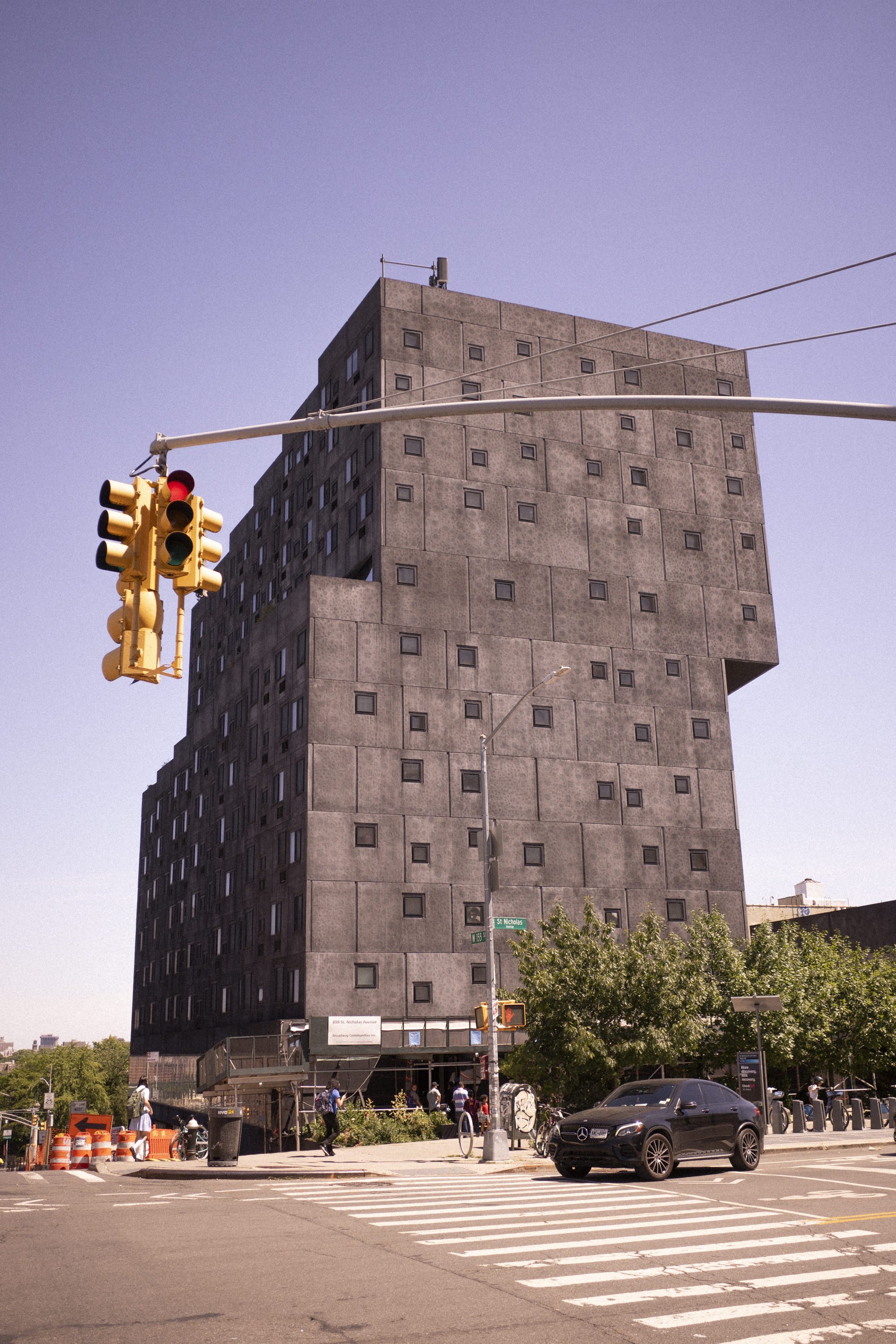
Just before popping in for coffee, we had passed the cantilevered Sugar Hill Housing Development — affordable housing in an avant-garde container with a children’s museum on the first floor.
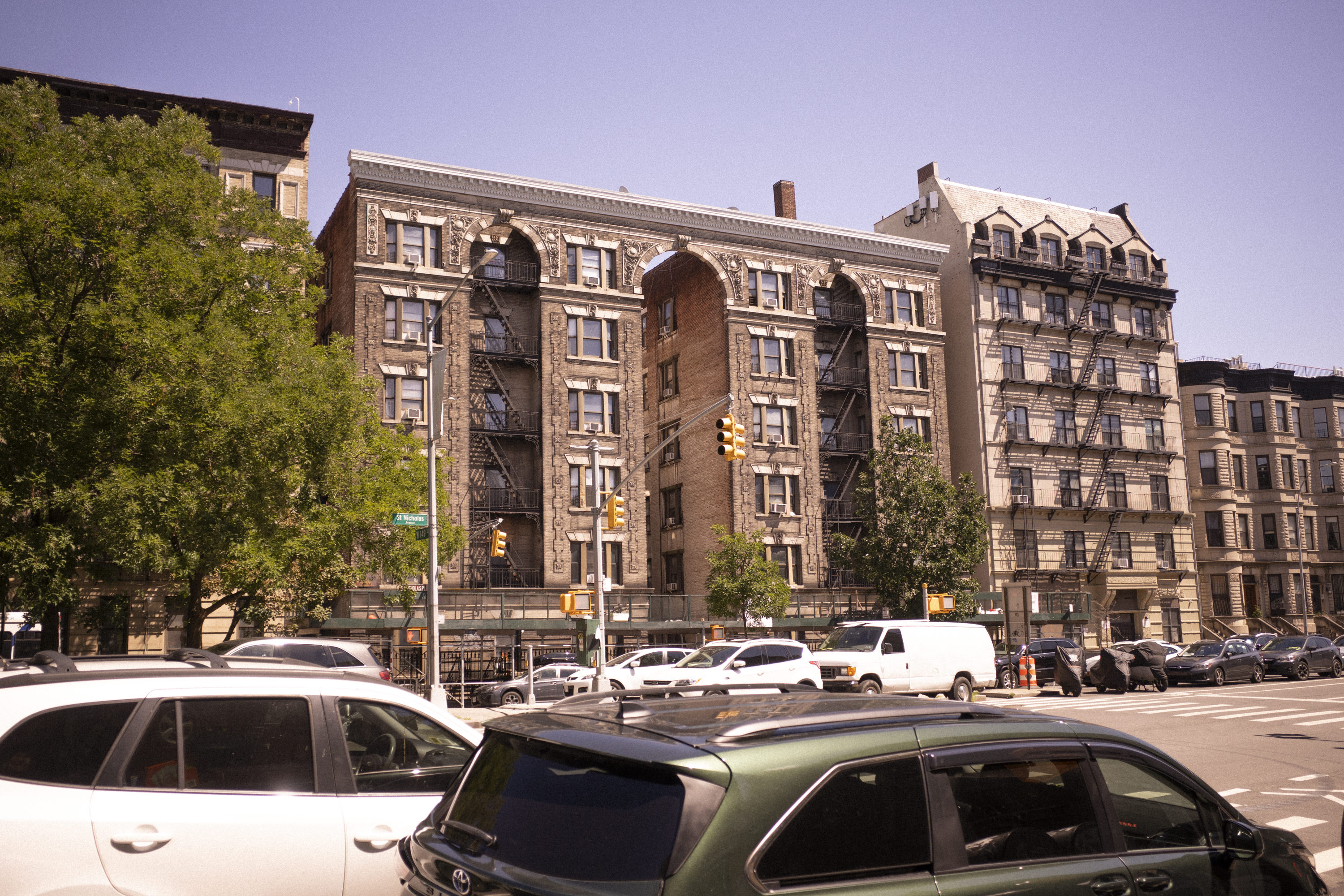
Down through Sugar Hill and Hamilton Heights, down through West Harlem alongside St. Nicholas Park we strode. The city became more city-like. Gentrification became more apparent, and by the time we were on 125th Street, just a few blocks from the Apollo Theater, you felt like you were in the hungry heart of commerce once again.
We tucked into a bodega and I ordered my favorite slap-up lunch — a turkey and cheese on an everything bagel with jalapeños and spicy mustard and tomato, with a bag of salt and vinegar chips (to be shoved into the bagel) and a sparkling water. (Almost as good as a cheese sandwich with Branston Pickle.)
We lunched al fresco in the shade near the Great Hill of Central Park, cooing over our godlike sandwiches. Around us the park thrummed with perfect parkiness. What an absolute miracle of a place, Central Park. The greenery, sure, but just the sheer resource of the space, all this space available to anyone breathing and capable of being outside. Little groups had gathered here and there, also lunching on this weekday afternoon in the sun, hot but not too hot, the Knicks having recently won, the pervasive vibes being good vibes, everyone aware of how lucky they were to be right here at this very moment. We felt that luck.
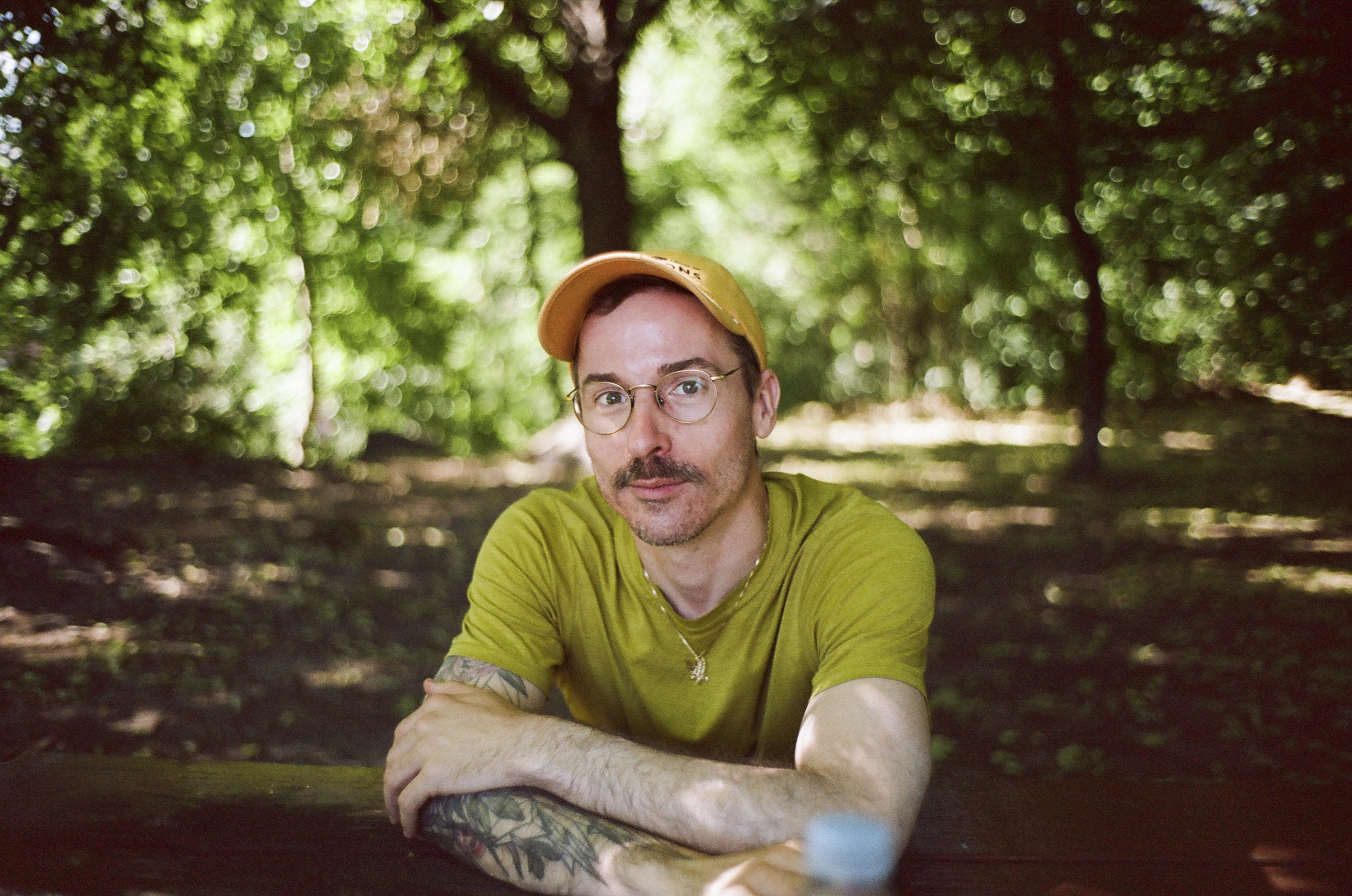
We stuck to the west edge of the park, passing the reservoir, down down past the 90s, the 80s, past the American Museum of Natural History, past the Ladies Pavilion and the Lake, into Strawberry Fields thinking about Lennon having been shot just a hundred meters away in front of The Dakota. The farther south we got, the more intense became the park activity. Rollerbladers, horses, bikes of all types — recumbent and carbon time trialers and Citi Bikes and Bromptons — whizzed past. We passed Tavern on the Green and Umpire Rock and finally were ejected onto Columbus Circle and the mad world of Midtown tourists and office workers.
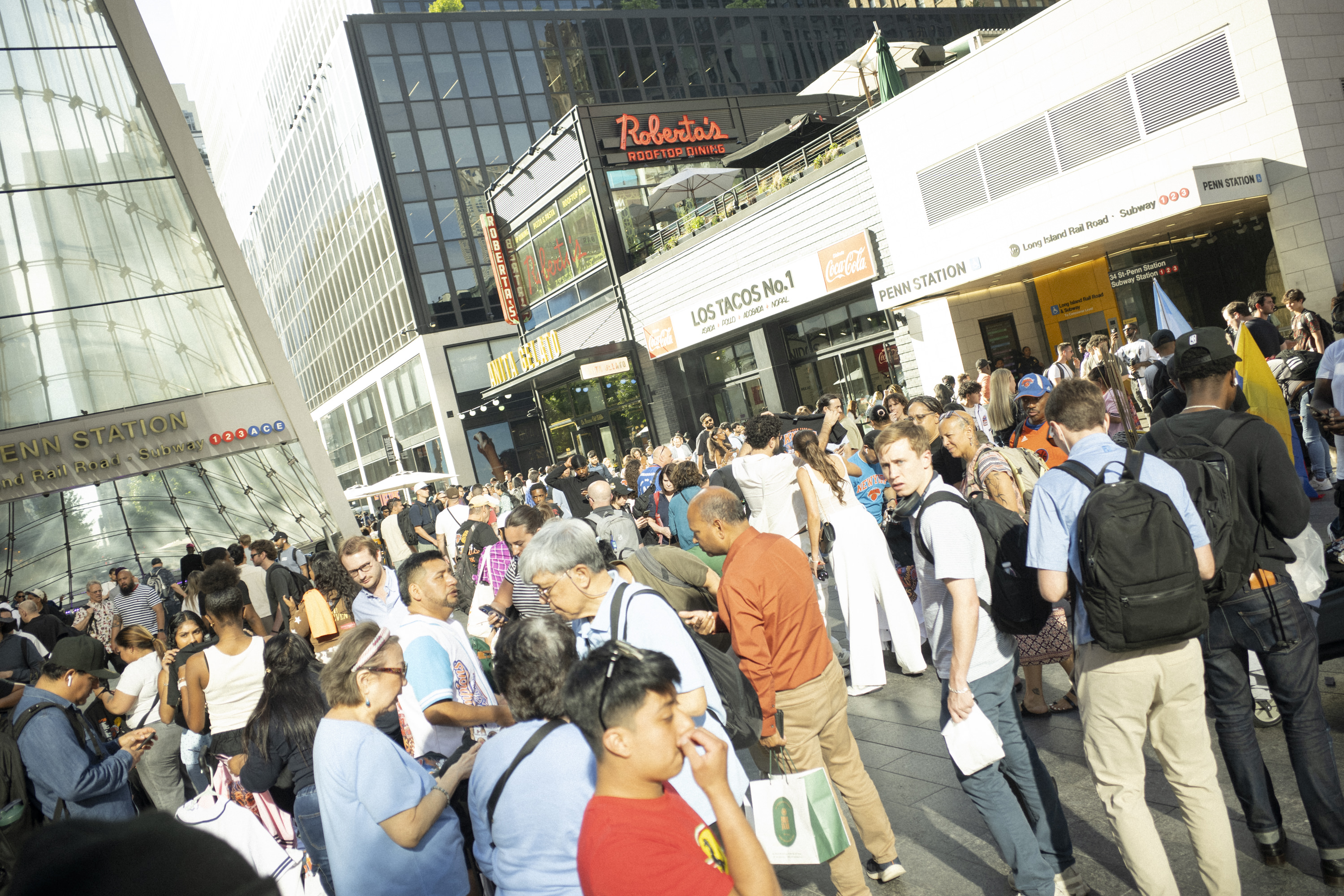
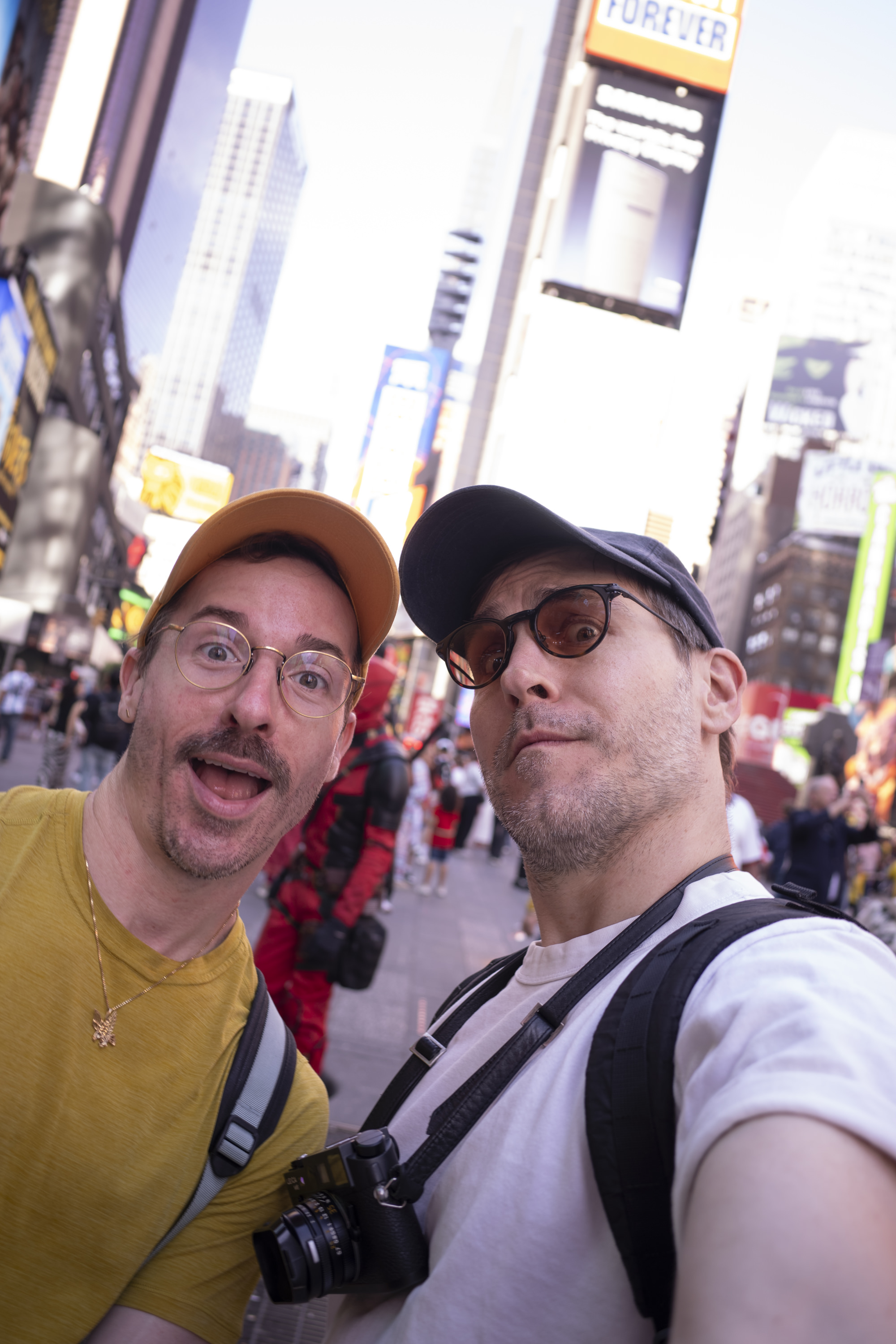
Engulfed. We were engulfed in crowds, moving through the sectors of Manhattan we both knew best. We wiggled down Broadway to Times Square because why not. More people. All weirdly tame though, everyone a bit languid from the heat perhaps. We continued to blast down past Penn Station, sticking mostly to Seventh Ave since we were a good eighteen kilometers or so in and were looking forward to hitting Battery Park and detours were not on our minds. We could have walked by the Flatiron and through Madison Square Park (ahh the original Shake Shack, hello, I remember visiting you many lives back), and then through Union Square for a quick spot of people watching (hello Reinhold!), then over through Washington Square Park and past the chess games and then into Greenwich Village past the Comedy Cellar, through that jumble into SoHo, but we didn’t. We just stuck to Seventh Ave. Through the West Village we went (hello Three Lives and Company, the greatest of bookshops) down into those haunted hinterlands between the West Village and TriBeCa, a desolate stretch of woebegone blocks with no real texture or life. But then, the Ghostbusters firehouse appears, and you’re in the heart of quiet TriBeCa, past Walker’s and Gotan and soon enough the Oculus — strangely appealing in its spinal boniness, an inversion of the dark, austere holes of infinite falling water across the street.
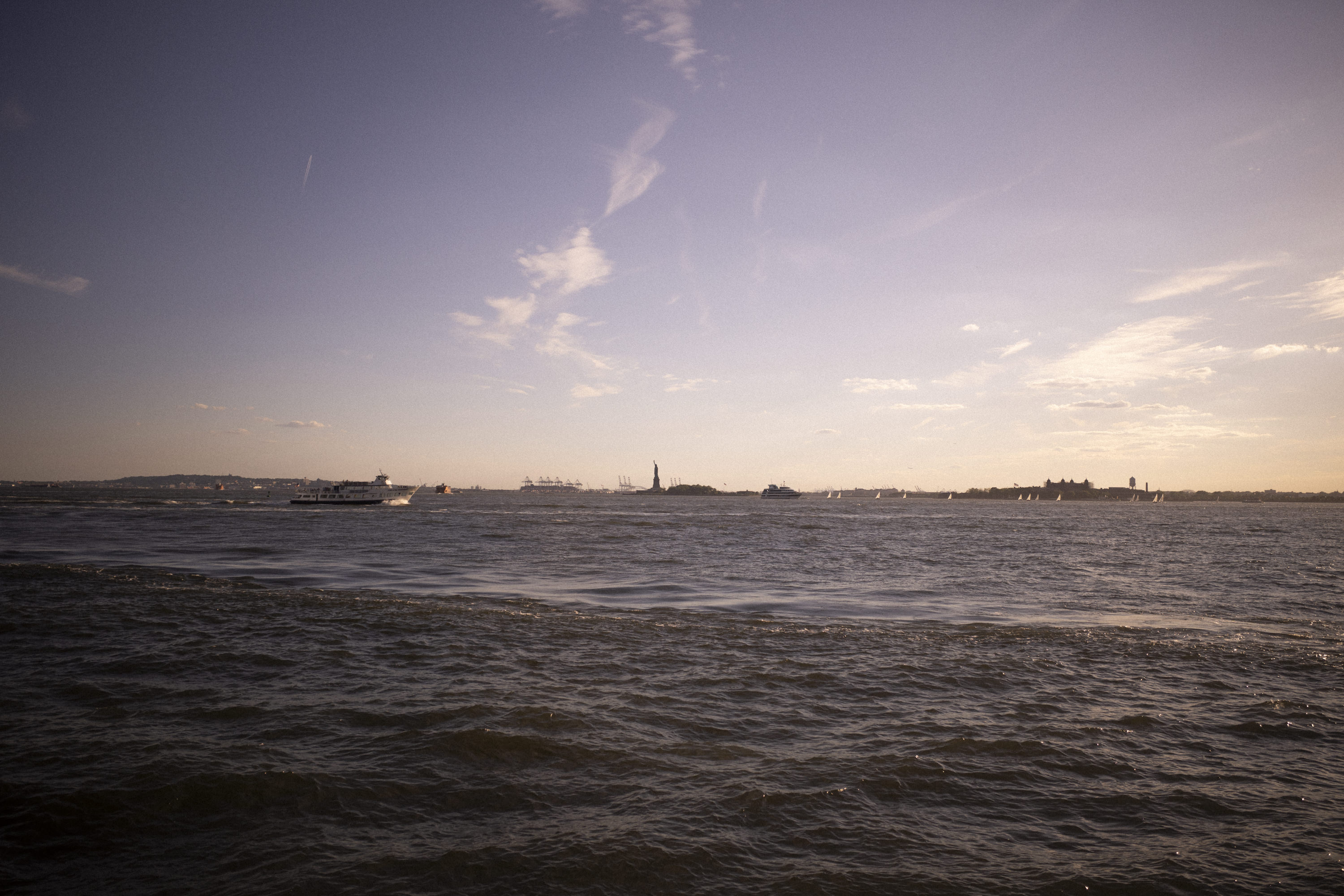
Sure, there’s a better walk down through the Financial District, but we didn’t care. We wanted The Battery and we wanted it now. And we got it. Into the park and past the merry-go-round and finally to water’s edge. The Statue of Liberty just a little blip out on the horizon. It felt good. We did it — we walked the island. We sat in some comfy chairs in the shade and a friend of Michael’s passed by. Hi, we just walked from Marble Hill. Oh?
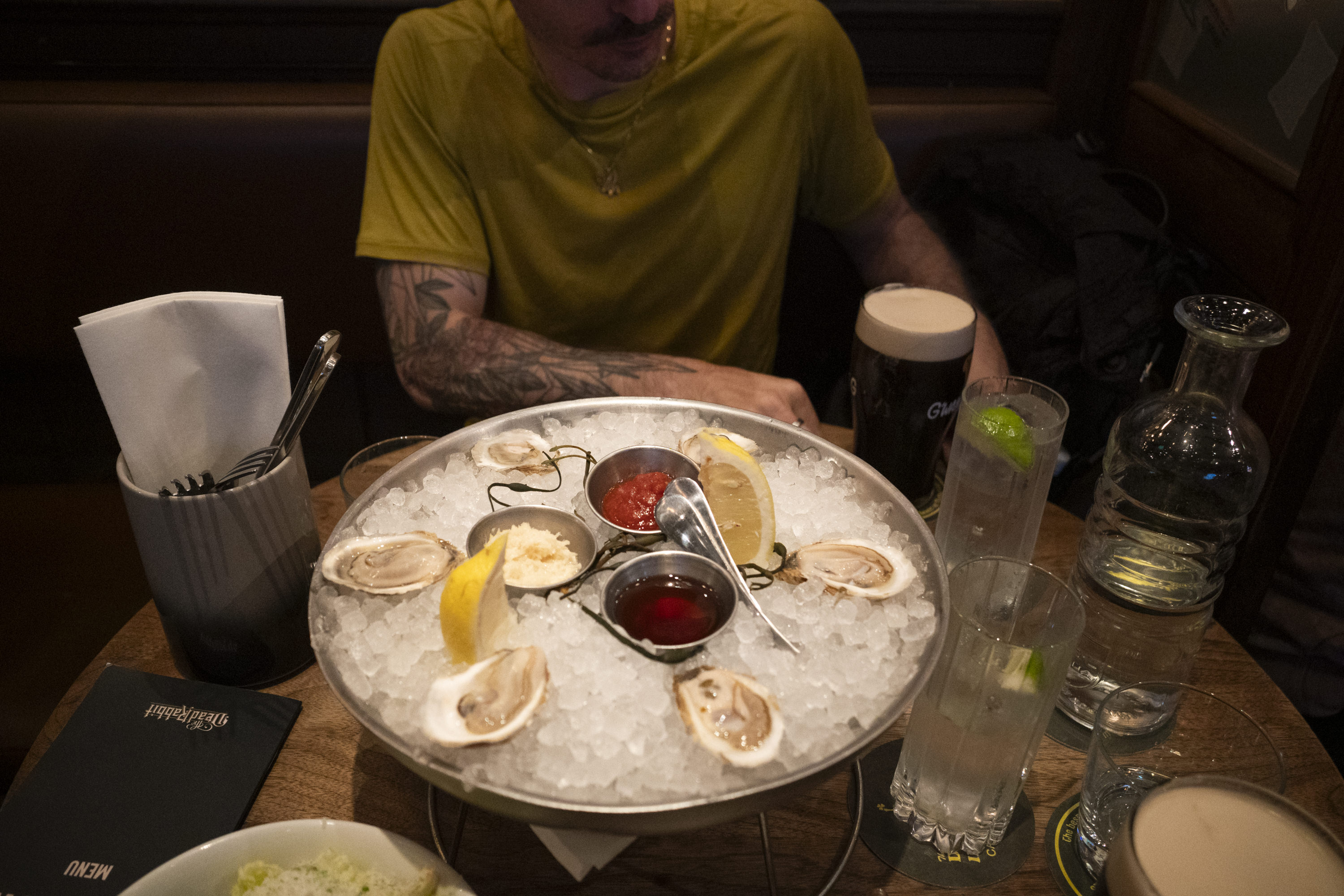
It was early evening. We made better time than expected but were still worn down. We decided on dinner at the Dead Rabbit on the edge of the warren of buildings that is the Financial District. The so-called Fraunces Tavern Block — a trapezoid bounded by Pearl Street, Broad Street, Water Street, and Coenties Slip — was the last of the original-scale Manhattan south of Wall Street. Five-story brick warehouses, laid out back when Pearl Street was the shoreline. The Dead Rabbit’s building is from 1828. Most everything around here burned in the Great Fire of 1835. In 1977, this block went on the National Register and became an official historic district.
Into this improbable timeslip we stepped. We ate oysters. They felt well earned. Around us a strange collection of tourists and bankers hooted and hollered over the TVs and music. The plan was to do many more walks like this around NYC. Next year I will.
C
Not subscribed to Ridgeline?
(A weekly letter on walking in Japan)
This essay is from the Ridgeline newsletter, mailed out August, 2026. Thoughts? Email me@craigmod.com.

Craig Mod is a writer and photographer based in Japan. He's the author of the books Things Become Other Things and Kissa by Kissa and is a MacDowell, Ragdale, and VCCA writing fellow. His essays and articles have appeared in The New York Times, Eater, The Atlantic, California Sunday Magazine, Wired, Aeon, New Scientist, Virginia Quarterly Review, The New Yorker, The Morning News, Codex: Journal of Typography, and elsewhere.
He writes newsletters, oh yes, newsletters: Roden & Ridgeline.
The work on this site is supported 100% by paid memberships and book & print sales.
Whatever you do, don't follow @craigmod on Bluesky or Instagram.