Ridgeline subscribers —
Alex Wolfe walks. He walks weird walks and I like weird walks, so when Alex reached out to do a little walk (not a weird one, really, just a little one with a sprinkle of weird), I — of course — said: Sure.
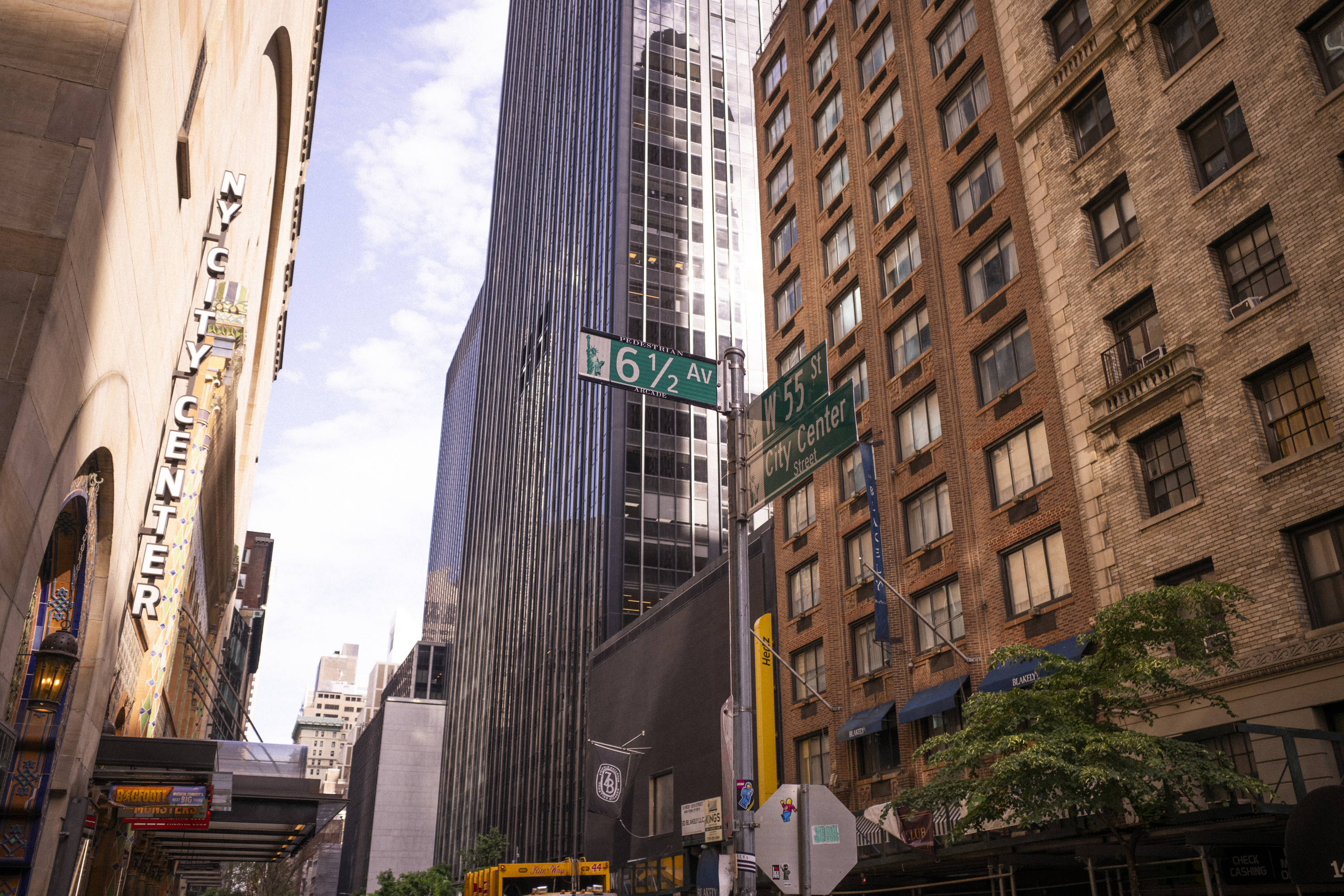
His pitch: “A short walk through privately owned public spaces I mapped through Midtown.” Sounded good to me. Midtown, a word that evokes little more than Sbarro, tourists, Tiffany’s, bad suits, cement, cement, MoMA, cement, and glass walls rising from the pavement. I was up for a revision of my internal mapping.
Alex — “a writer and artist who leads public walks through New York City” — and I followed this course of his: “Noticing: Public Spaces of Midtown.” We met in front of Stavros Niarchos NYPL and off we went, eastbound.
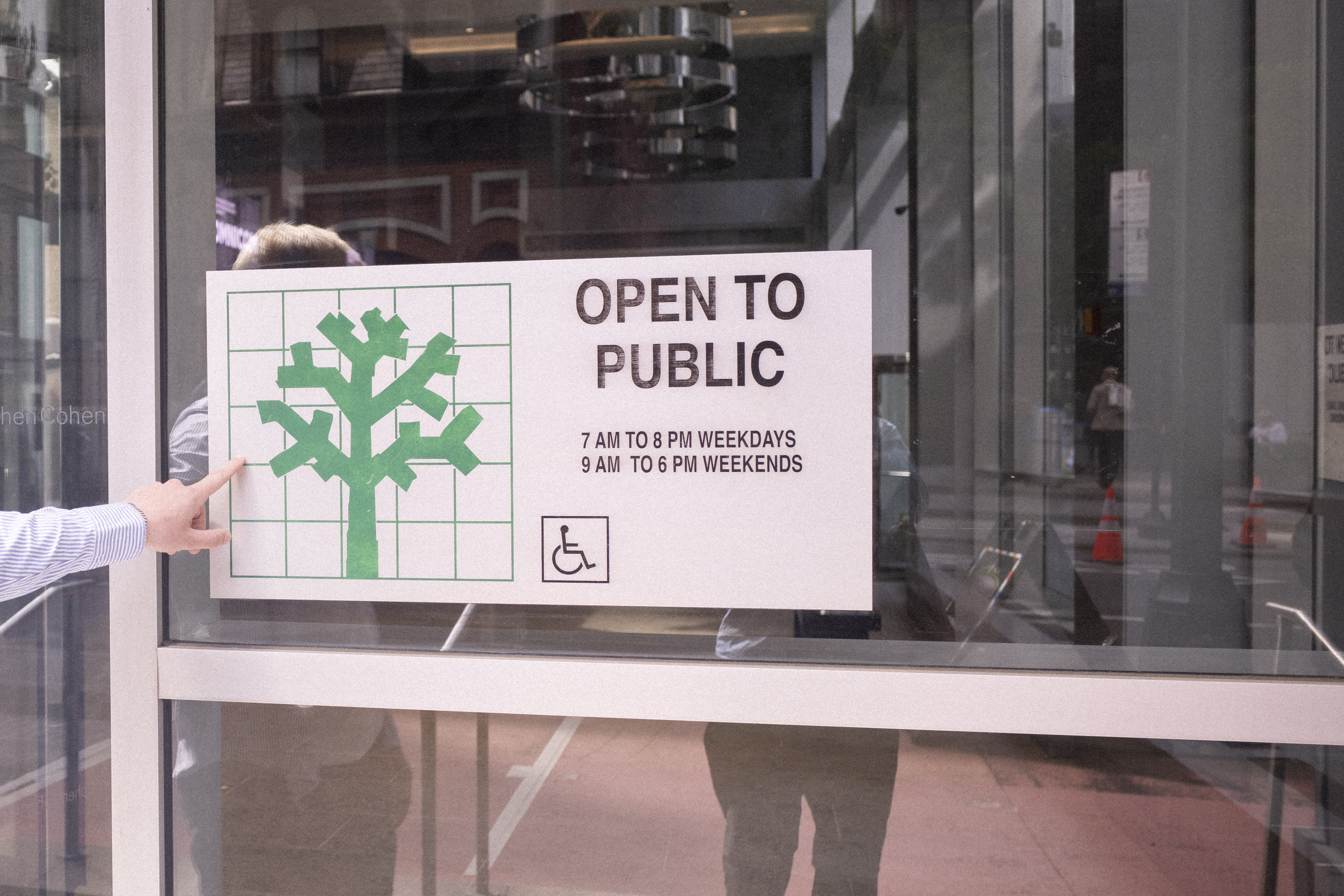
I suppose I had an ambient sense of what “POPS” — Privately Owned Public Spaces — were, but had never given them conscious attention. Here we were, now very consciously attending to them. They were everywhere. Their little logo popping up (the old one with the strange tree atop a grid, the new one with three bizarre chairs) on every block, seemingly next to every building. Entire lobbies of giant offices, it turned out, were POPS. You could host a book event in one if you were brave enough (Alex’s friend had done just that). Alex has taught classes at various POPS across the city.
In fact, he is running a class this Saturday (June 20, 2026): “Writing in Public Space – Chinatown.”
POPS came about as a way for private developers to make a trade with the city: You (the developer) “give” (it stays private) the city some “public space” (outdoor plazas, atria), and get more square footage for offices in return. The net positive being buildings aren’t so squished against the edge of the road, everything has a little more breathing room, and people have seats and somewhere to hang out, eat lunch, listen to music, read a book. For most developers, it’s an easy trade, codified in law:
- 6:1 in standard high-density commercial districts — six bonus square feet of sellable/leasable building per one square foot of plaza given to the public
- 10:1 in the densest Lower Manhattan districts — the original 1961 ratio, now surviving only in a few districts
Capped at 20% over the base allowable floor area in toto.
Many cities have similar ordinances. Tokyo does. You can view the terrible POPS of Roppongi Hills — optimally engineered to discourage any kind of joy or humanity amidst its tunnel of wind and chopped up outdoor spaces.
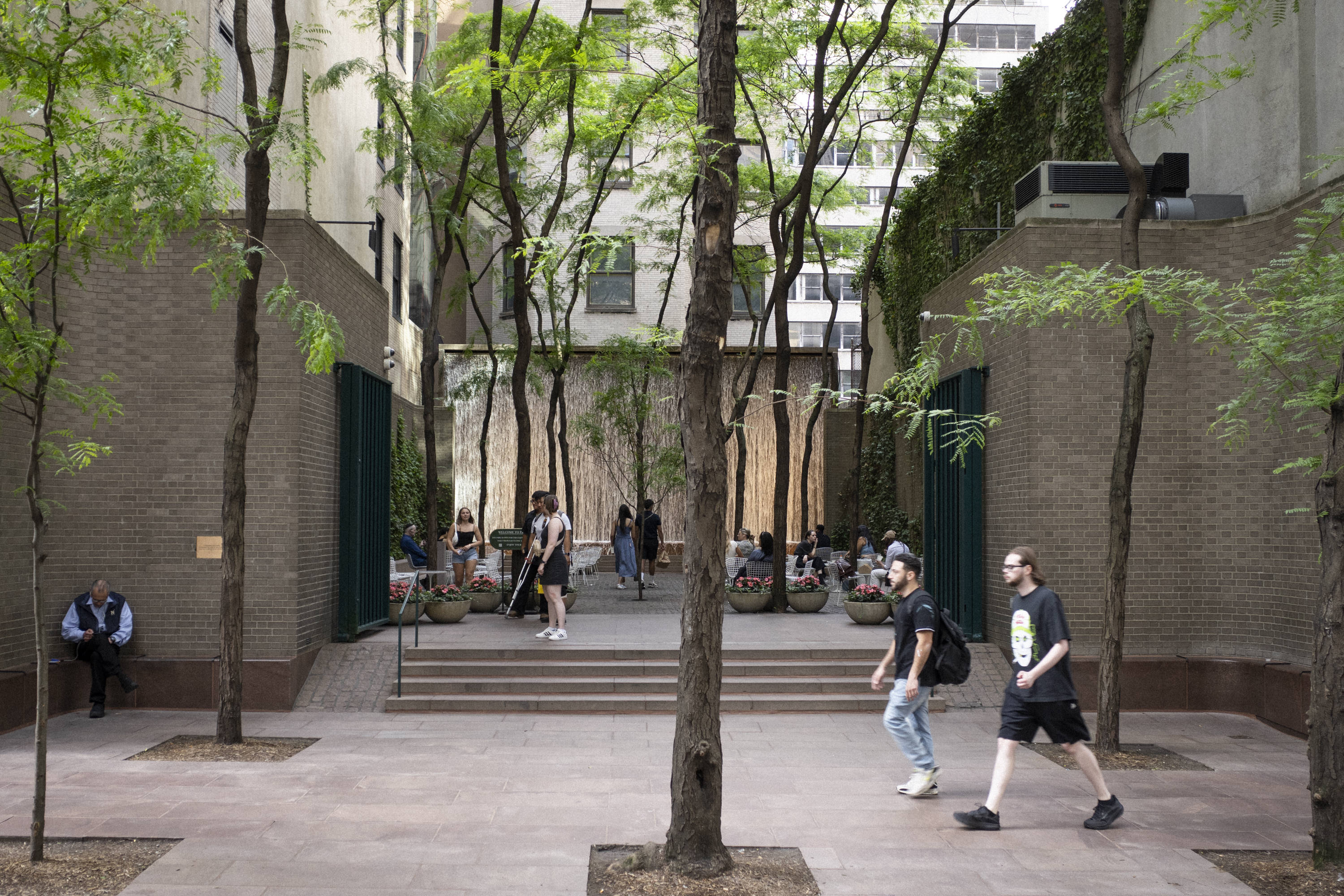
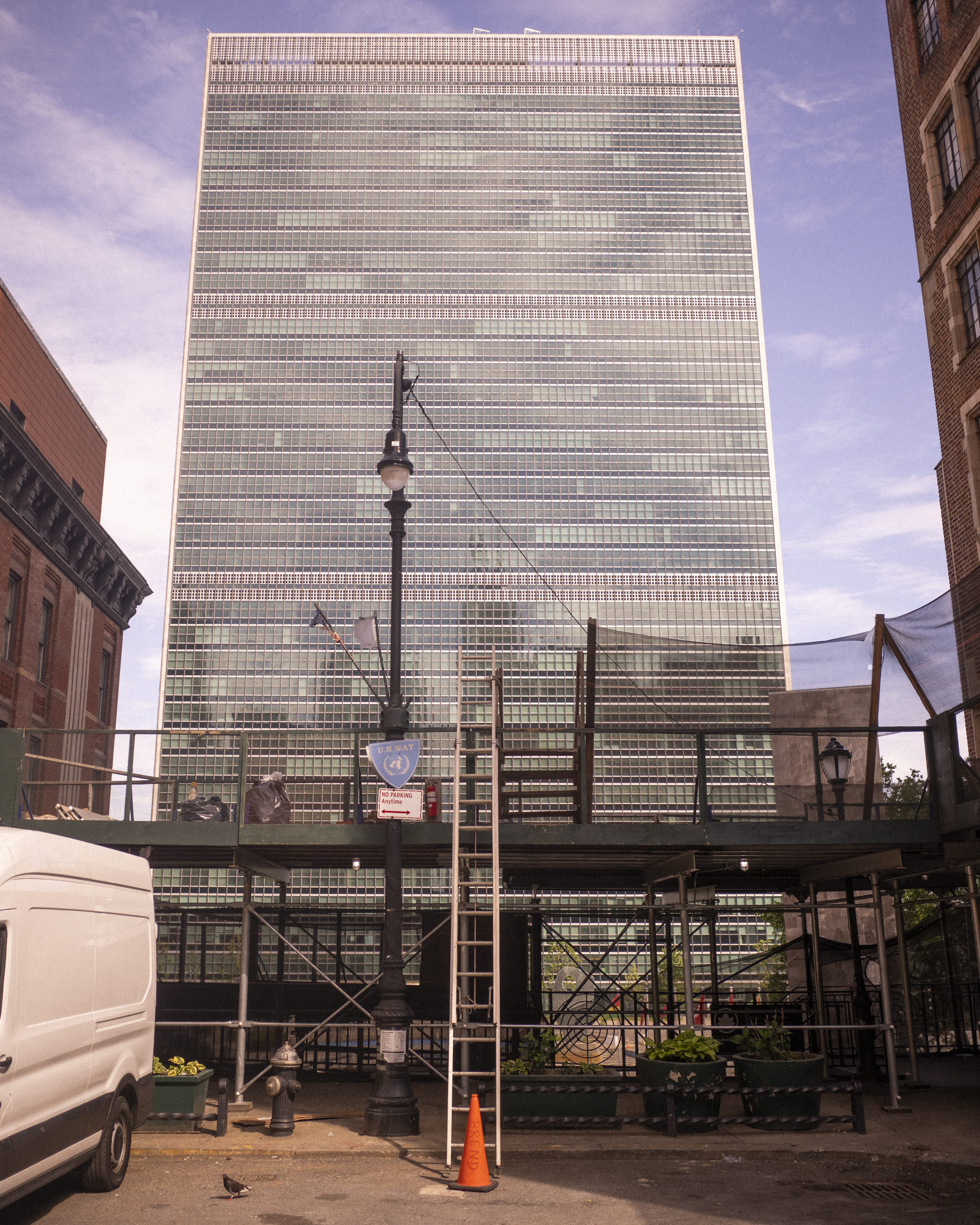
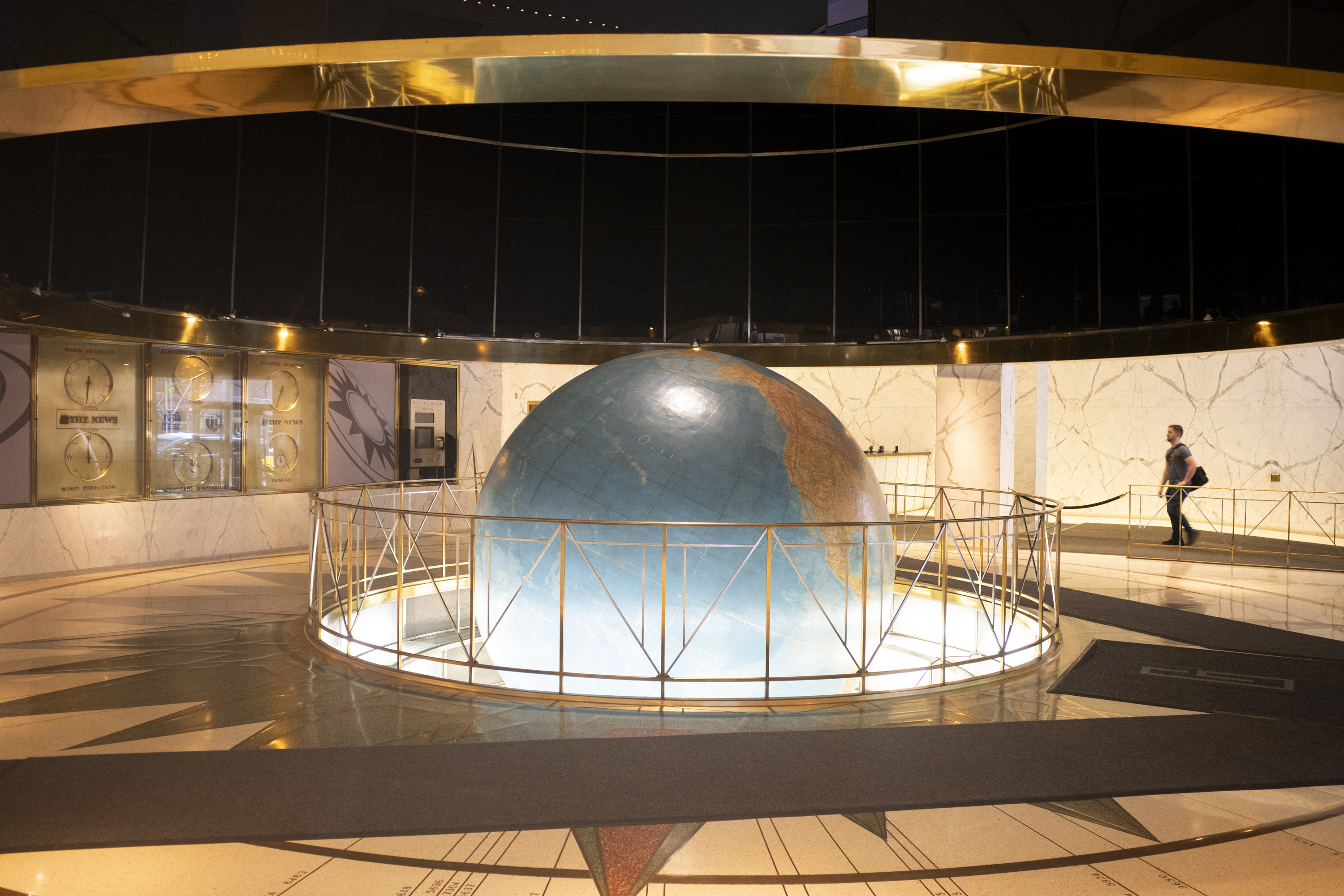
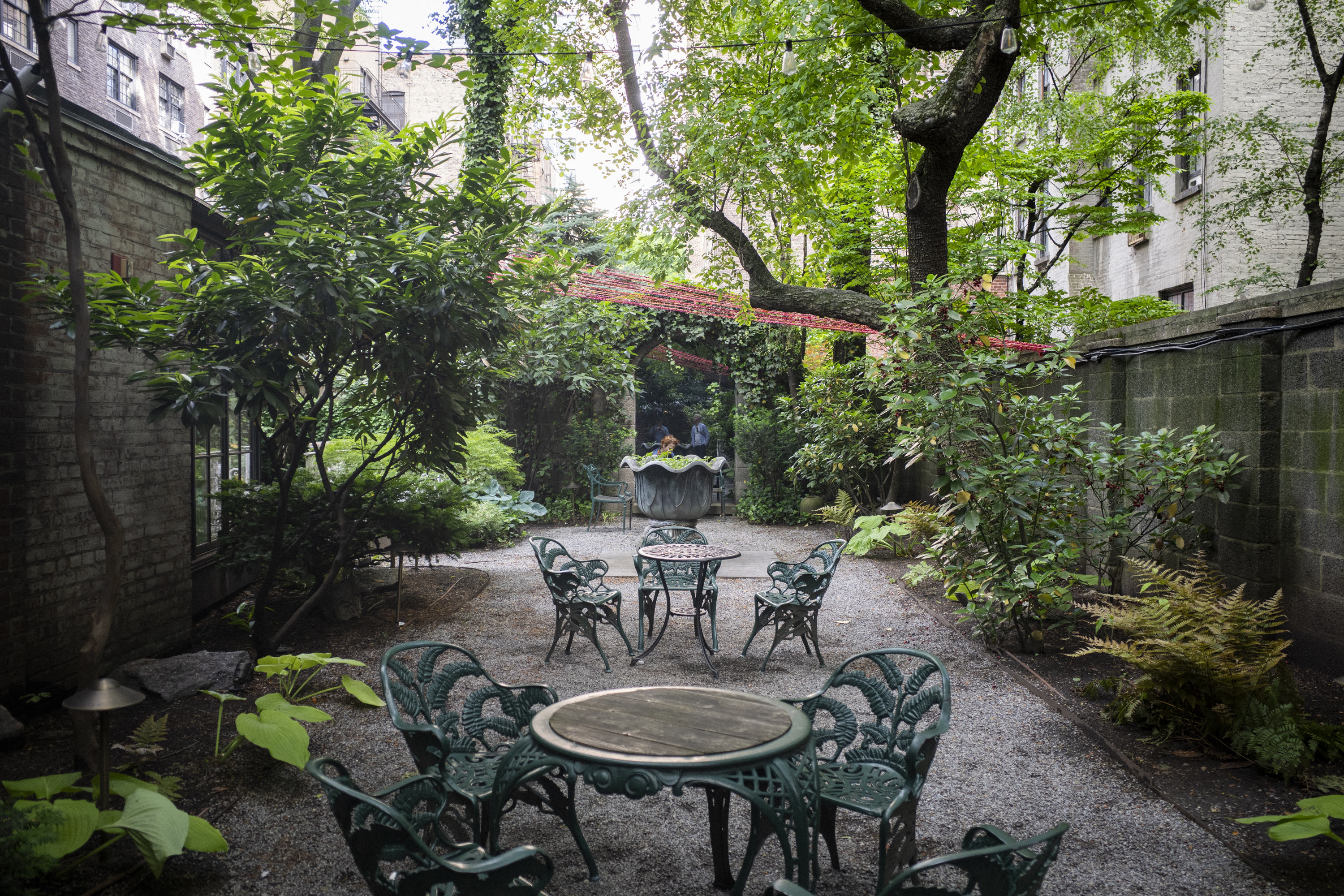
NYC POPS, on the whole, seem a little less despondent, a little more “fair game.” We passed gardens with waterfall features (some on, some off). We walked over to Tudor City and the Tudor City Bridge (apparently peak Manhattanhenge viewing), which was a surreal development on the edge of 42nd Street, right next to the UN. The lobbies of some Tudor City apartments looked like they were designed for Dracula. (For $500k you can live there.) We walked to St. Peter’s church, which was modern and fun with an epic organ. Next to it stands the Citicorp building, on stilts, which almost collapsed because of an engineering issue. Between them all we weaved in and out of POPS. POPS here, POPS there. Some POPS with music piped in, some out in the open, some hidden in courtyards, one over in “Amster Yard.”
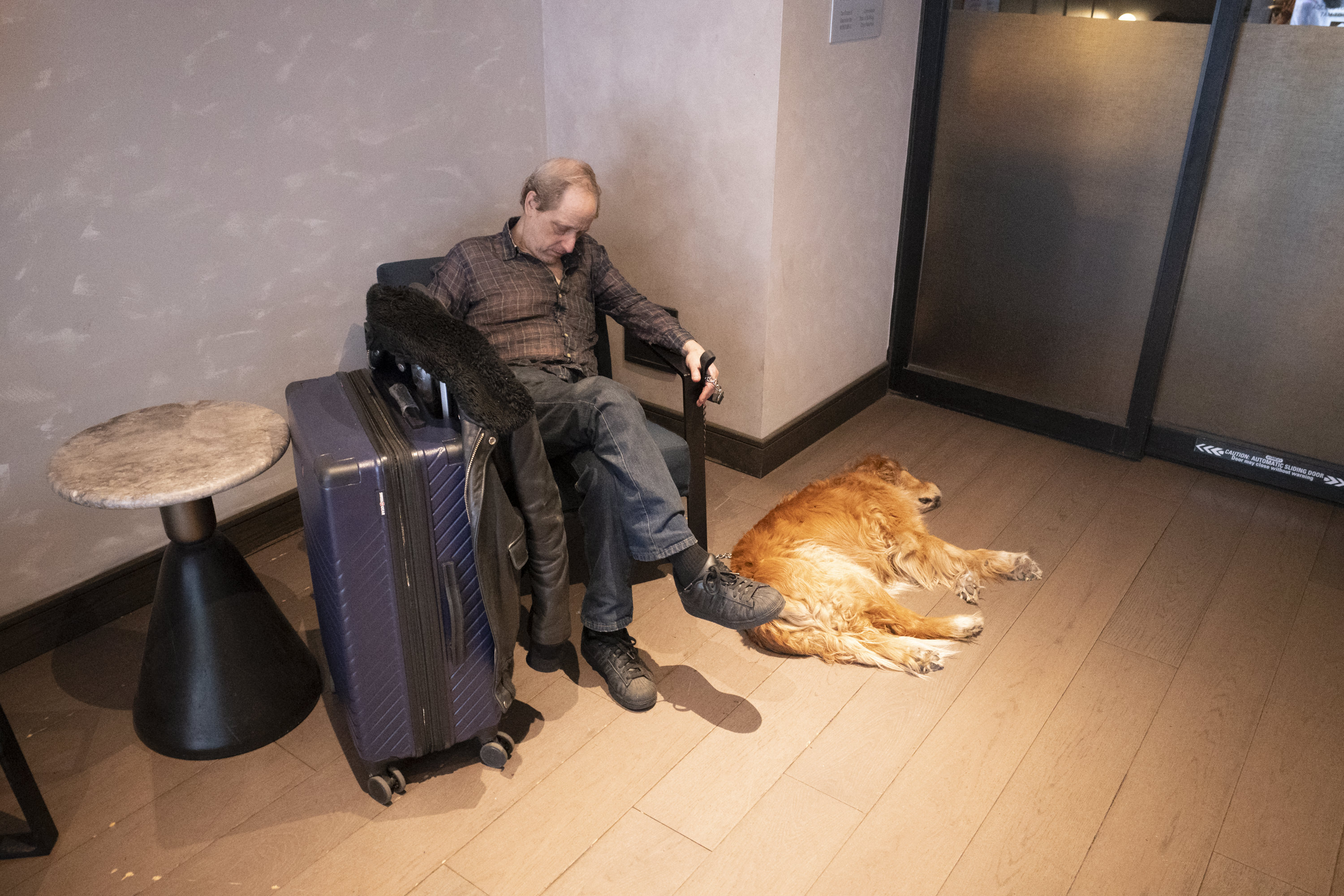
Probably the strangest of all was down 6 1/2 Ave, a place called Parkers. Felt like a cigar lounge, but technically still a POPS. Or within the boundaries of a POPS. You can go in there and sit and work to your heart’s content. Needn’t order a thing. Towards the back this guy was sleeping with his dog:
Outside our little stroll, Alex recently walked from Manhattan to the MetLife Stadium in New Jersey. Round trip ticket prices on NJ Transit are normally $15. Because of the World Cup™©, they were planning on charging $150, and landed at, apparently, $98. So Alex and his buddy, Thomas Wilson, walked it. For the New York Times:
To be clear, officials advise strongly against this. “Do not walk,” announced Alex Lasry, chief executive of the New York New Jersey Host Committee. “You are going to be putting yourself, you are going to be putting law enforcement and people on the road in danger if you walk to the stadium.”
The photographer Tom Wilson and I decided to see if we could make the trek anyway. We’d have to walk through what is, for many residents, the Bermuda Triangle of the tristate area; it is more often associated with organized crime and pollution than with wildlife and wetlands. And we couldn’t walk through the Lincoln Tunnel. Instead, we started our journey by taking the ferry to Weehawken from 39th Street, near Penn Station, where many soccer fans will also start their journey to the stadium.
It looks like a mostly terrible walk (sort of the point — highlighting the indignity of gouging rail riders, the sadness of the long walk in the States), which is how most walks in America are. America — a car-first country if there ever was one. It’s one of the (many) reasons Kevin Kelly and I haven’t done a Walk and Talk in the US.
Speaking of weird walks in America, Alex isn’t the only one going on loopy walks. Buddy Sam Anderson walked the “Old Leatherman” route last year. Who was this “Leatherman?”
In summer and in winter, in every possible kind of weather, the man wore, from head to toe, an outrageous outfit he seems to have made himself: rough leather patches stitched together with long leather strips, like a quilt. It was stiff, awkward, stinky and brutally heavy. It looked like knight’s armor made out of baseball gloves. To anyone encountering him on a quiet country lane, he must have seemed almost unreal: a huge slab of brown, twice as wide as a normal man, his suit creaking and squeaking with every step.
In the years following the Civil War, the wandering stranger became an object of curiosity, then a frequent subject of the newspapers. People gave him a name: the Old Leatherman.
Sam is able to wax lyrical and poetic about the walk, but a bunch of it is on pretty gnarly roads through post-industrial sadness, mixed with rich natural beauty, as is the wont of Connecticut, New York, and Massachusetts.
If you want a “ground truth” account of walking various chunks of “ye olde America” — the North East — check out Sebastian Chiu, who “ran” (though it looks like mostly walking?) from New York to Boston in one big push over a weekend. (220 wild miles.)
Last year, Alex did yet another weird walk for the Times. “New York Is Planning a Train Line to Connect Its Transit Deserts. We Walked All 14 Miles of It.” An attempt by the city to rectify the insanity that is moving north-south through outer Brooklyn. Alex writes:
Speed saves time, but it also lifts us off the ground and abstracts the landscape. Our world becomes a set of coordinates, a series of destinations. But those who forgo the convenience of speed and choose to walk are offered something else: a slower rhythm that draws us back into the world. Our sense of place is restored. On foot, the city reveals itself.
To walk this route, like taking any long walk, is to confront the city’s gaps firsthand. I kept feeling as though we were suspended between two places — the present and the possibility of change. Our walk felt like a way of touching the memory of these places before the IBX line changed them forever.
I’ve been in New York about six weeks now, and the walking has been amazing. I walked from 225th Street down to the tip a few days ago and intend to write about that. Mainly, Manhattan is a maximally rewarding place to meander — the density of Interesting Things (people, buildings, performances, sadnesses) is unparalleled.
Thanks, Alex, for the invite to walk Midtown.
C
Not subscribed to Ridgeline?
(A weekly letter on walking in Japan)
This essay is from the Ridgeline newsletter, mailed out June, 2026. Thoughts? Email me@craigmod.com.

Craig Mod is a writer and photographer based in Japan. He's the author of the books Things Become Other Things and Kissa by Kissa and is a MacDowell, Ragdale, and VCCA writing fellow. His essays and articles have appeared in The New York Times, Eater, The Atlantic, California Sunday Magazine, Wired, Aeon, New Scientist, Virginia Quarterly Review, The New Yorker, The Morning News, Codex: Journal of Typography, and elsewhere.
He writes newsletters, oh yes, newsletters: Roden & Ridgeline.
The work on this site is supported 100% by paid memberships and book & print sales.
Whatever you do, don't follow @craigmod on Bluesky or Instagram.