Walking and Not Walking a Castle in Italy
An End-of-Summer Retreat With a Bunch of Artists
Ridgeline Transmission 236
Ridgeline subscribers —
The castle is not haunted. The castle is not haunted. That line was my refrain as I tried to sleep in the gargantuan attic space that had been turned into a bedroom. My bedroom. Five-hundred-year-old rafters and floorboards. Backside of the roof plainly visible. Inset into one of the walls — a wall that ostensibly led nowhere — was a tiny door. I did not like that tiny door. What kind of Italian gremlin would crawl out of it at night and steal my liver?
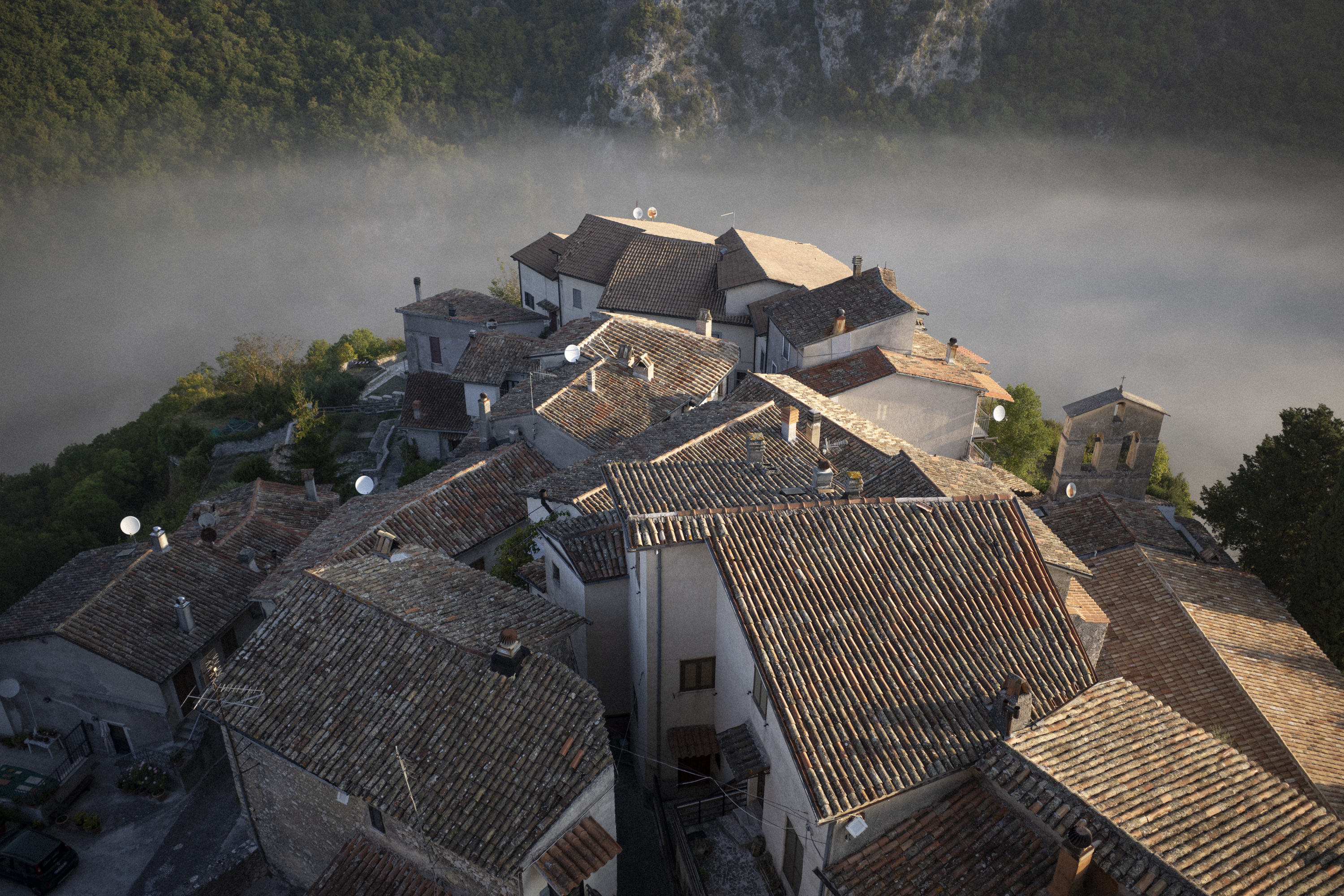
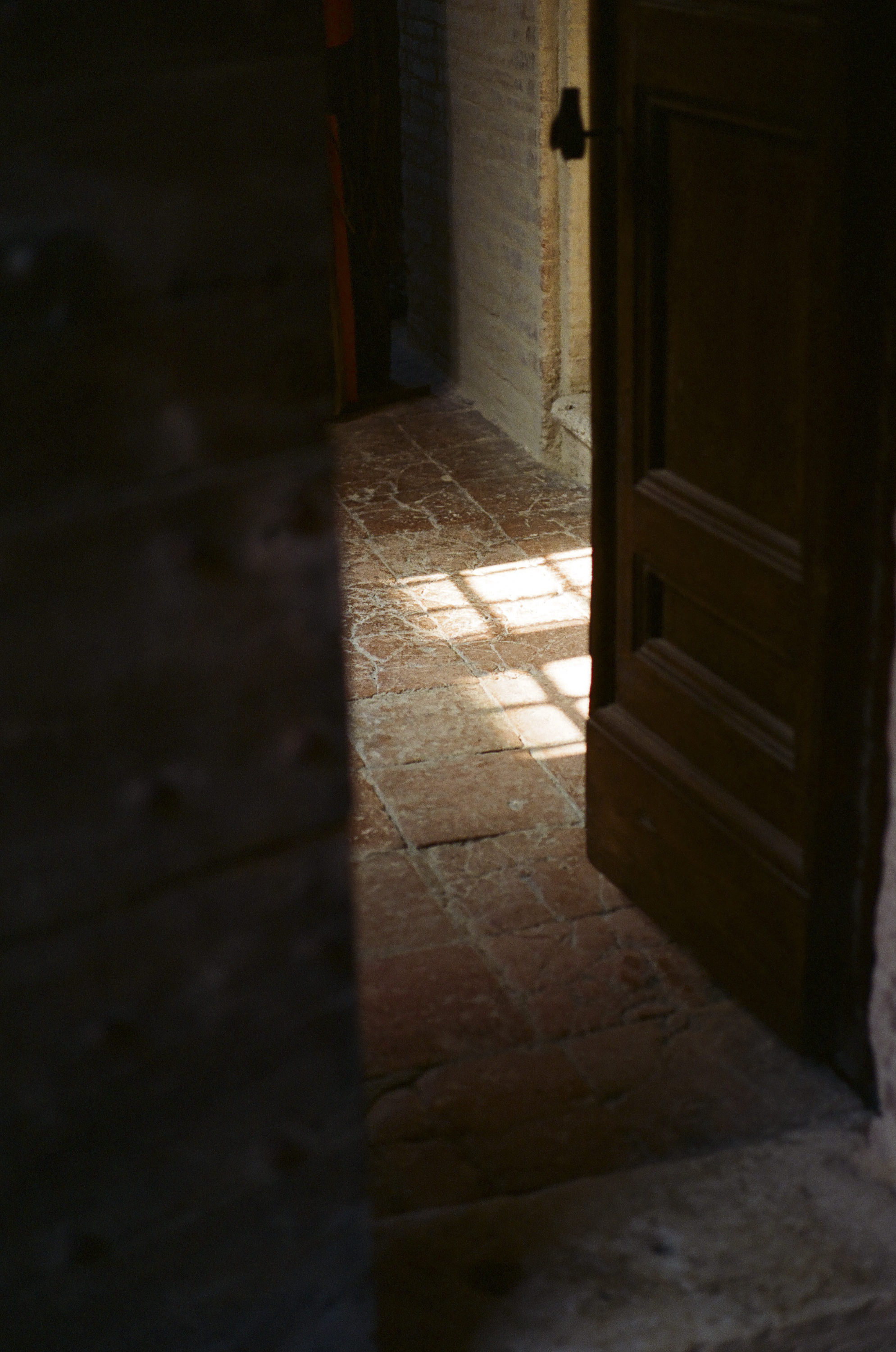
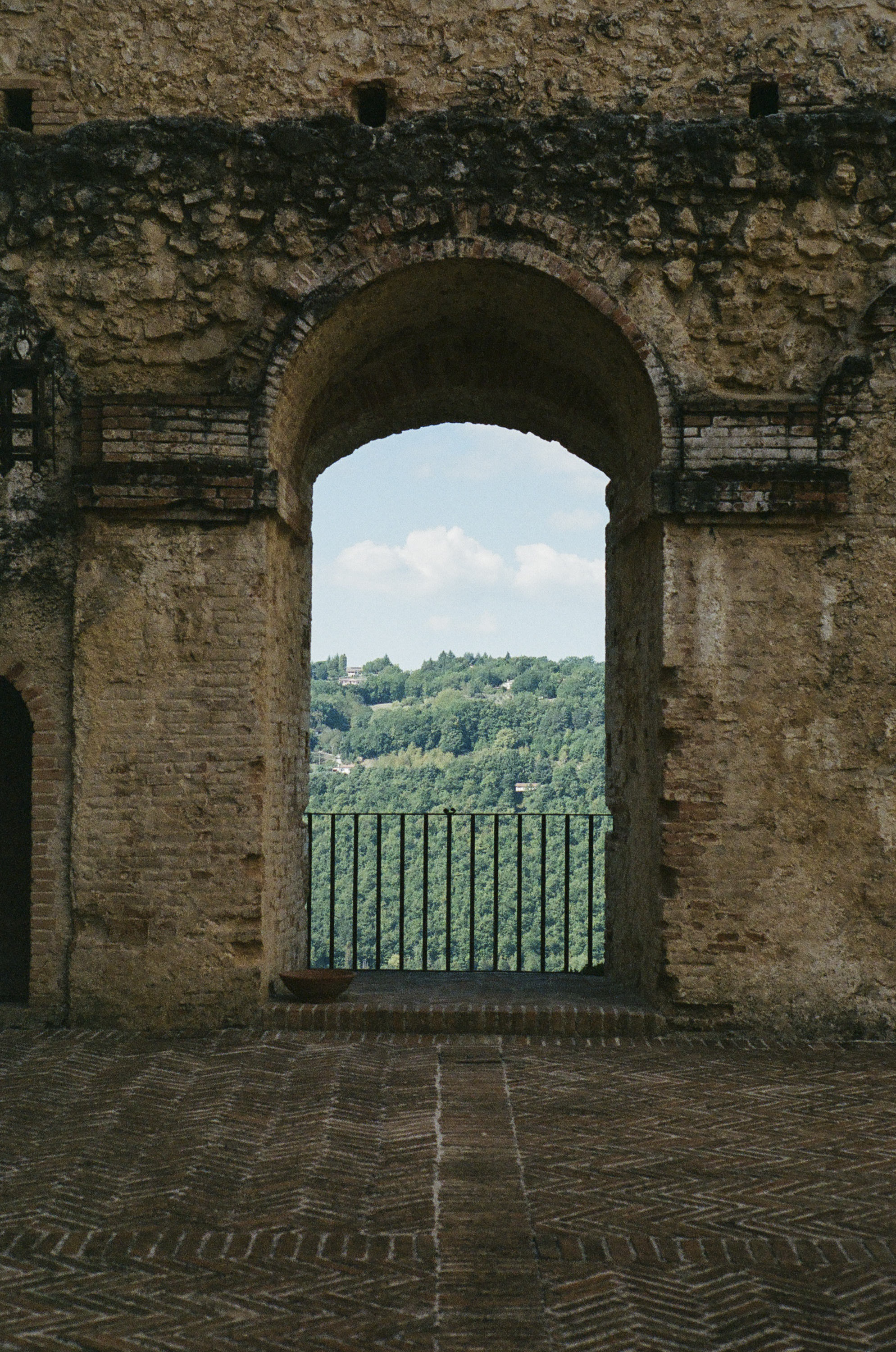
I was staying in Rocca Sinibalda, a beautifully restored castle perched atop a towering rock about an hour east of Rome. Huge rooms lined with frescoes, carvings on every piece of wood, hulking doors that opened in infuriating ways. All of it filled with art the owners had collected. The structure, once a fortress, dates from at least 1084. When the Black Death reached Italy in 1347, the thing had been up on its rock for a quarter millennium. After Rome was sacked in 1527, some folks reworked the fortress into a castle, a proper noble residence. Most notable was the involvement of Baldassare Peruzzi, one of the architects of St. Peter’s. Inside this lofty structure of old brick and old concrete and gnarled beams, it’s hard to imagine the vast scope of love and sadness and inspiration and study and violence and philosophizing that happened within those walls.
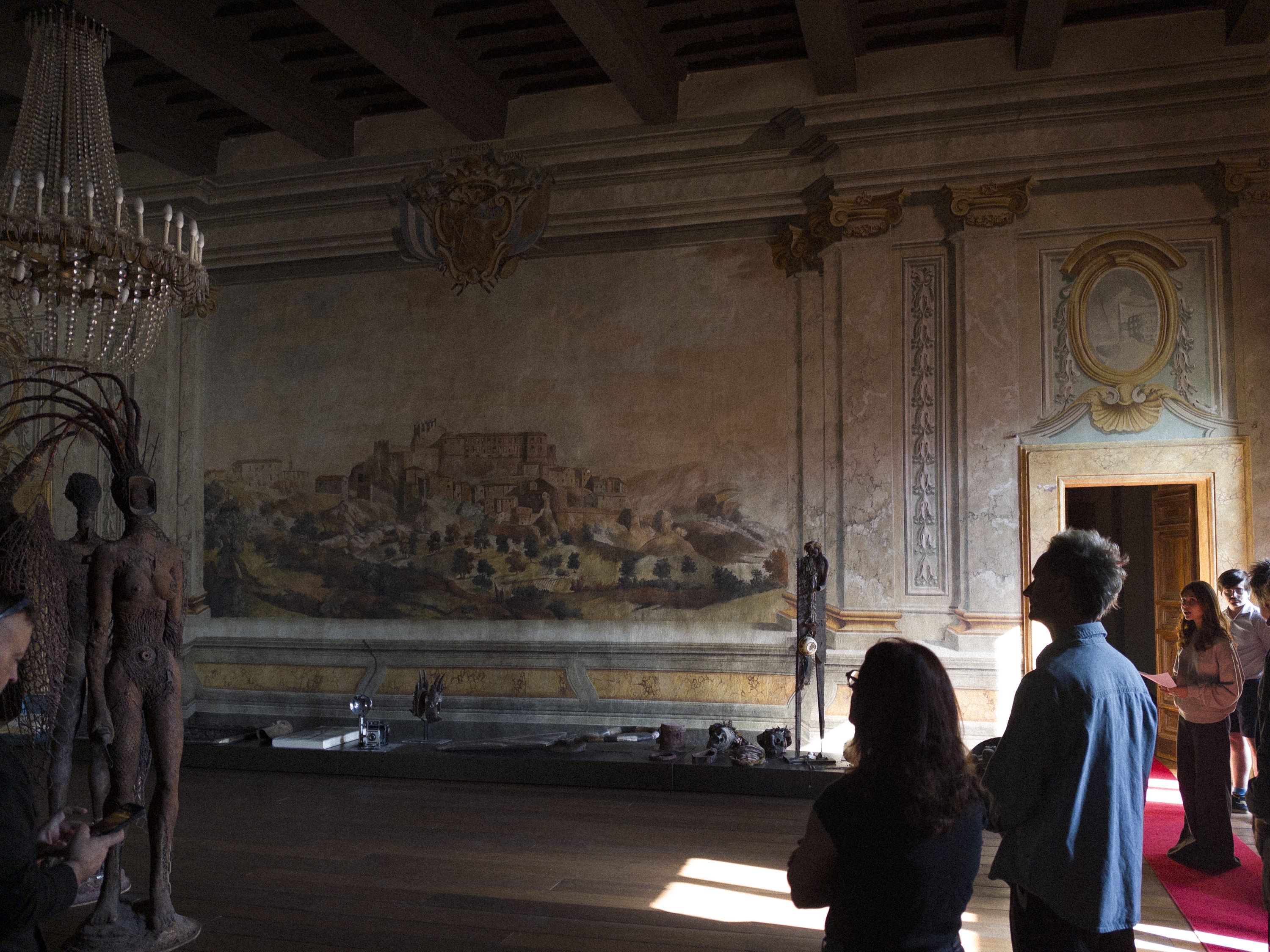
It was fun to think of this history, the temporal strangeness of this hulking thing perched on a rock in the countryside of Italy, as twenty-odd of us weirdos descended upon the castle for four nights and five days. Our mission: be wacky, introspective artists. The retreat was organized by Ursprung, a ragtag group of scrappy, young, brave (to run an event like this requires the utmost bravery), highly motivated Germans. Among us, we had American Greg Dunn, the neuroscience PhD turned artist. Dutchman Yuri Landman (homepage), experimental music instrument designer (who — rumor has it — makes guitars for Sonic Youth). American Kelly Krause, longtime creative director for Nature. Greek performance artist Eleni Danesi. Sound artist Rob Koch collaborating with American poet and artist Kathi Hendrick. Canadian-via-Poland uber-didact science and art mixer Martin Krzywinski. German artist Moritz Wessely, maker of many things, knower of many more. Peruvian artist Ilán Valdés. Dutch Marije Baalman, artist and inventor of complex digital / physical installations. Italian biophysicist and composer Mauro Battipede. And many more.
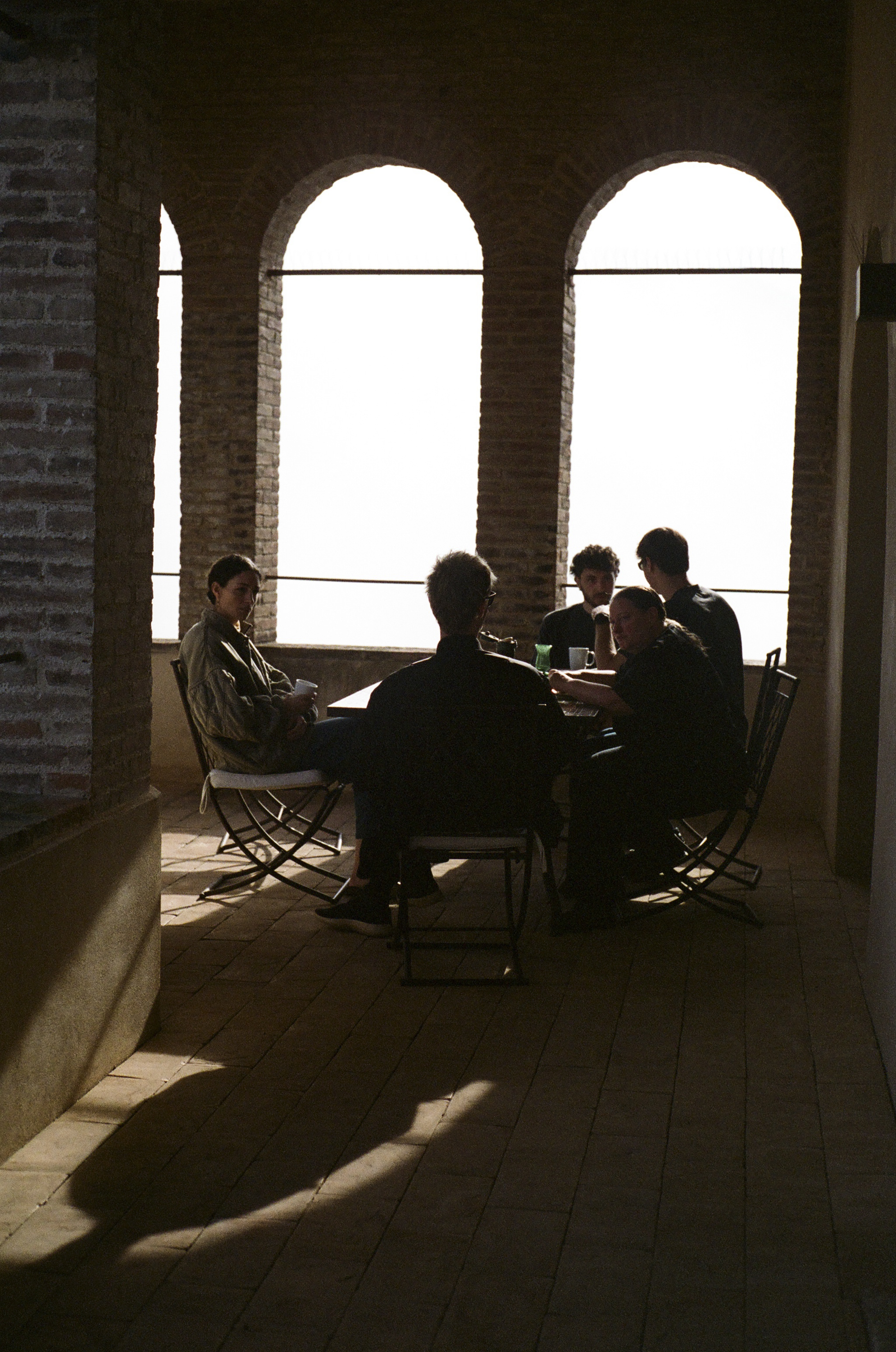
The group was diverse. And smart. They brought with them a pulsing intelligence felt in all corners of the castle. Sometimes it felt like my conversation partners held in hand a thick rope, on the end of which twisted twelve maniac stallions, ready to burst towards whatever topic you next mentioned. Everyone seemed to know something about everything. I managed to sneak in a little Walk and Talk philosophy, and a few of the dinner tables turned into Jeffersonian conversations. Apparently there was a great one about personal heresies (always fun).
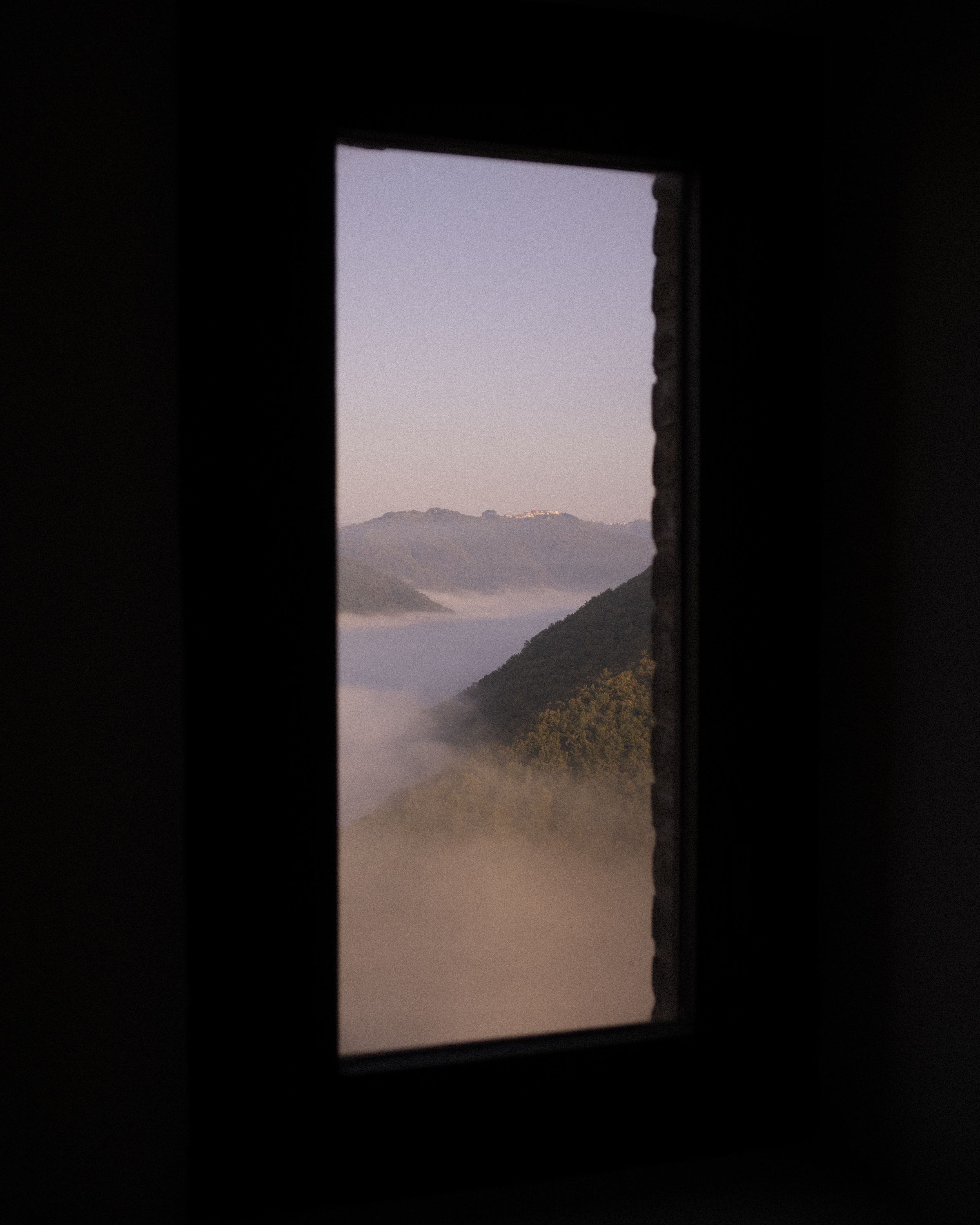
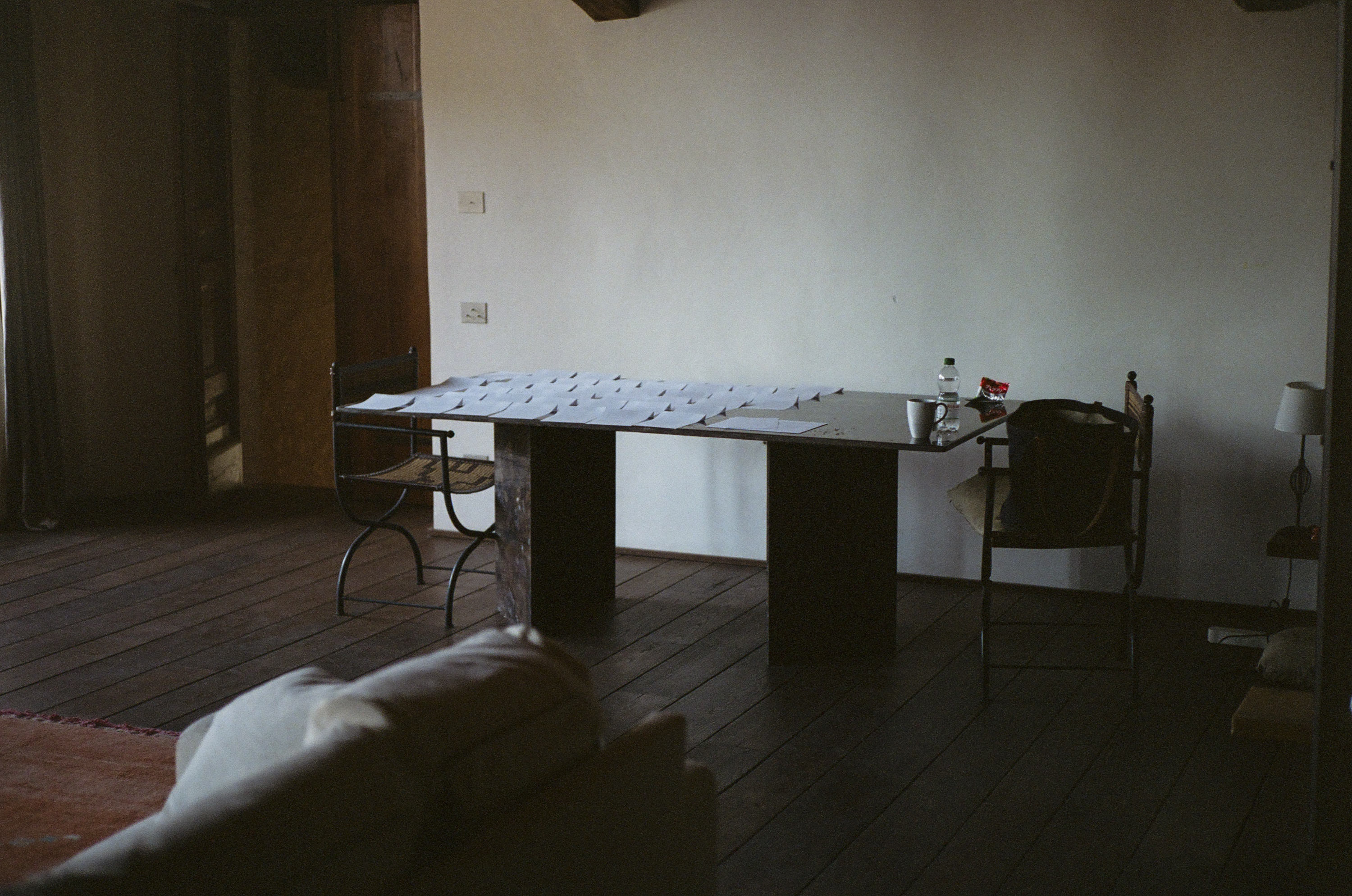
What was I doing there? Great question. I had some fantasy of “getting a lot of writing done.” It turns out that Kevin Kelly had been the one invited, not me, and he couldn’t make it, so he suggested me in his place. I passed the Zoom interview, and there I was, an anthropological interloper on the edge of this makeshift artist commune, an ersatz KK. I read the materials and anticipated a mix of workshops and studio time. I imagined afternoons filled with silence, solitude, working on projects (me, working on a new book), and evenings filled with open studios and presentations and more. The Ursprung crew had a more collaborative image in mind, and so the reality became: days filled with talks and workshops (they all kept running over because everyone had so much to share, and we had so many questions, and everyone wanted to hear from everyone else), like an unconference. Over the five days I had maybe an hour or two of actual solo, get-shit-done time. I managed to print out the new manuscript, cut it up, arrange it on a table, move pieces around, find some structural insights, lie down on the couch, look at the book again, shuffle some papers around some more, lie back on the couch while thinking about how talking as much as I had been talking made it physically impossible to consider placing pen to paper.
In other words: pretty productive.
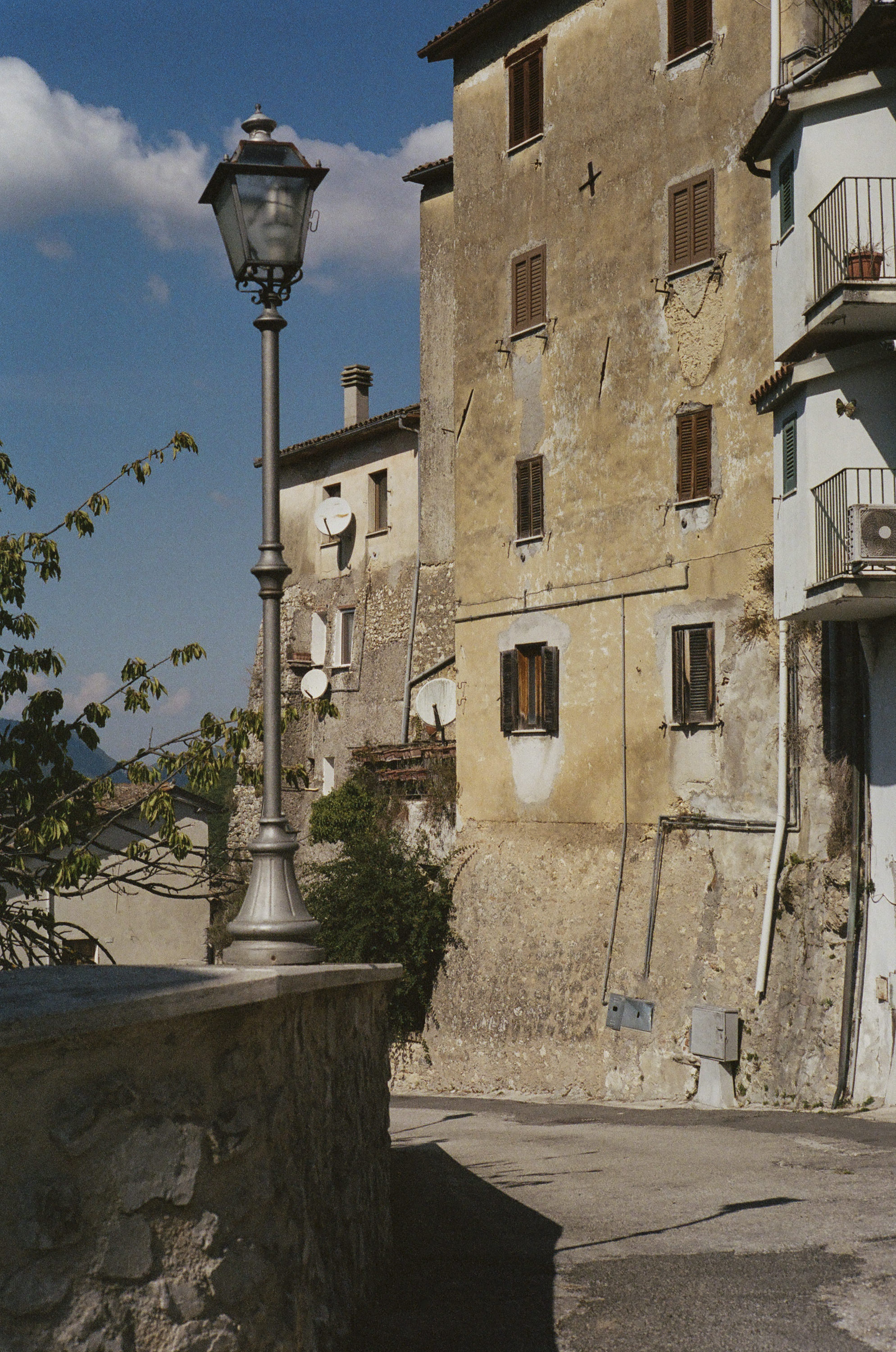
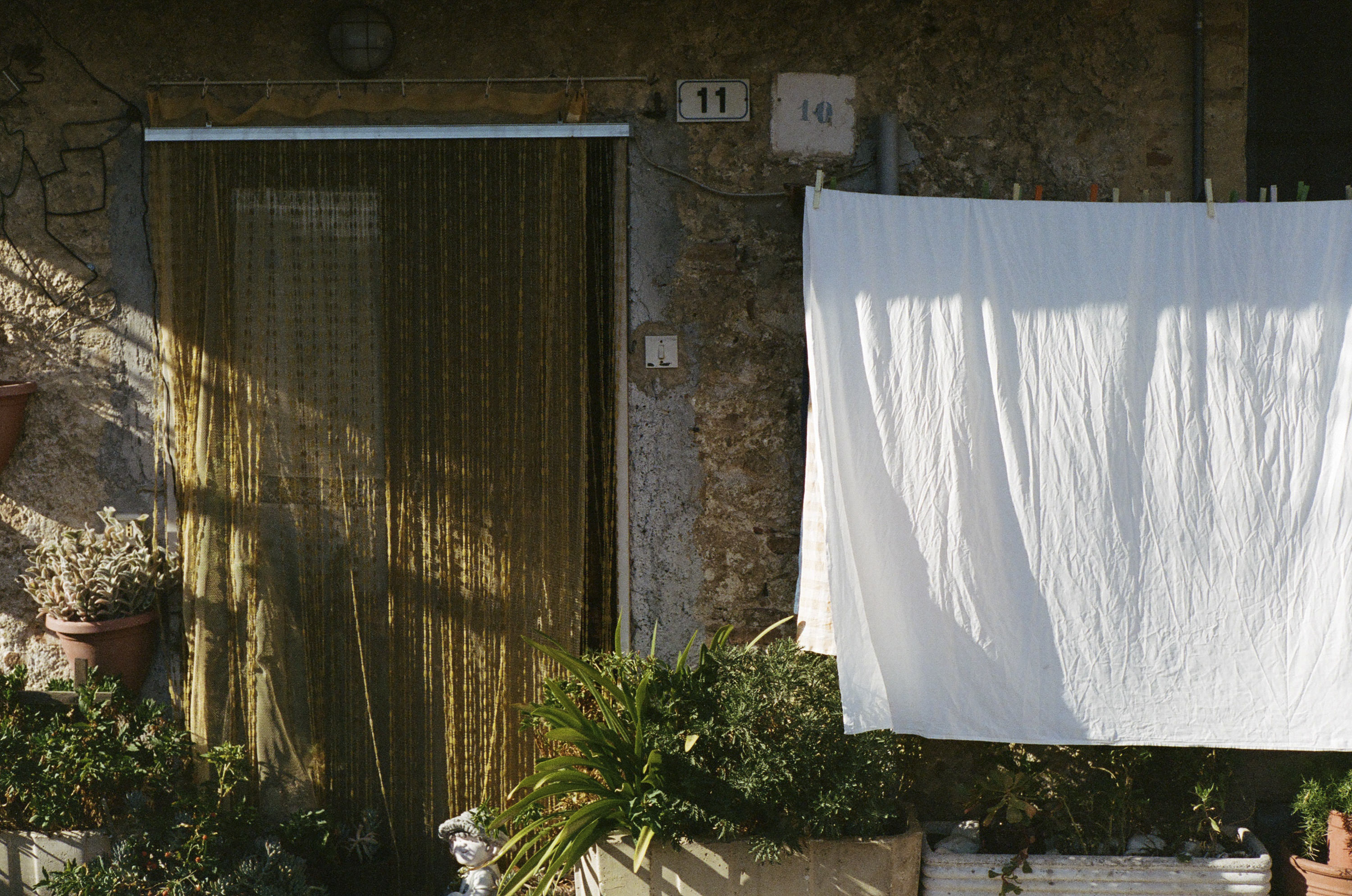
This was fine, though! My personal, private theme for the gathering was: recalibrate expectations. I’m not often in groups like this, certainly not in an Italian castle, and so I optimized for as much one-on-one time as possible between sessions. I grabbed participants. Drilled them on their lives and work as we walked the little castle village. Got espressos at the little village bar. Took photos of the little village buildings. And marveled at the crisp, blue end-of-summer skies out over the valley. The part of my brain that writes, and the part that socializes, draw from the same energy source. I gave myself up to the social.
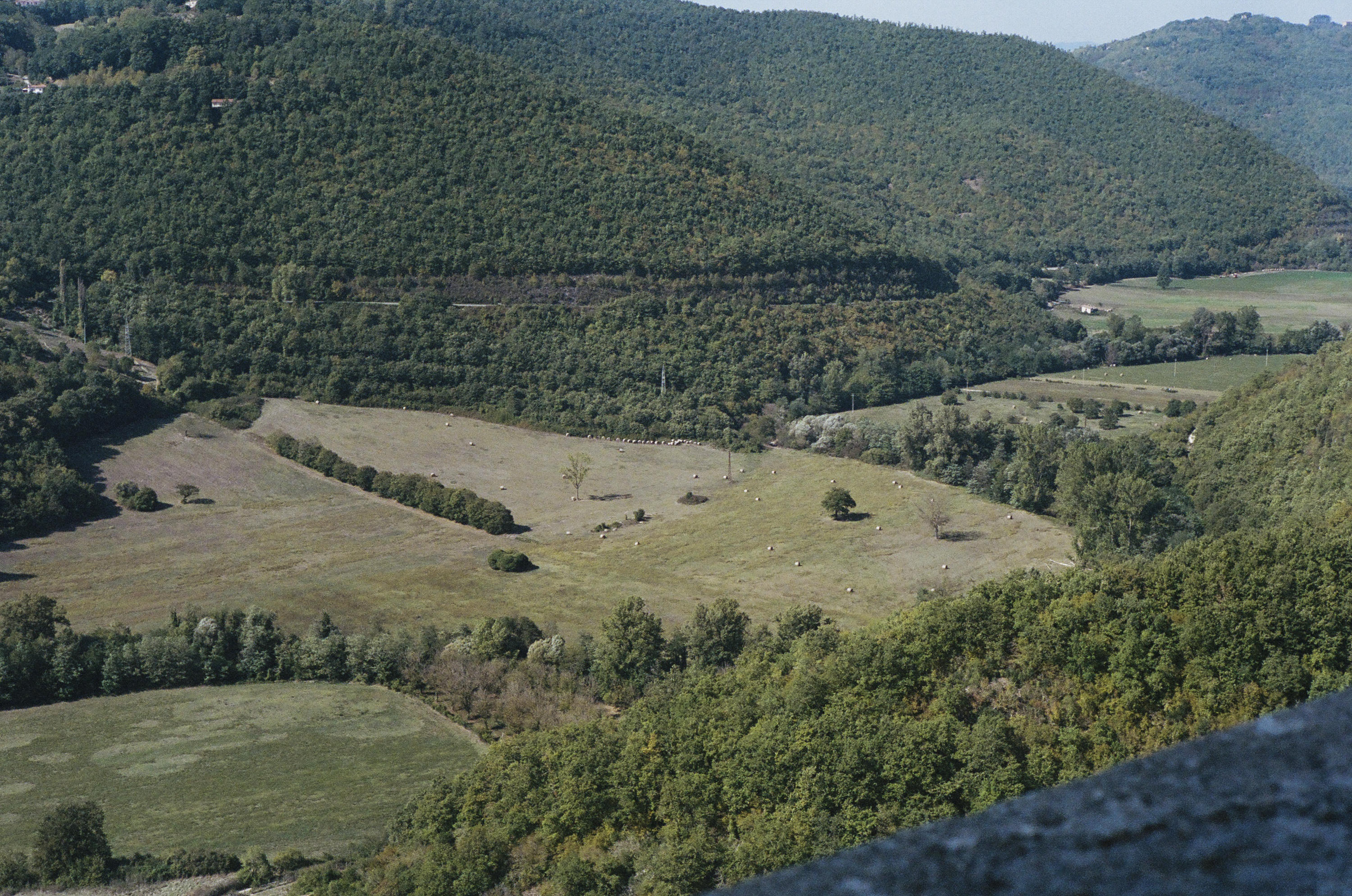
Demographically, the village of Rocca Sinibalda felt not unlike the Japanese countryside — old, that is. Old and disappearing, with a silence that left you wondering: How much longer? Not much, one suspected. All the world over, depopulation and job loss turning villages into ghost towns. At least this one had a castle of note, which would probably keep folks coming for a good long while. But what of all the others?
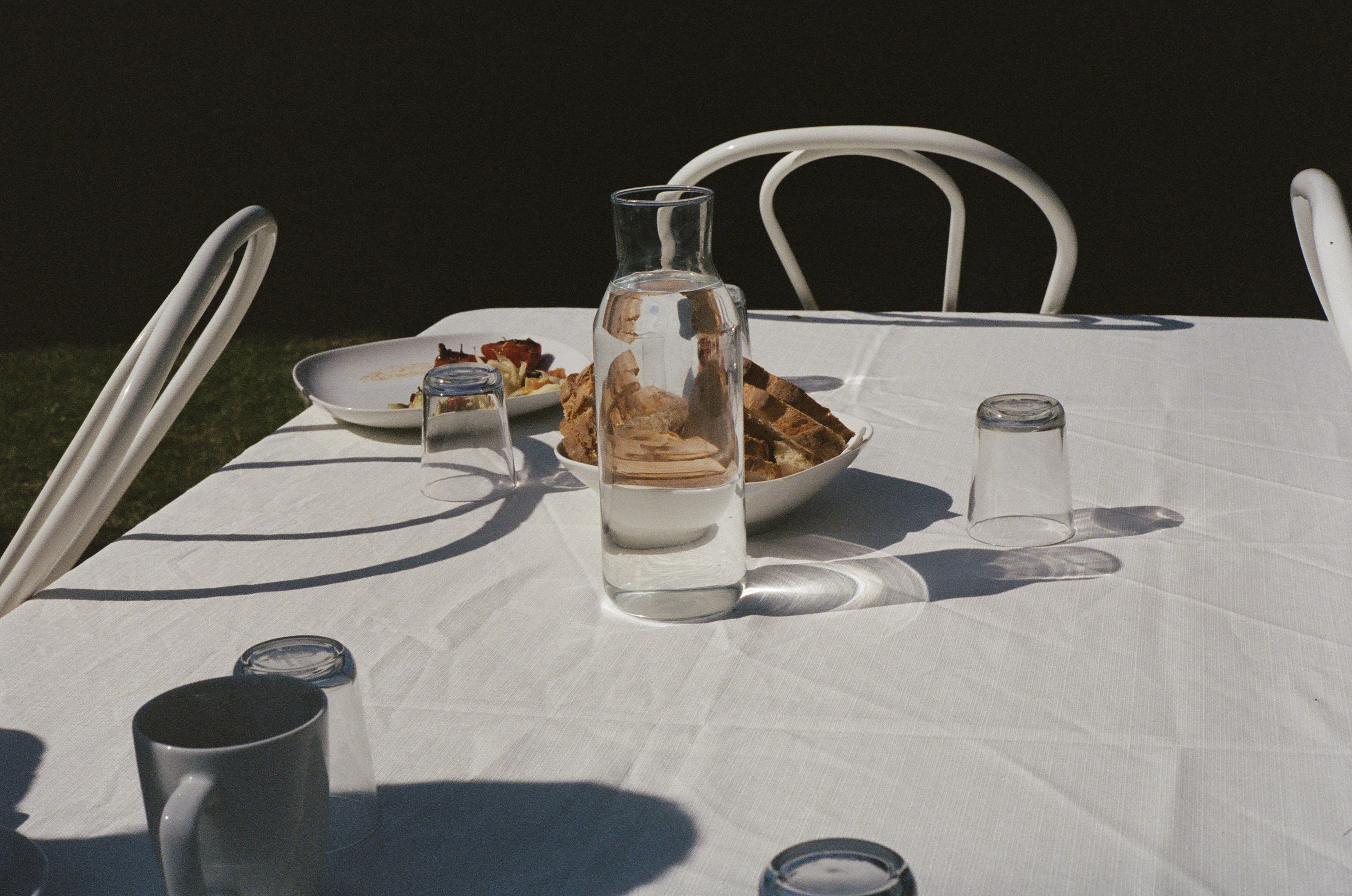
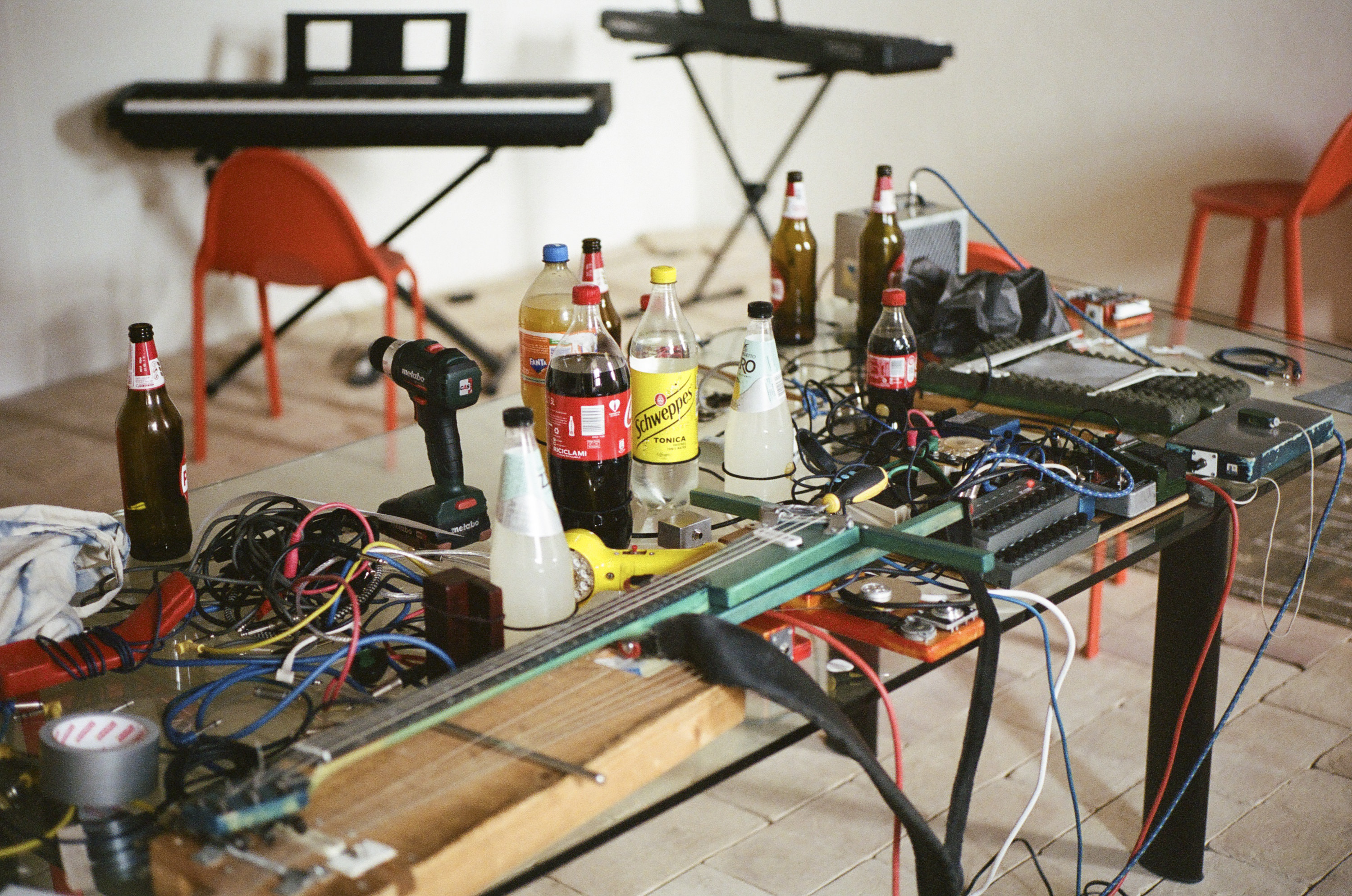
Back inside the castle walls, high above the village, lunches and dinners spilled over into multi-hour conversations. For a gathering of accomplished artists, the group was unusually scientific. Ages ranged from the mid-twenties to the sixties. Much discussion centered around consciousness and AI (like it or not, it’s a thing to talk about), about the “future of Europe,” about the future of “work,” economies, and more. Gut microbiomes were discussed at length. An animated feature film and book series about tardigrades was brainstormed. Every couple of hours someone gave a fascinating presentation of their work. Yuri banged stringed instruments made of plywood and revved power drills next to magnets and whacked stuff microtonally. Eleni moved her body in a pool draped in a plastic sheet while a projection projected over her evolving form. Moritz had us perform. Marije showed off her hardware installations. Co-organizer Adrian Cipriani set up a Bret Victor-inspired physical computing corner. Greg introduced us all to microetching as an artistic technique. Kelly showed us what it takes to produce a compelling Nature cover every week. Ilán took us on a night walk along some dark dirt roads. And Rob and Kathi led a dreamlike spatial music performance.
Again and again I revised my expectations. I wouldn’t be getting much work done, no, but I also realized that I had accrued a bit too much cynicism in recent years. I was probably harboring the most suspicion in the group. A “no contact paired somatic energy exercise” you say? Outside castle walls, in the “real world,” the thought of participating in something like that would send me running for the ocean. And yet, I did it. I did the somatic thing. A kind of improvisational tai chi with a partner. It left me feeling freakishly energized and, weirdly, like I had gone skydiving.
On the night walk, Ilán had us collect “interesting objects” we saw along the road. Standing by a river (which river? where had we walked to?) in near-pitch darkness, we then formed groups of three and made sculptures from our objects. The results were surprisingly … lovely? The whole process felt hallucinatory. The groups continued to combine until we had one mega-found-object-sculpture. Spontaneous narrative burst forth from the bundle of weeds and wood and rock and plastic bits. In the distance a dog barked. One walker jumped on a picnic table and begged us to walk back. Which we did.
I liked having my inner imp of dismissal shot down, or at least told to temporarily shut up. He is often a useful guide, a way to say no no no no no no no no to the many things you can say yes to. Saying no is nothing if not the most important part of completing something. (Yuri, in my favorite monologue of the retreat, went on an impassioned rant about finishing songs (as opposed to forever tinkering) and something about hitting a Coke bottle with a drumstick consistently for three minutes.) But sometimes it’s good to let go of the nos and say yes when you normally wouldn’t.
I’m grateful to have been able to join this inspired crew. Big thanks to Ursprung for allowing me to sub for Kevin. And extra respect to them for having such eclectic tastes in humans. An incredible gathering, in an amazing setting (thank you, Bianca, the castle’s owner, for opening up your home to us!), at which I felt pushed and pulled, brain squeezed dry by the end. Everyone was a hoot.
If you have the chance to attend an Ursprung, you should. They try to keep costs as low as possible, and also subsidize artists who can’t pay full-fare. They’re always looking for more sponsors and partners.
As for the ghosts, who knows. I lasted two uncomfortable nights in that luxurious cavern of an attic, and then accidentally found a tiny, unused bedroom in the back of the castle. There was barely enough space to open your suitcase. Heaven. Into my monk’s cell I moved. There were no tiny doors in the walls. My liver was safe.
C
Not subscribed to Ridgeline?
(A weekly letter on walking in Japan)
This essay is from the Ridgeline newsletter, mailed out October, 2026. Thoughts? Email me@craigmod.com.
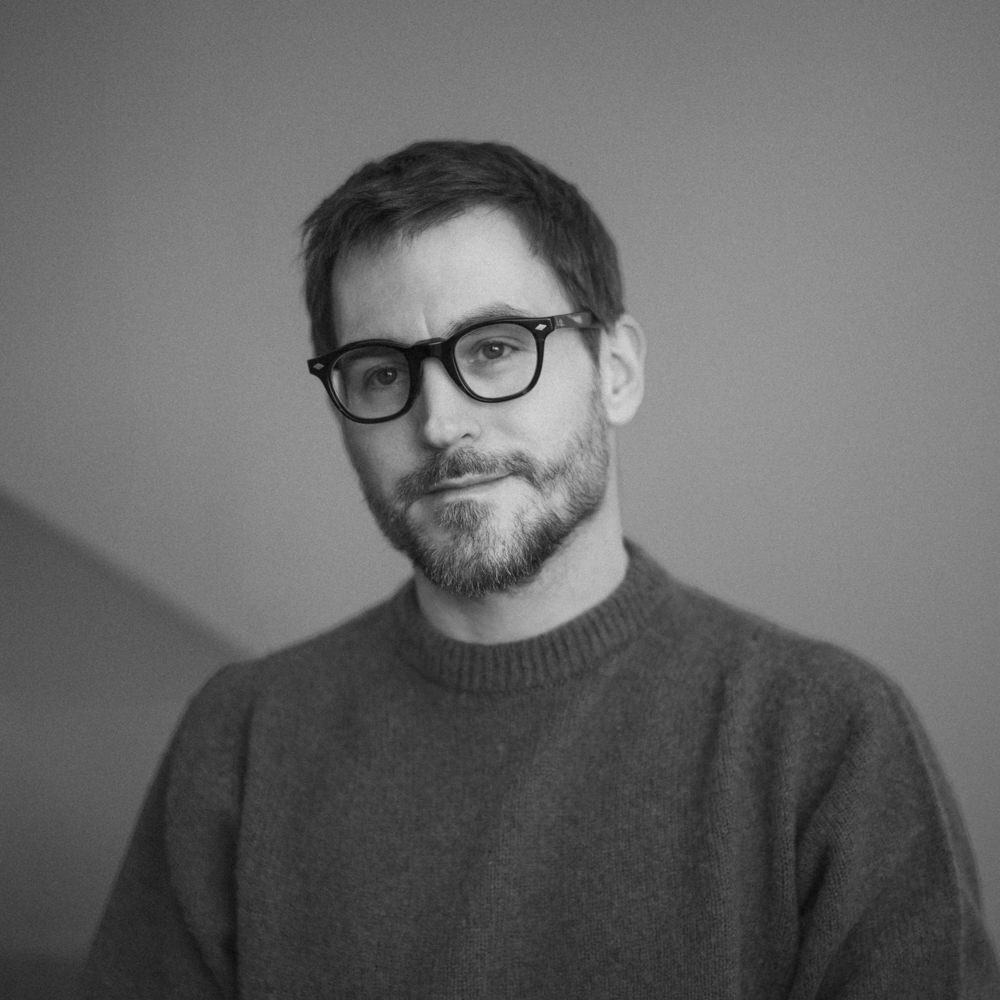
Craig Mod is a writer and photographer based in Japan. He's the author of the books Things Become Other Things and Kissa by Kissa and is a MacDowell, Ragdale, and VCCA writing fellow. His essays and articles have appeared in The New York Times, Eater, The Atlantic, California Sunday Magazine, Wired, Aeon, New Scientist, Virginia Quarterly Review, The New Yorker, The Morning News, Codex: Journal of Typography, and elsewhere.
He writes newsletters, oh yes, newsletters: Roden & Ridgeline.
The work on this site is supported 100% by paid memberships and book & print sales.
Whatever you do, don't follow @craigmod on Bluesky or Instagram.