Walking Norway's Gudbrandsdalsleden Pilgrimage
Fjords and reindeer meat for all
Ridgeline Transmission 235
Ridgeline subscribers —
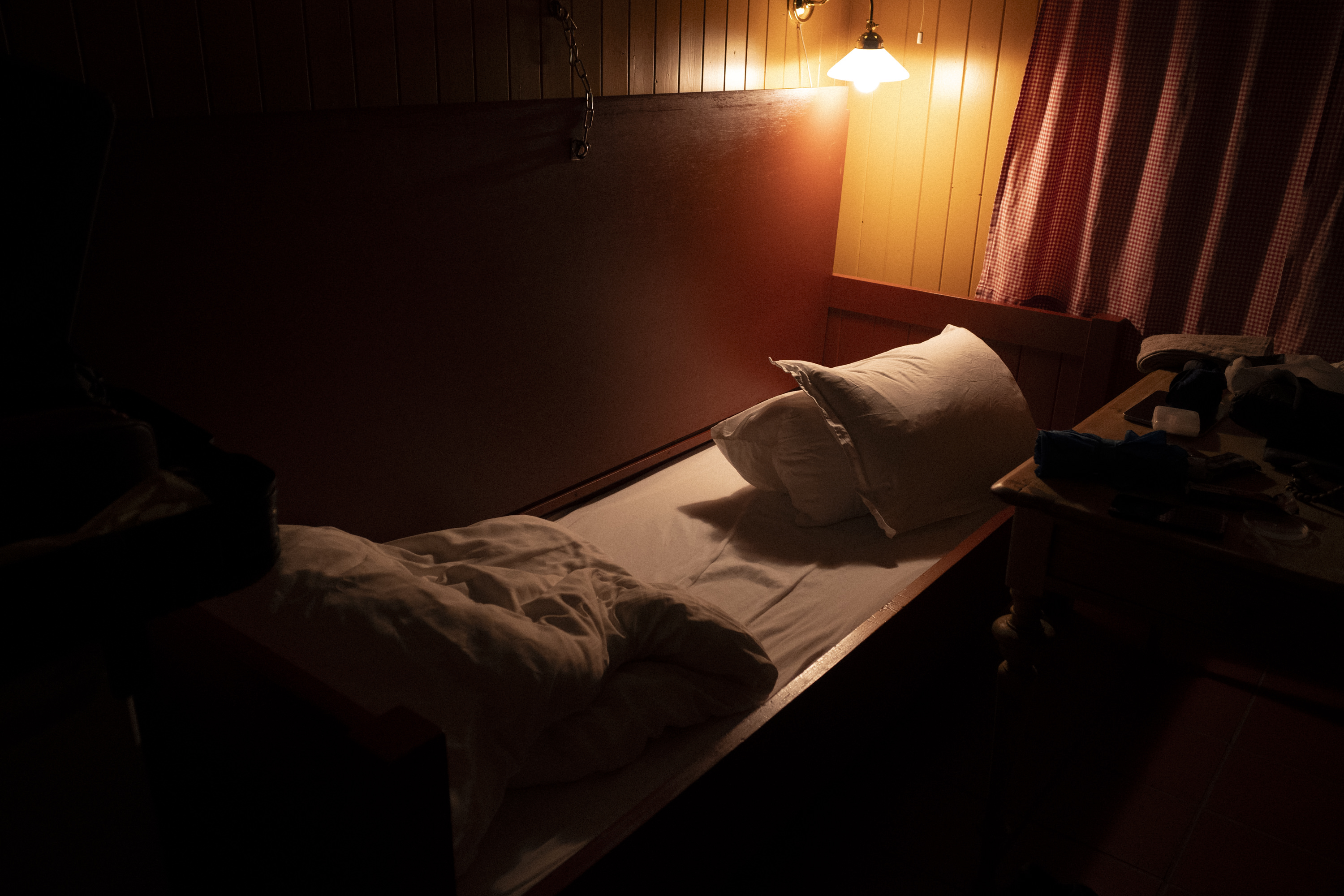
Norway has small beds. So small. The smallest beds I’ve ever seen. How can a country with such big people have such small beds? One night I slept inside what I think was a bench. I slept well, but: inside a bench. The lid was held up by a chain. Oddly, I had no odd dreams. Aside from the tiny beds, the miniature beds, Norway was a dream or dream-like. It met expectations — it was clean and efficient and sane and the countryside felt coiffed.
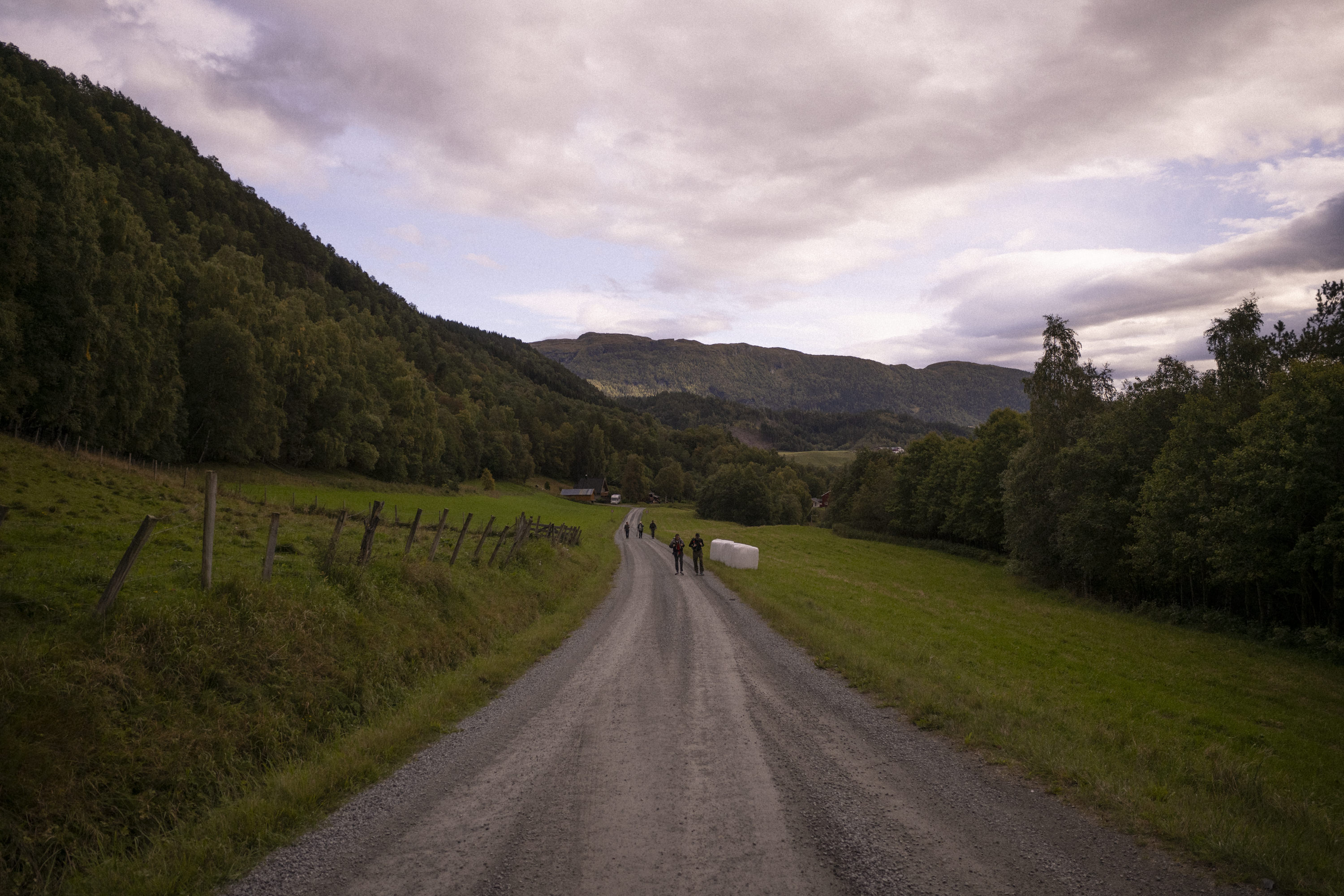
We were walking and talking, Kevin Kelly and me and six other walkers. We walked from Berkåk to Trondheim. 132 kilometers or so in total. We walked the Gudbrandsdalsleden — St Olav’s Way — the old pilgrimage road connecting Oslo to Nidaros (Trondheim’s old name). Closed for nearly 450 years after Norway went Lutheran and the cult of saints was suppressed. Fellow walker and photographer Julien Balmer — Swiss in passport but Norwegian in mountain cabin ownership — alerted us to its existence and graciously organized hotels and farms and luggage forwarding.
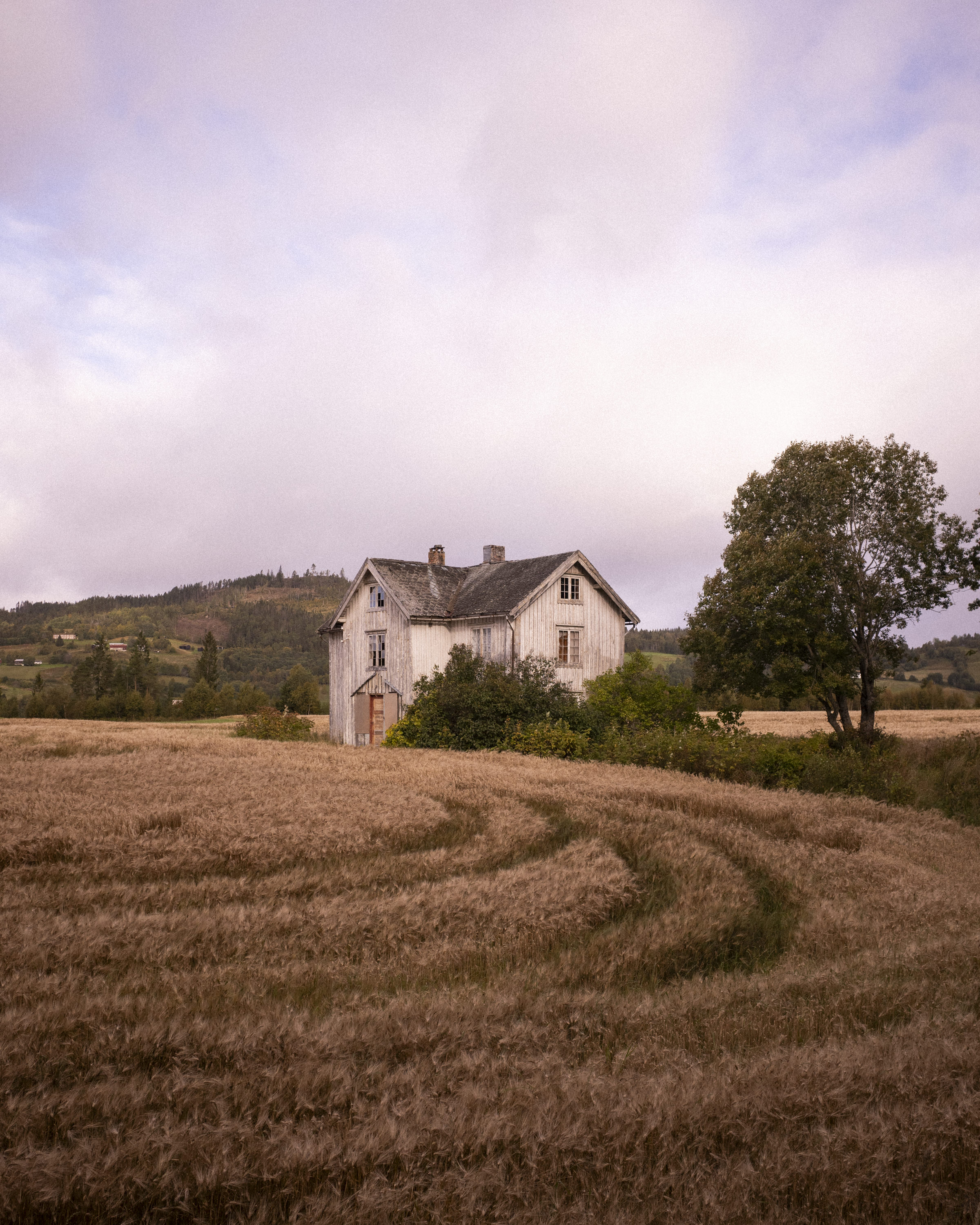
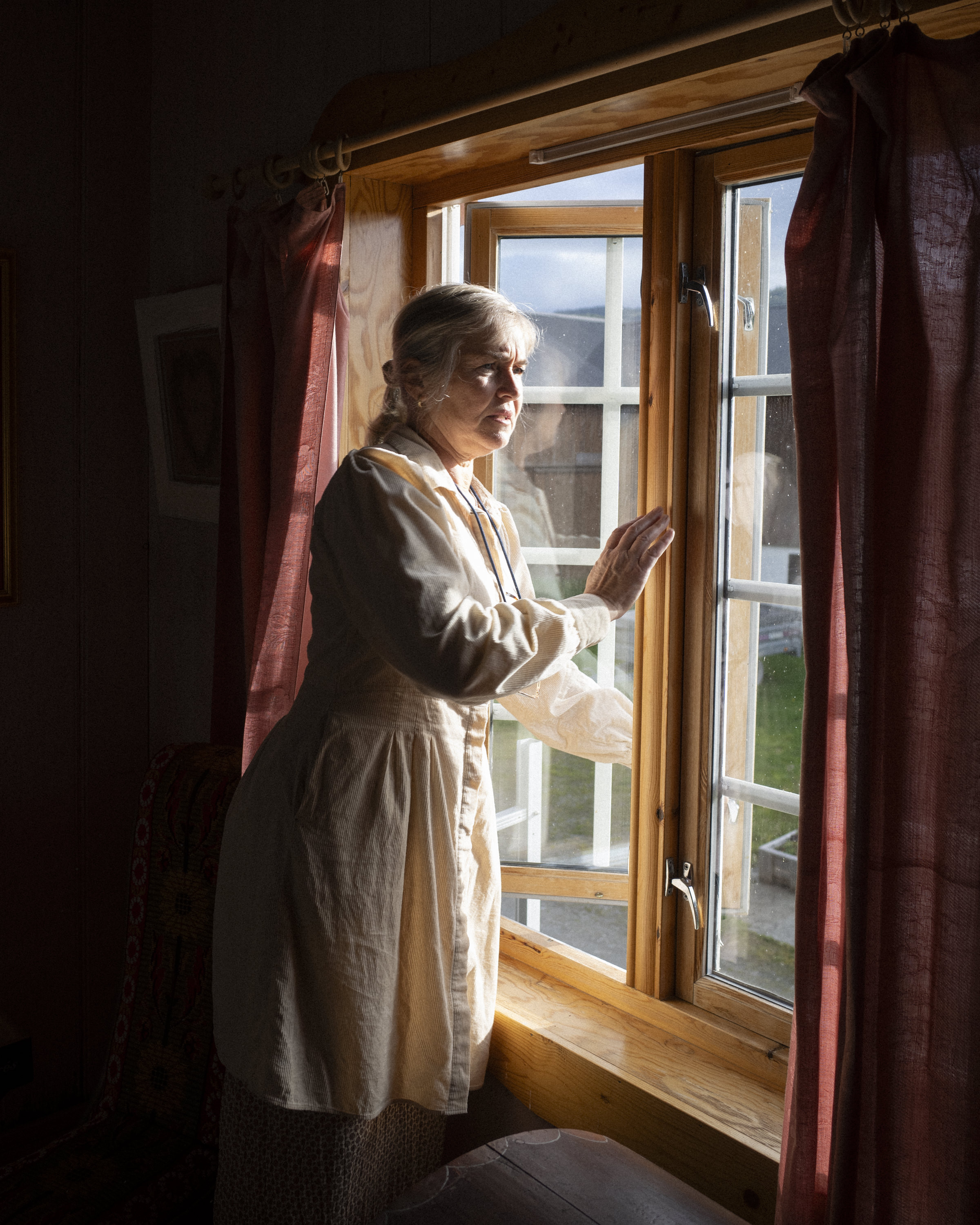
Of all the places on the pilgrimage, I loved the farms. We stayed at two. One had the bench bed. The other felt like a ghost could appear at any moment. The ghost farm was run by a beautiful woman who may have lived on the property for five thousand years. She could have seen and seduced Vikings and then chopped them up and fed them to her dogs. She was strong and funny and her house was full of doors and fireplaces large enough for a human body. The fish stew dinner was exactly what our muscles demanded. How the stairs in her home have not yet resulted in a death, I do not know — they were steeper than those you find in an old Japanese house. And boy, those are steep.
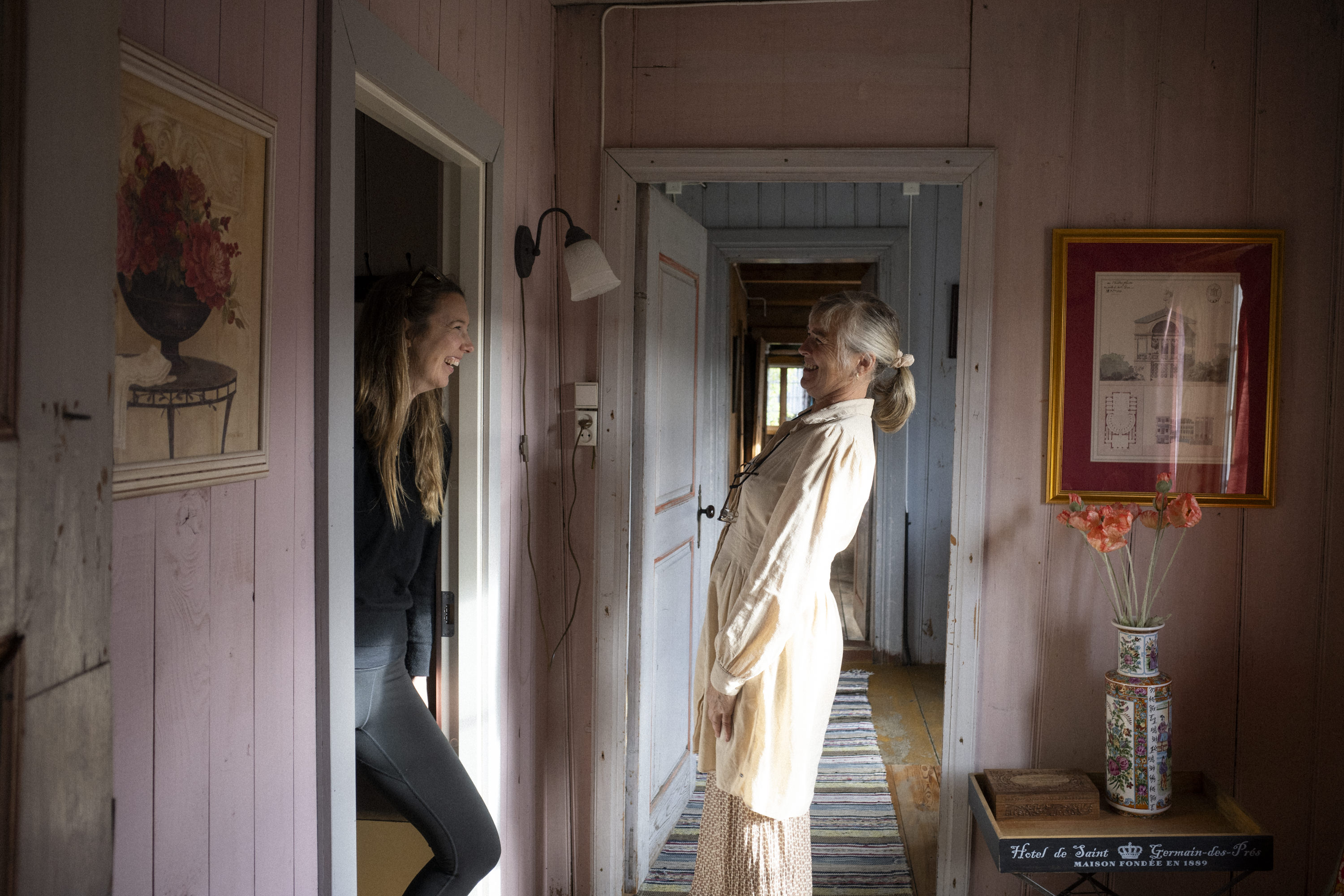
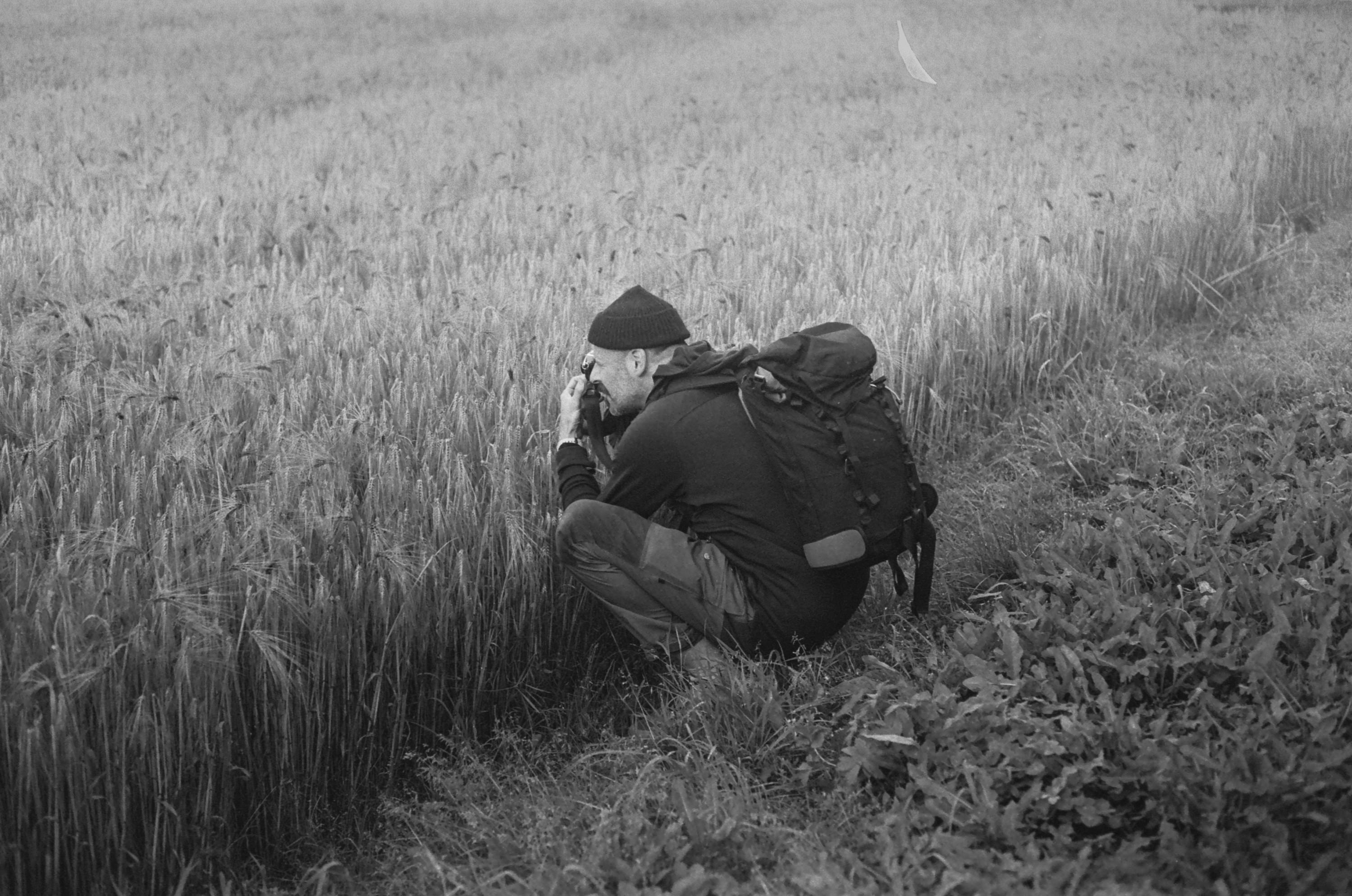
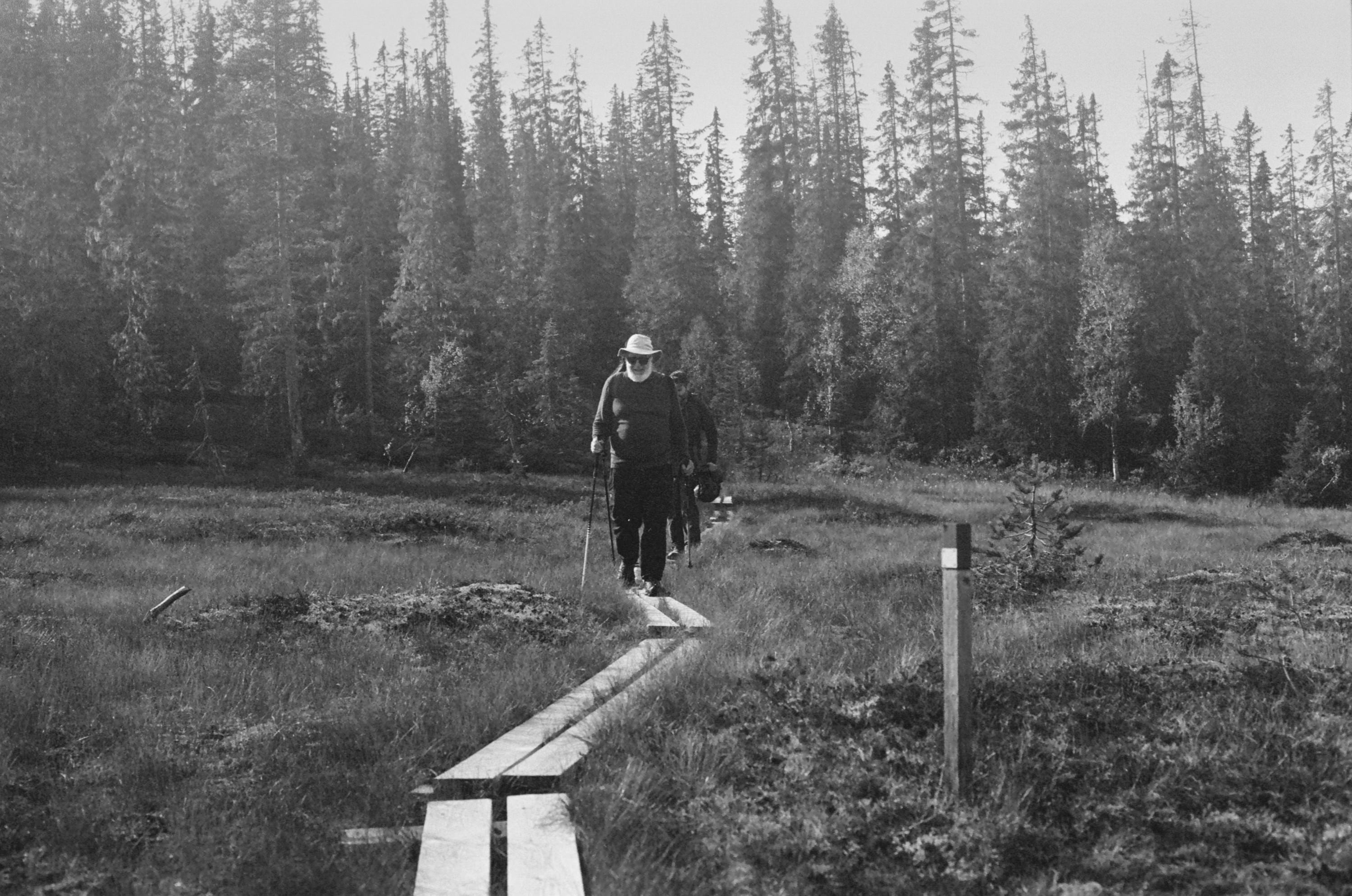
The old road was mostly pleasant. A lot of “Norwegian flat” — ha ha ha — as the Norwegians said, always chuckling. There was a lot of chuckling, dry chuckling. I love the dryness of Norwegians, if not the absence of dryness up in the mountains. They were strangely swampy, the mountain paths. Not quite lose-your-leg boggy (as it was in parts of Wainwright’s), but certainly soak-your-feet swampy.
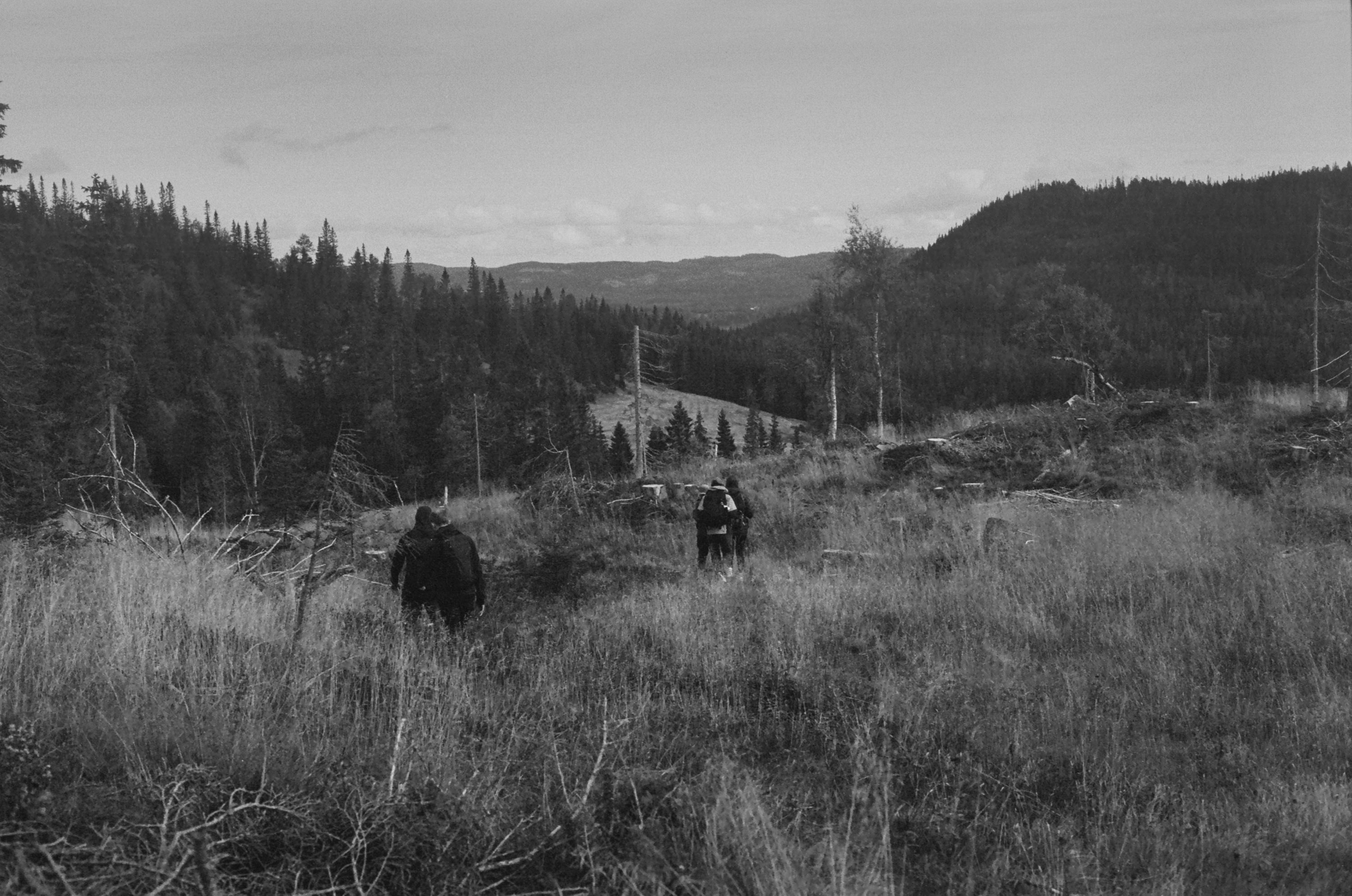
Some days we followed the Orkla River. We followed it all the way to the Orkdalsfjorden. What’s a fjord? “A fjord is a long, deep, narrow inlet of the sea that extends far inland, typically carved into a U-shaped valley by glacial erosion and then flooded by the sea.” Basically, think of the Grand Canyon’s Colorado River suddenly emptying into the sea, while still surrounded by the Grand Canyon. Something like that. Except if the Grand Canyon had been formed by glacial erosion. You get the idea.
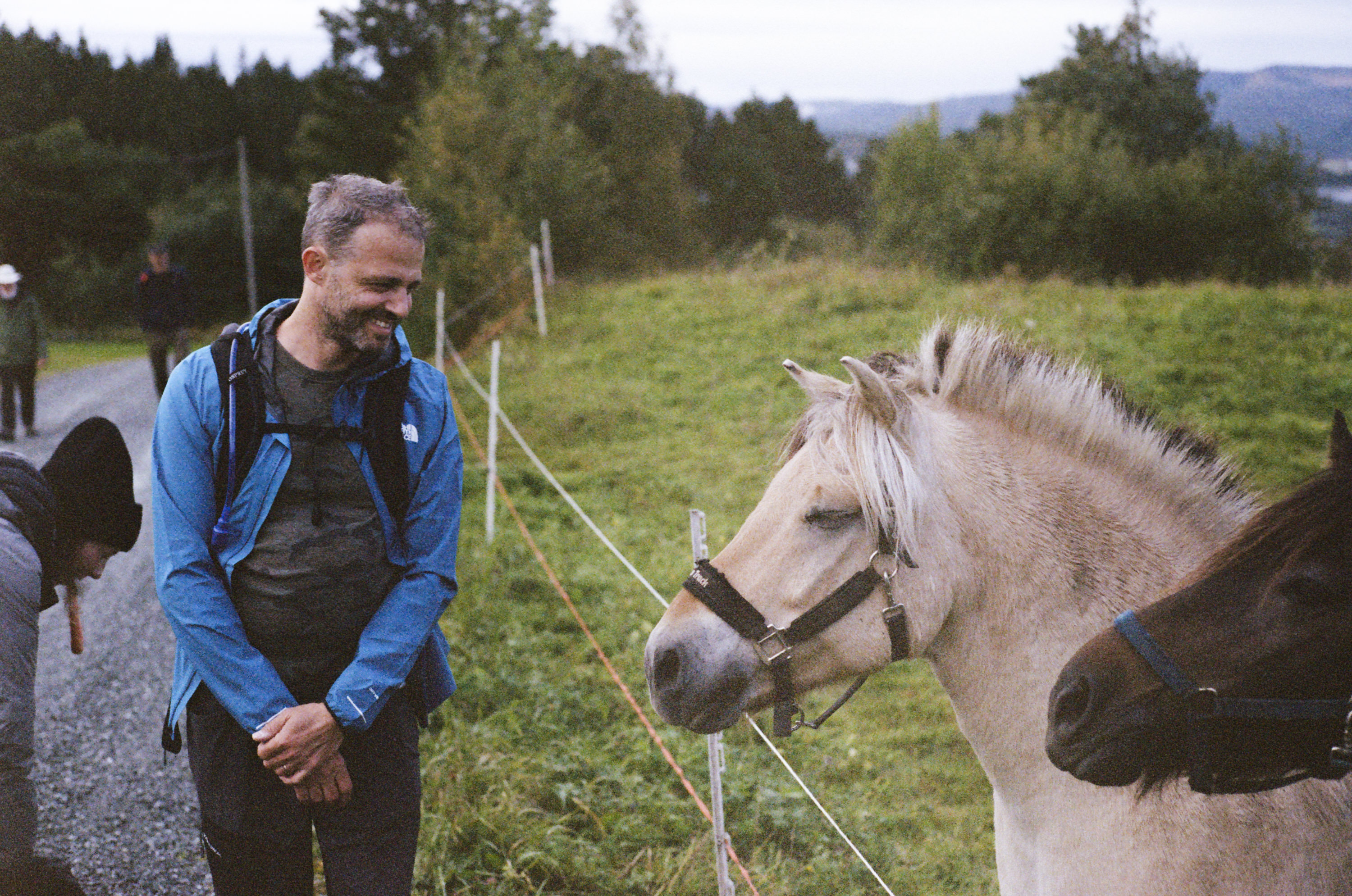
We passed old farms, fields of barley — so many fields of barley, golden and waving and perfectly aligned — next to oxide-red (“rødmaling”) barns and we followed train tracks and fed the random carrot to the random horse. We walked through some striking suburban neighborhoods, which had apparently been built atop the old route. We visited every supermarket. Every. Single. One. All in all, the walking was excellent. Maybe a touch too much road, but when the talkin’s good, you hardly notice.
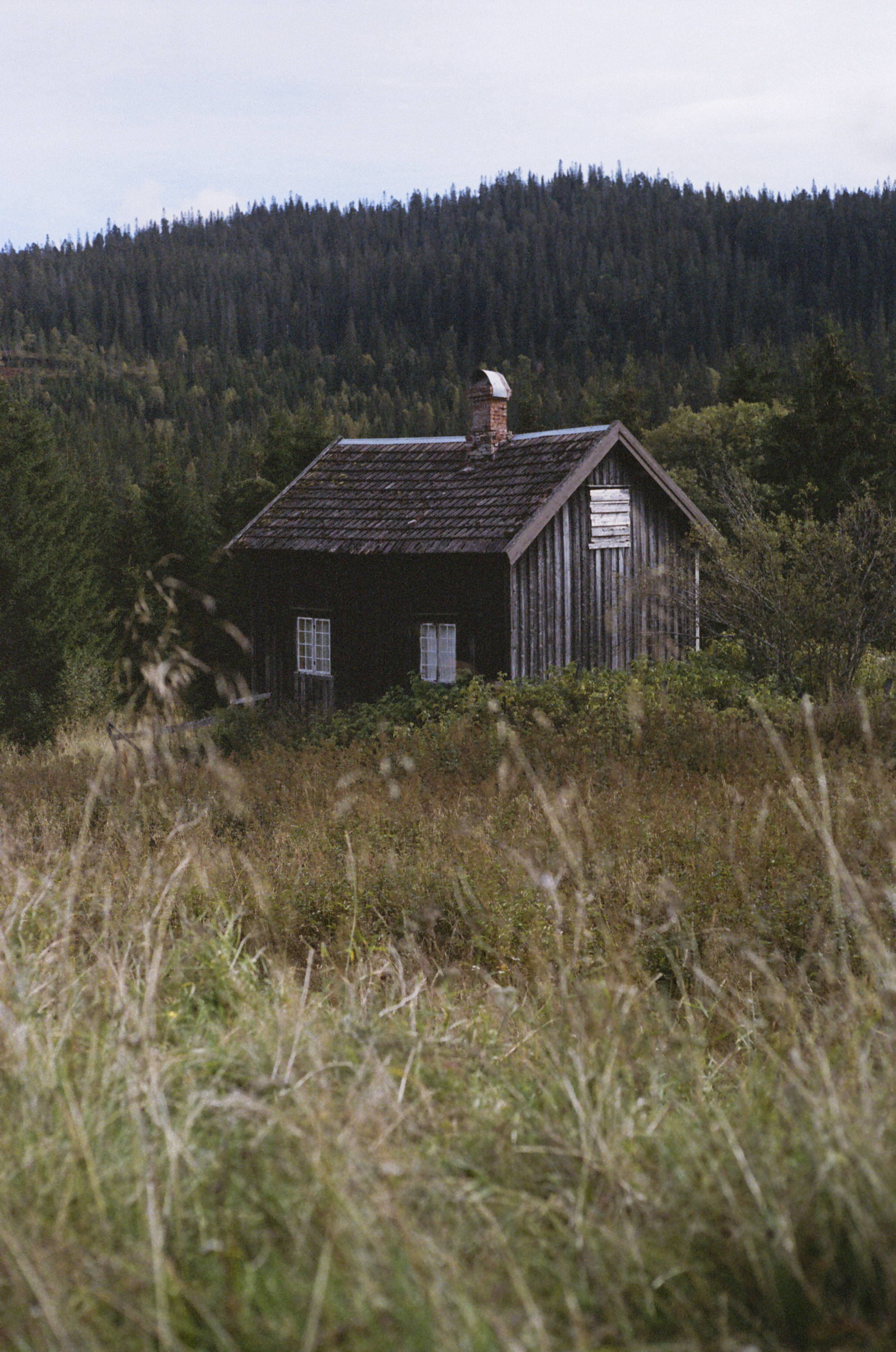
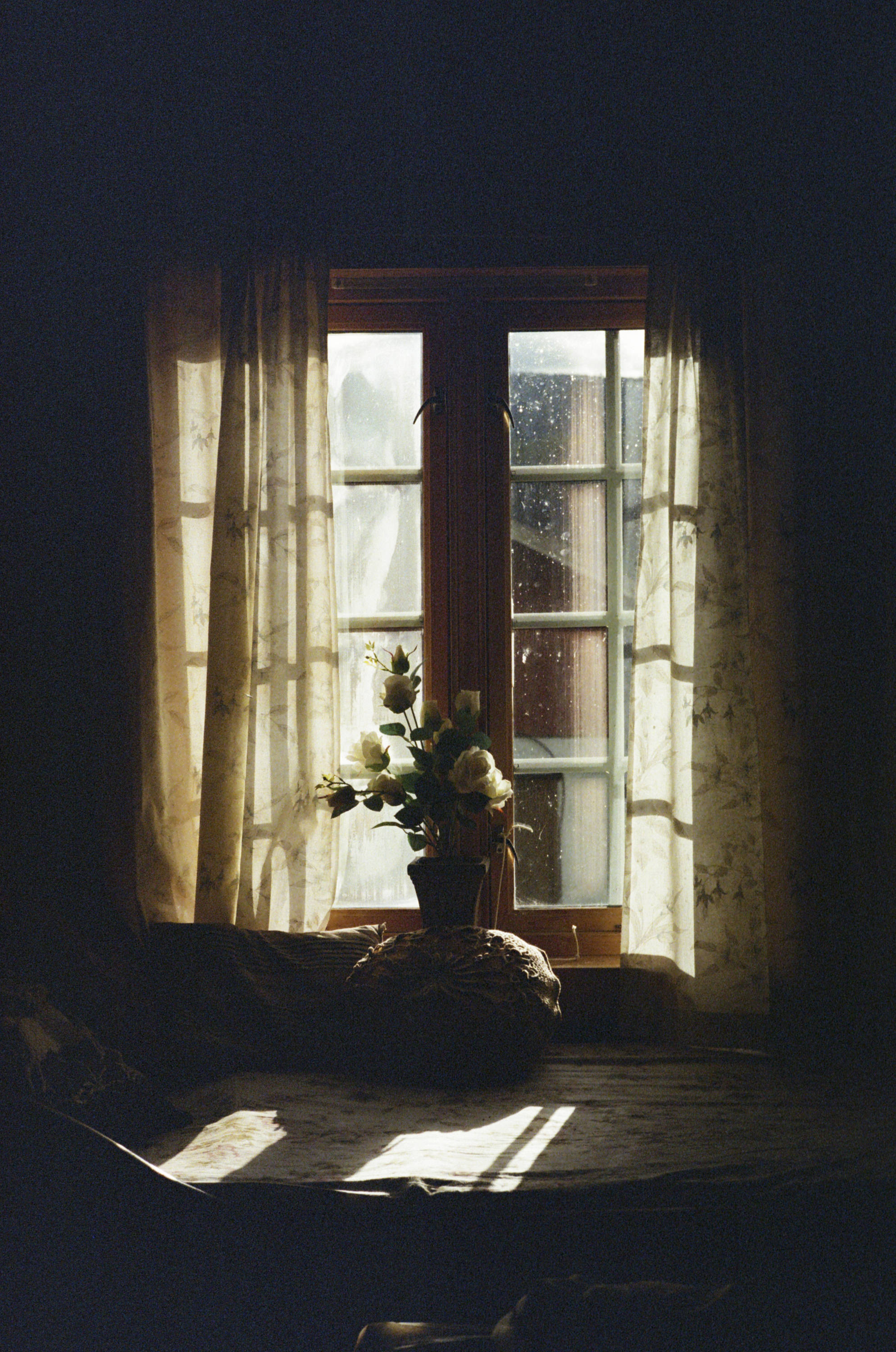
Speaking of which: the evening discussions.
We talked about where we live and why we live there, how we ended up where we ended up. Would we move in the future? Perhaps!
We talked about what we’d need to change to be more optimistic about the future. It reminded me of a conversation we had in Spain with Seth Godin in 2025, about optimism as a tool which can be applied to situations, rather than an explicit mindset.
We pondered if another “Renaissance” of art was possible. What would it entail, how would it manifest, are we (actually) already living in one? What if the world was filled with more art, art everywhere? I spent a few days in the heart of Paris shortly after Norway and it made me think: Huh, Paris is basically that, no? It’s so beautiful, just beauty atop beauty atop beauty. Everywhere you look, gorgeous light and stone and blue-grey zinc-clad mansard roofs, studded with dormers and ridges. Good god, the eye, it delights endlessly when scanning the Paris cityscape. Is there a prettier city? So why only one? Why not more like this? What’s the trade?
The question of abundant art also made us consider over-abundance as the death of delight — if everything is baroquely and expertly decorated, can anything be enjoyed? If every city were Paris, would we simply forget? How many drops of poison are required to amplify delight?
We talked about “profound” media experiences. As in, which pieces of media had an outsized effect on your brain or life? I brought up the 1990s demo scene at large. 2nd Reality, Future Crew — these strange programming-related pieces of media (and indeed they are “media;” music video hosannas to code) inspired me to dig into that scene. A scene where I made connections, connections that enabled me to find a strong foothold outside my hometown, connections that got me internships in California in the summers after I graduated from high school. I’m not sure any other “piece of media” had quite the effect of pushing me so far from home, so fast. When I was seventeen I read Sandra Cisneros’ The House on Mango Street which also knocked something fundamental and critical loose in my brain. Edward Tufte’s books, too, given to me by my boss at one of those internships, inhaled over a weekend when I was nineteen. A couple of us mentioned Annie, of course.
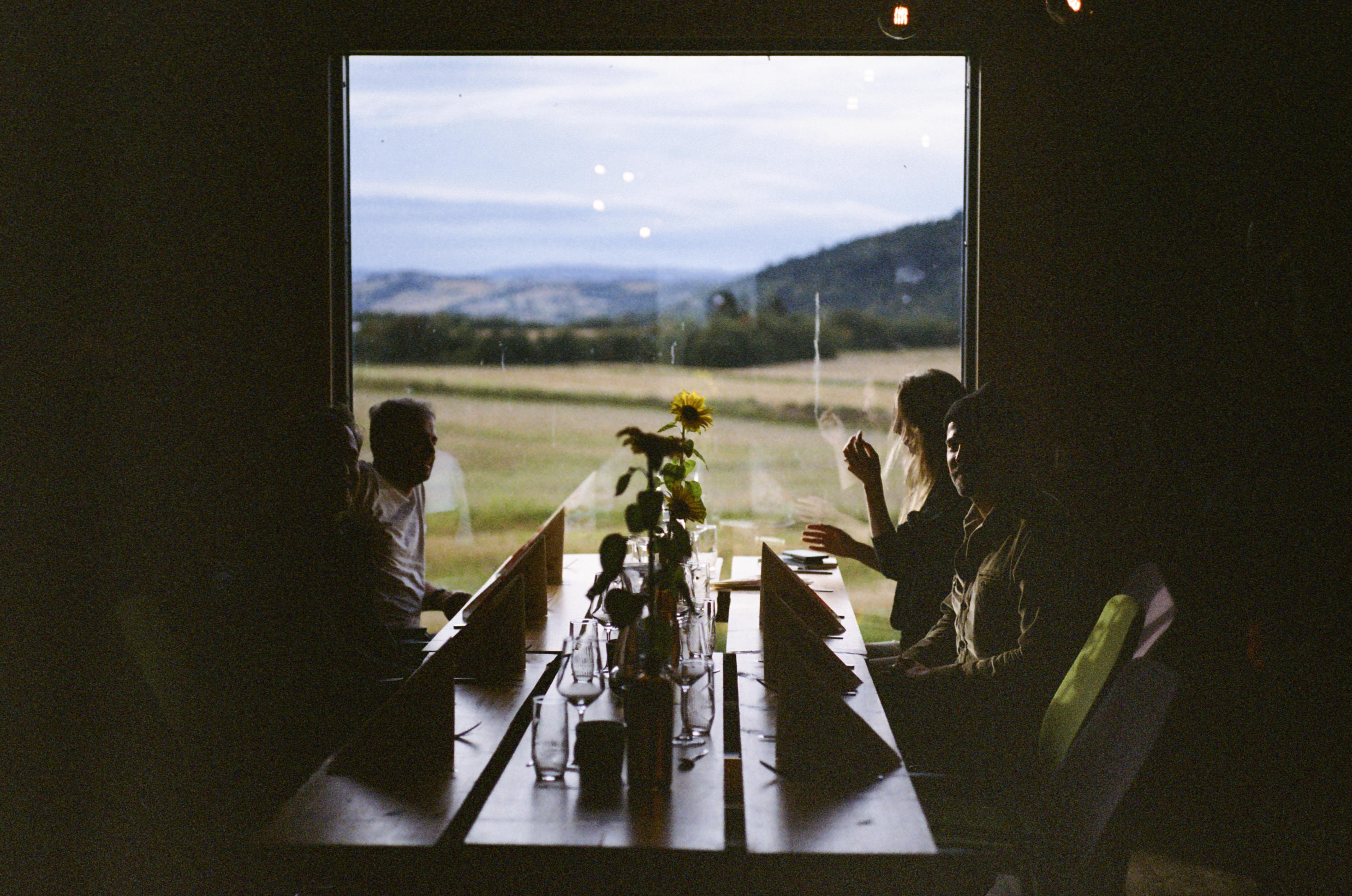
We made note of how strange it is to obsess about “audience” today because so-called audience feels smeared across every digital surface like butter. It’s just there: audience. I’m not sure writers or artists or photographers in the ’50s or ’60s or ’70s or ’80s or ’90s talked about audience in quite the same way we do now; certainly writers were not expected to “bring” one (an audience) with them if they were picked up by a big publisher.
We discussed “a perfect day” or what a “great day” looks like. One of the walkers outlined his sparkling water routine: expertly sequenced from morning to night for maximum delight. This was not a joke. He was deadly serious about bubbles. I chopped great days by decade: 0–10, 10–20, 20–30, thinking in broad strokes about what made a great day in each of those frames. Performing, making, building were big parts of 0–20, and travel, I realized, was a core part of my 20s. A great day at twenty-six was backpacking in Tibet and writing a poem while experiencing altitude sickness. Today, a great day is a quiet one, going deep on a piece of writing. “Be regular and orderly in your life, so that you may be violent and original in your work,” as the old Flaubert line goes; “regular” days feel great to me now.
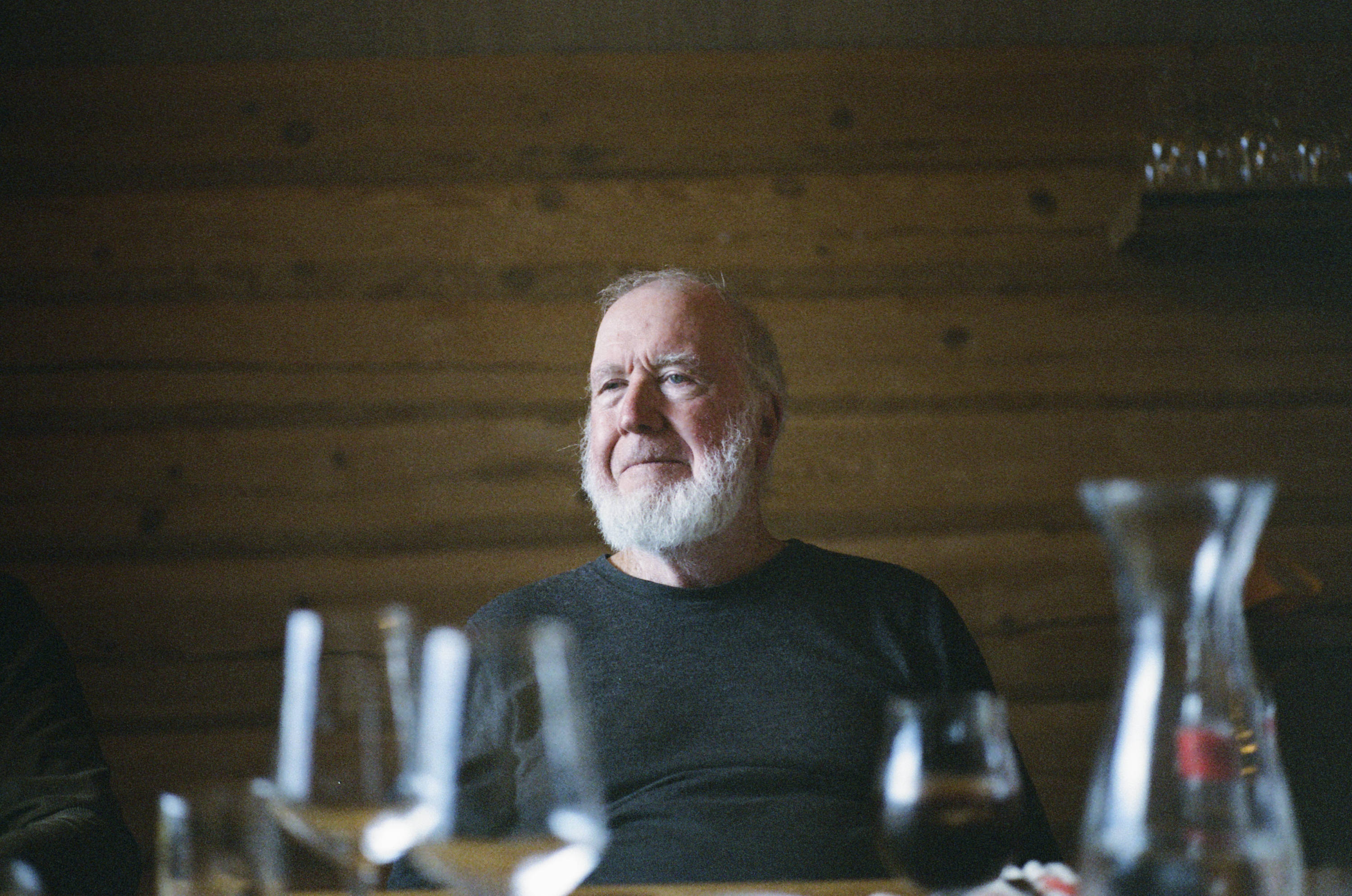
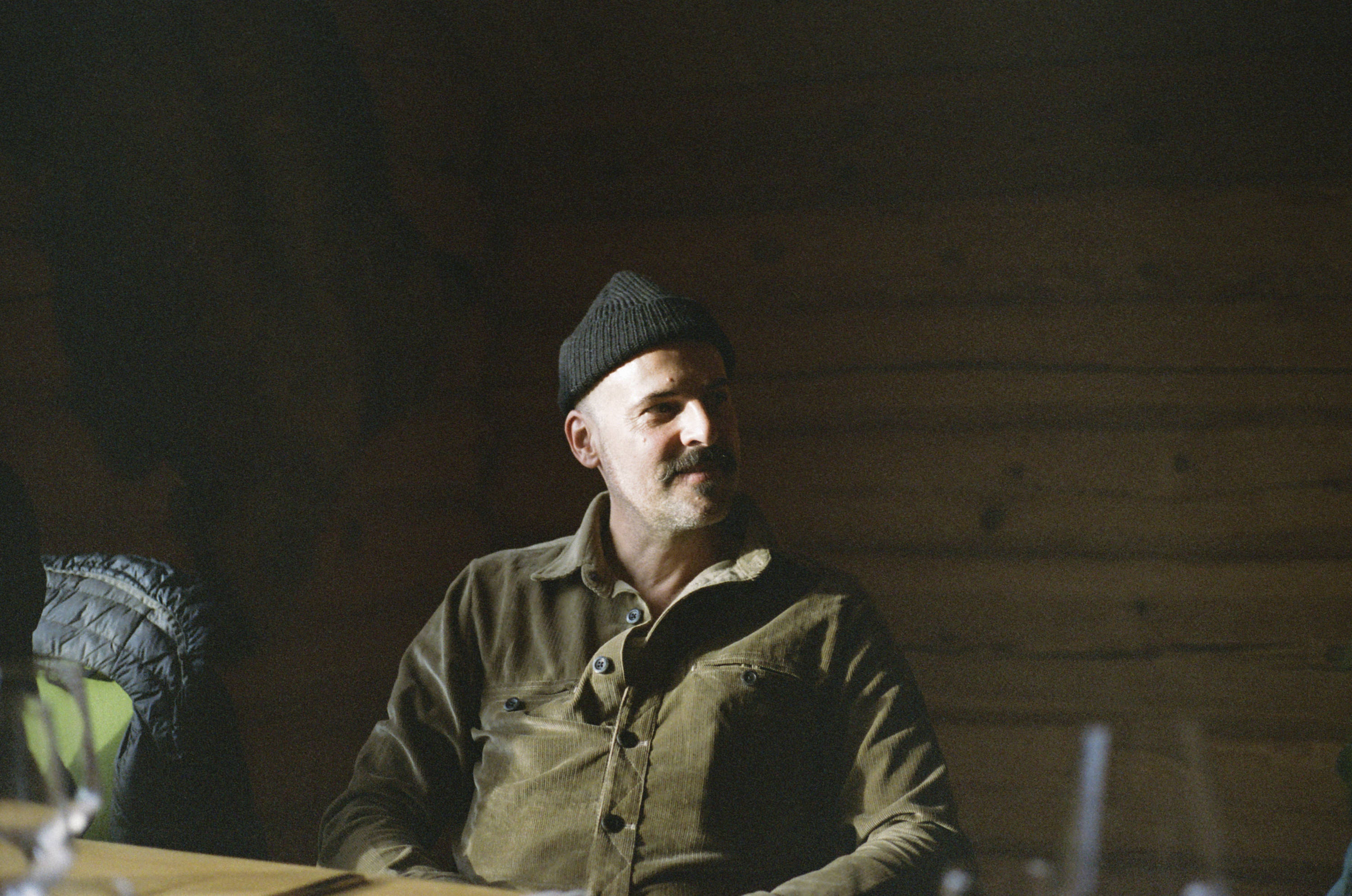
The last dinner was simply: Tell us your best story. Which is what all evening discussions aspire to — the best nights, the best answers, almost always involve a good story. So why not ask for that? Turns out we never had. We got good ones, stories about spies and adventures and births and parents and learning how to drive and Shuggie Otis and backpacking with 500 rolls of film.
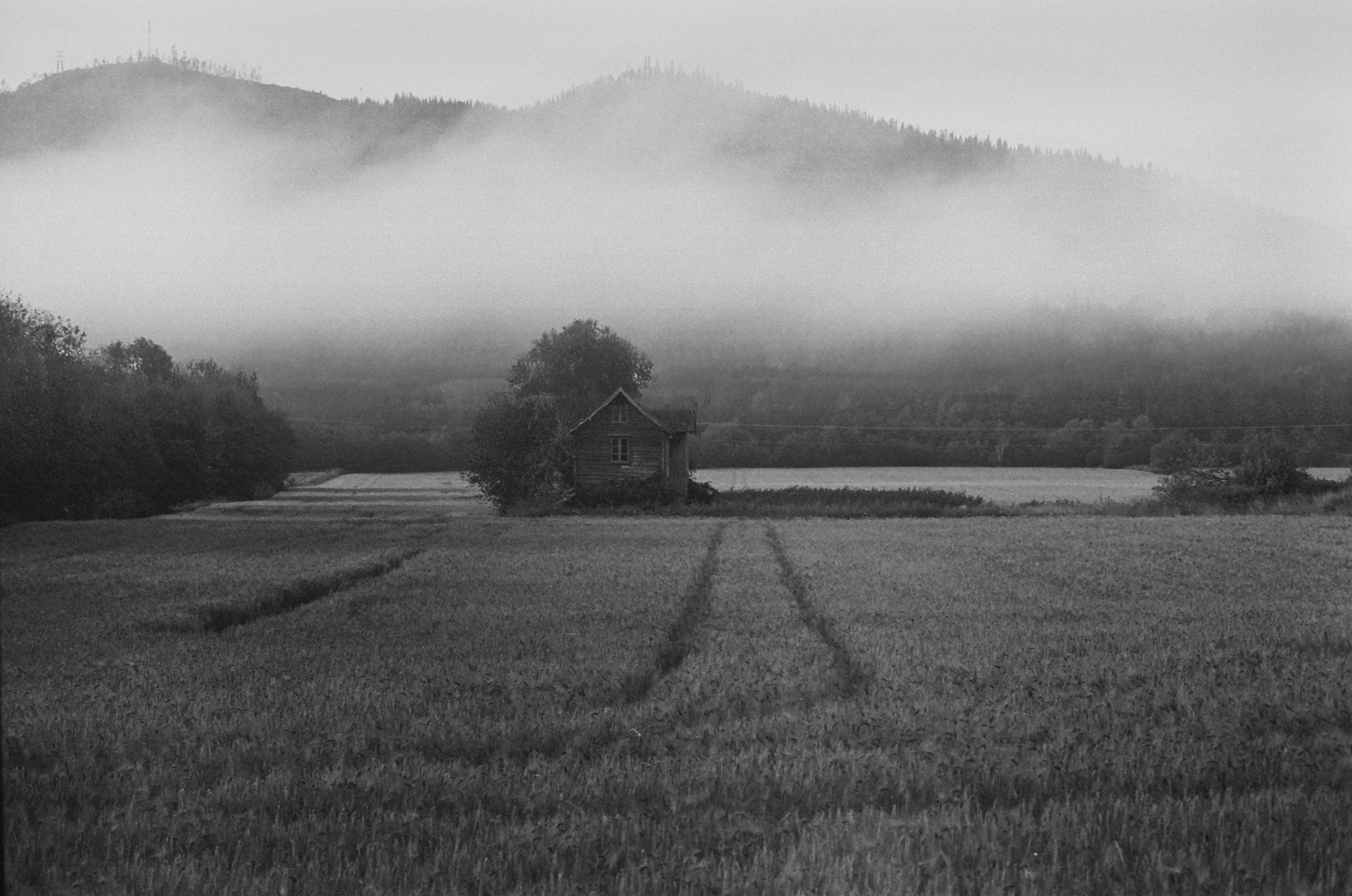
As expected, the walk finished and my brain felt squeezed dry. I do more talking during these weeks than I do in an average quarter. So by day seven, my introverted soul is battered, but my heart is full. Spending a week with seven or eight inspired people and watching their personalities and quirks and kindnesses unfold each day, that does something good to your noggin. By the end, you’re bigger, and you hope everyone else feels similarly.
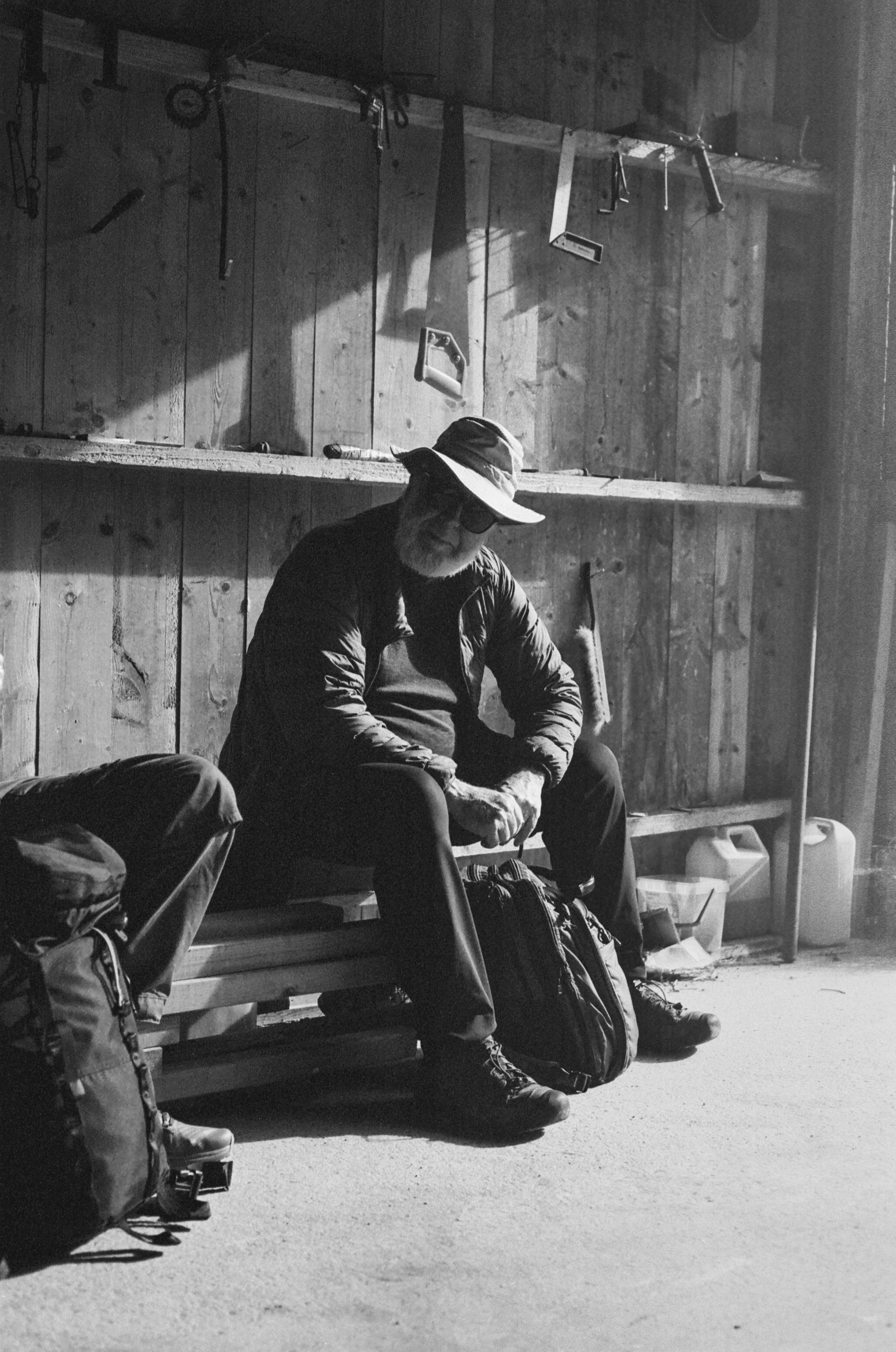
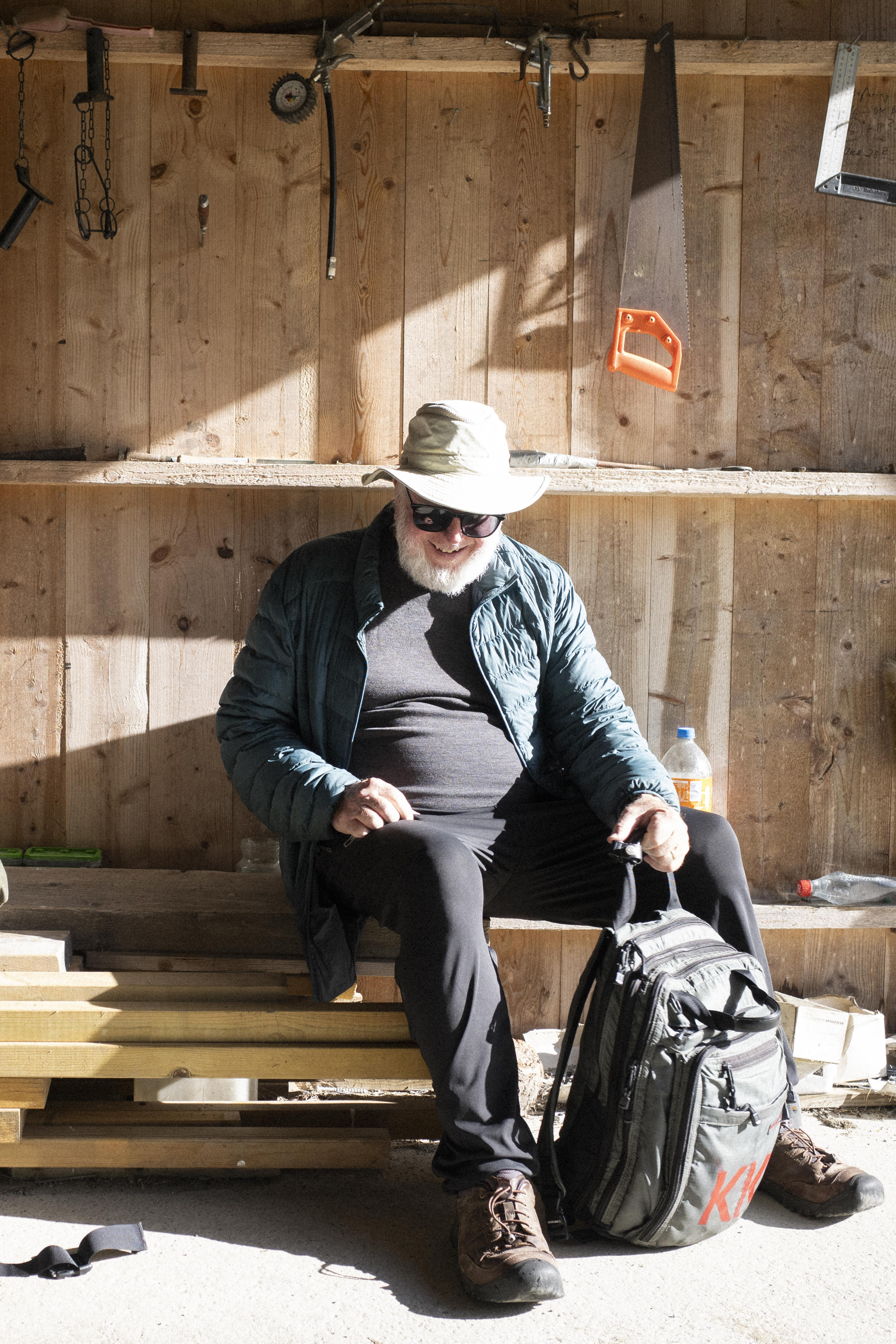
So go walk the Gudbrandsdalsleden. Oddly, though it ends at Nidaros Cathedral, do not expect a Santiago-style arrival with huge groups of other walkers and the shared sense of accomplishment among strangers. The finishing point felt abandoned. The cathedral, insanely, closes at two in the afternoon, which means you’ll almost certainly arrive to find it shut. Which is a shame, because it’s gorgeous. Built over the grave of Olav Haraldsson, finished around 1300, it’s the largest medieval building in Scandinavia, and the northernmost medieval cathedral in the world (though much of what you see today was rebuilt in the 18th and 19th centuries). Stay an extra day and go inside, it’s worth it. And Trondheim is, as they say, a gem.
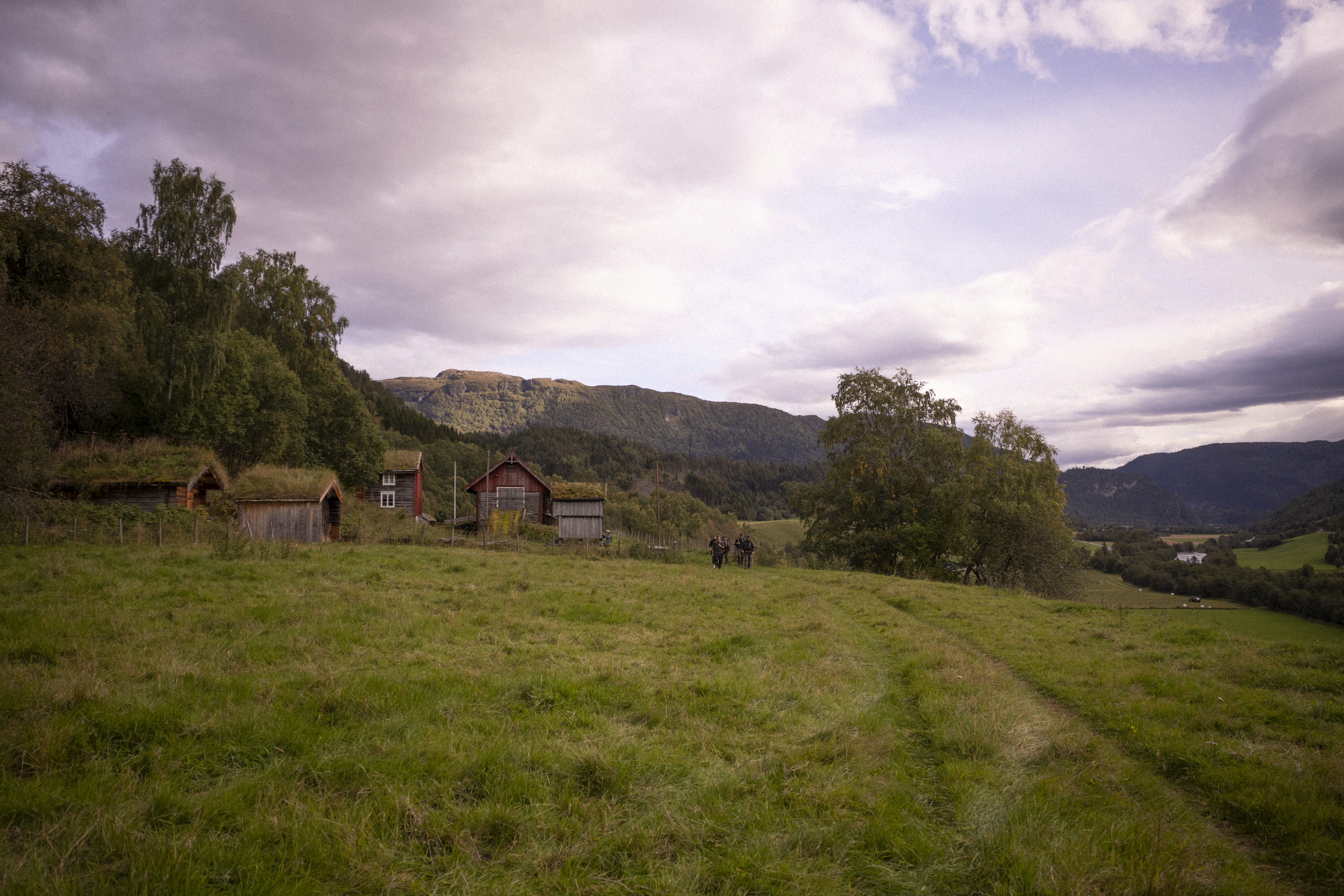
If you’re looking for a tourist-free walk (we saw zero (0) other people walking the pilgrimage route as “pilgrims” (we saw a bunch of locals walking their dogs)) through a landscape of dewy greenery and bronze barley, in a country full of dry-humored farmers, this is the walk for you. Reindeer meat and fish paste and all. Just beware: You may find yourself sleeping in a bench.
C
Not subscribed to Ridgeline?
(A weekly letter on walking in Japan)
This essay is from the Ridgeline newsletter, mailed out September, 2026. Thoughts? Email me@craigmod.com.

Craig Mod is a writer and photographer based in Japan. He's the author of the books Things Become Other Things and Kissa by Kissa and is a MacDowell, Ragdale, and VCCA writing fellow. His essays and articles have appeared in The New York Times, Eater, The Atlantic, California Sunday Magazine, Wired, Aeon, New Scientist, Virginia Quarterly Review, The New Yorker, The Morning News, Codex: Journal of Typography, and elsewhere.
He writes newsletters, oh yes, newsletters: Roden & Ridgeline.
The work on this site is supported 100% by paid memberships and book & print sales.
Whatever you do, don't follow @craigmod on Bluesky or Instagram.