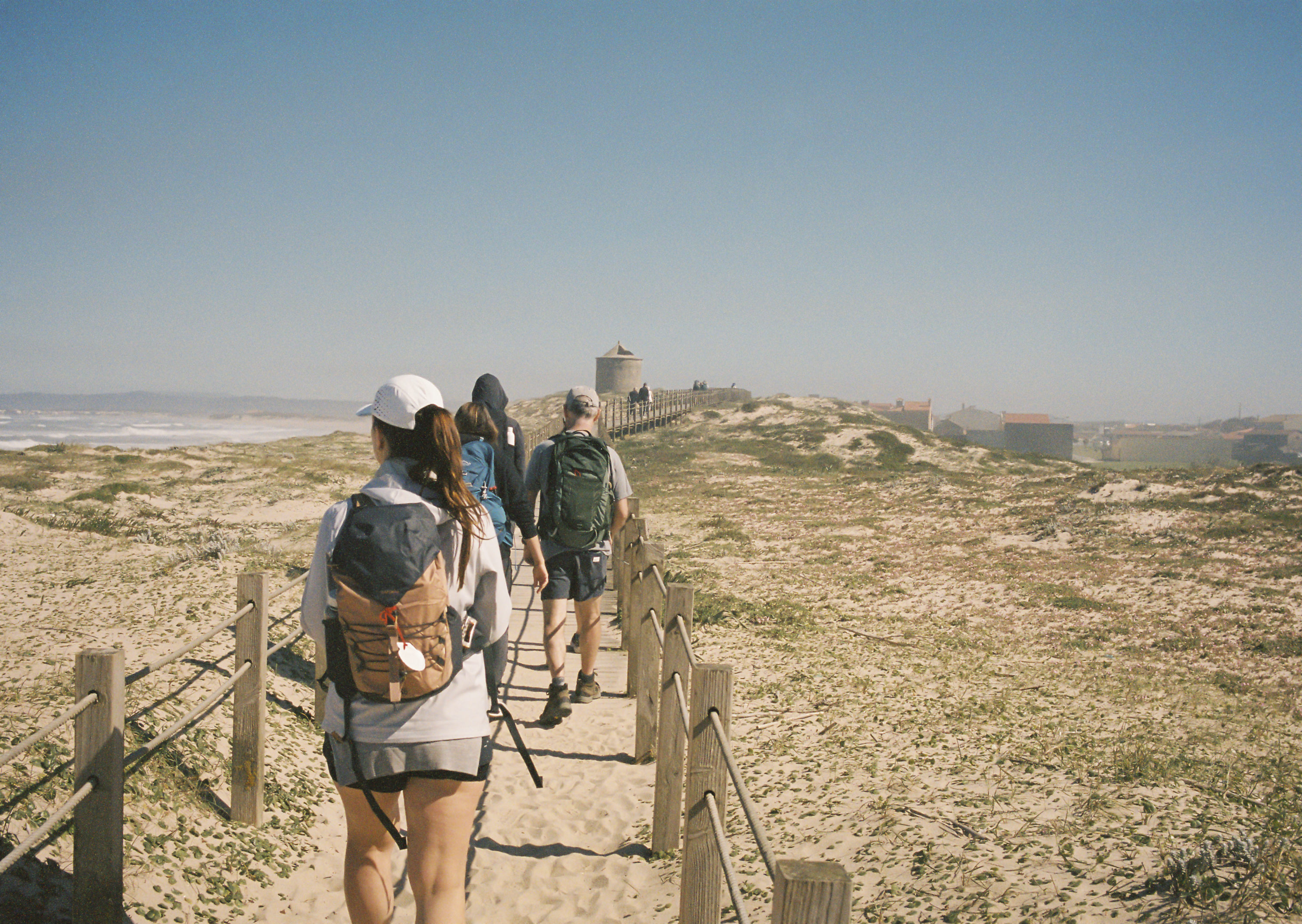
Walk and Talk — The Portuguese Coastal Camino
Walking 136km up the coast of Portugal and into Spain
Ridgeline Transmission 226
Ridgeline subscribers —
We were lucky. Maybe the luckiest group walking the Portuguese coastal Camino. (Certainly the second luckiest.) All the things conspired in our favor: The weather, the food, the quality of the path (lots of great seaside boardwalk walking for miles and miles), the kind old café owners who suffered our group’s order-chaos with inspired equanimity.
A Walk and Talk was afoot. Kevin and I have run a bunch of these things now. We’ve walked:
- China
- Thailand
- Bali
- England (2x) (3x if you count my Wainright Coast to Coast walk with a different buddy)
- the last 110 kilometers of the Camino Frances, and the Portuguese camino from Tui to Santiago
- and, Japan, just last December along the Kiso-ji, and the Kii Peninsula before that, and the Kumano Kodō before that, and just the two of us on the Nakasendō before that
This time it was from Porto, that lovely city that all the Portuguese have told me has changed so dramatically in the last decade. I was told so many times — by basically everyone I met — how the streets I was walking would have been avoided at all costs just a few years ago, that the drug issues were rampant, but now they (the once-dangerous streets) were bustling with travelers and one could find a “flat white” within a hundred meters of wherever you might be.
On a whim, and in an effort to “be kind” to myself (one of this year’s “major themes”), I splurged on a fancy hotel for the first two (!!) nights (I arrived the first night to the hotel at 11pm; they graciously allowed me to check out two days later at 5pm). The Largo. It was exceptional. Through and through. I had room XIX with windows looking out over the city towards and beyond the river. Every single detail, light switch, element of the hotel was precisely and caringly dialed in. The hotel staff member that picked me up at the airport was bar none the best driver of any car I’ve ever been in. It was like the Dalai Lama himself was carefully ferrying some newly produced CERN anti-matter to a mission-critical storage facility. I felt like anti-matter. I felt like my brain had been scooped out and placed in a paper cup. Like it was trying to crawl its way back to the big bang. I had been traveling for some twenty-four+ hours at that point.
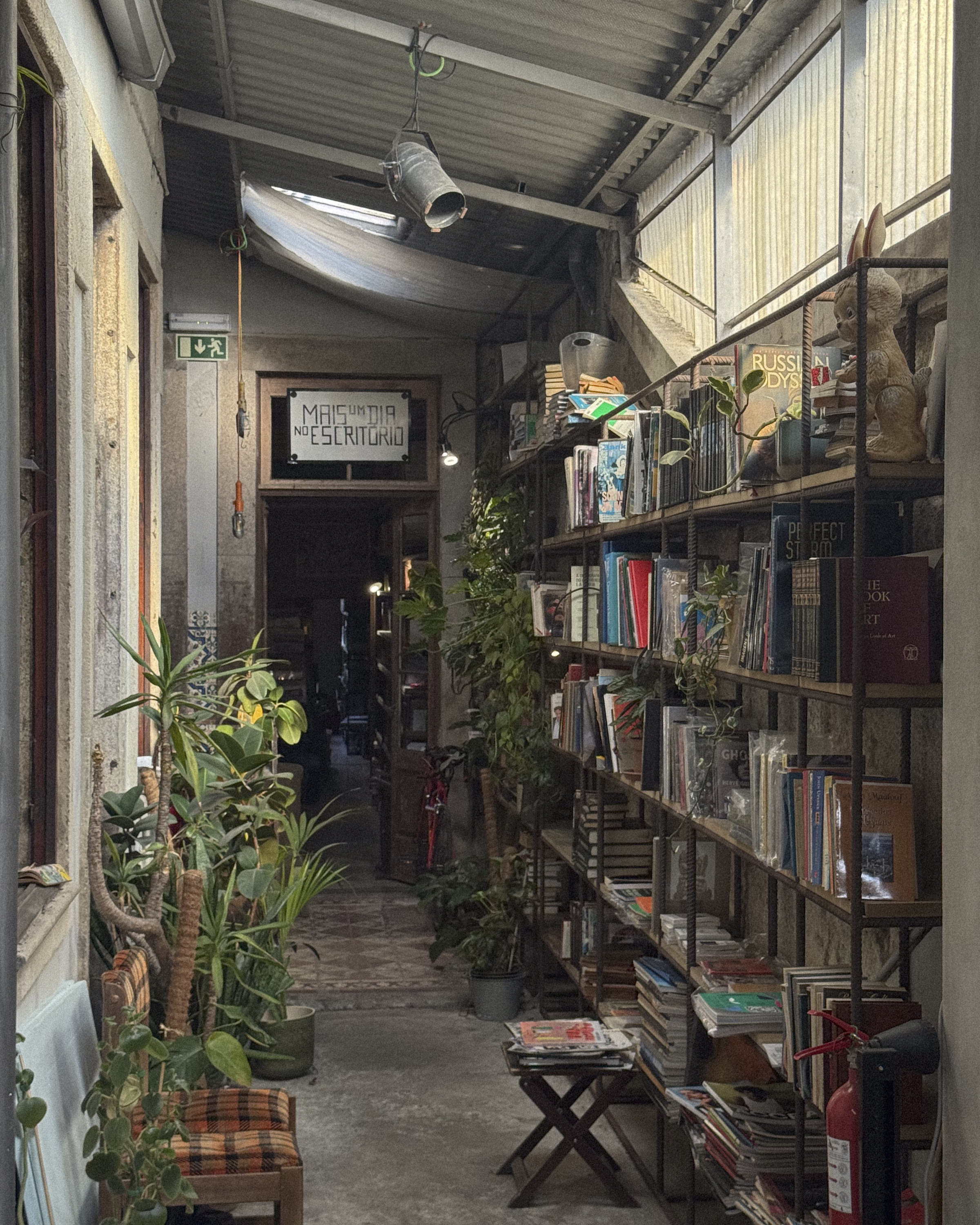
Anyway, yes, the hotel was great and delicious and the big breakfasts outside looking over the city were fully chefs-kissable; all of it a sign of more greatness to come. Termita, a bookstore, was dripping with dank houseplant vibes and housed a large collection of photography books and a gentle-hearted owner. (I skipped Lello because the thought of paying an entry fee to get into a bookstore that seems to exist mainly for selfies makes me sad.) The coffee at SO and Combi, delicious. Vivian Maier was on exhibit; I annoyingly didn’t have the energy to check it out. I knew the week of Walking & Talking was going to take all the social energy I had, so my time in Porto, really, was mostly given to beating jet lag and recharging, reading, eating a few delicious meals, and pounding the system with coffee and sunshine. I wish I had had another week in the city.
And so we started walking, 136 kilometers from Porto to Cape Selleiro Lighthouse (with a five minute border-crossing-by-boat to Spain thrown in the middle), then driving to Santiago on Easter Sunday morning.
In order to keep the first day from cresting thirty kilometers, and thus traumatizing our group of eight (thirty is a lot to ask of folks on day one), we took a bus out of the city and began at Agudela. From there, beautiful seaside boardwalks, up and up and up towards a hotel in Povoa. The towns were all quaint and beautiful, colorful, tiled. We got lucky on the dinners. One of the most difficult tasks in organizing these walk and talks is finding suitable locations for dinner. We need a single table for eight (in the past we used to travel as ten, but it turns out eight is a much easier number to wrangle on almost every aspect of these walks), ideally in a private room, but otherwise in a somewhat quiet space, or at least with minimal background noise. (The real trick is being able to hear a quiet speaker across the long side of the table.) Having that, we eat and talk for a good three+ hours. This is most difficult in the English countryside with its pub culture, cramped rooms, general background mayhem. Japan is one of the easiest because if you have eight or nine people, and are walking the countryside, you’re almost guaranteed to be taking over the whole inn.
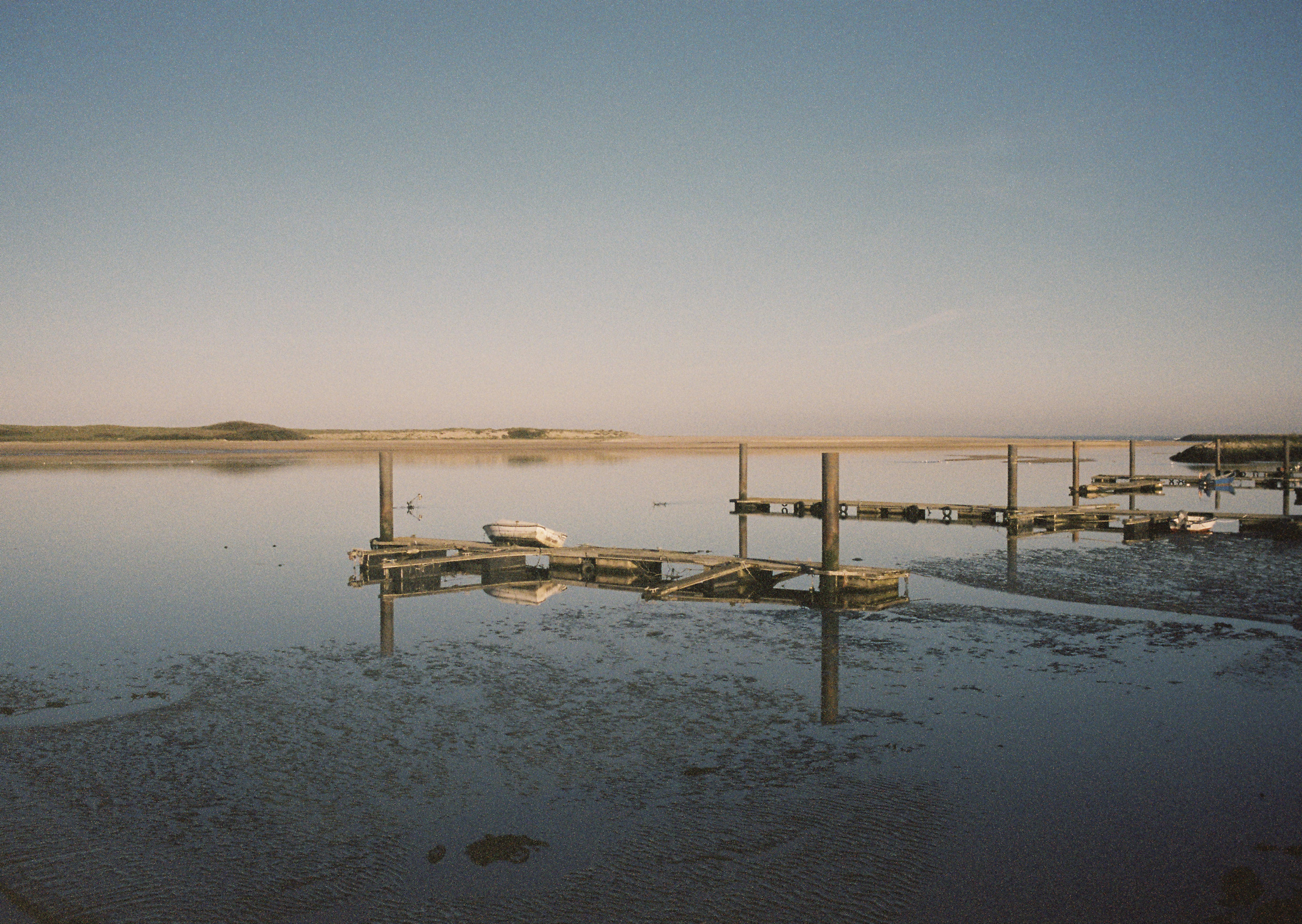
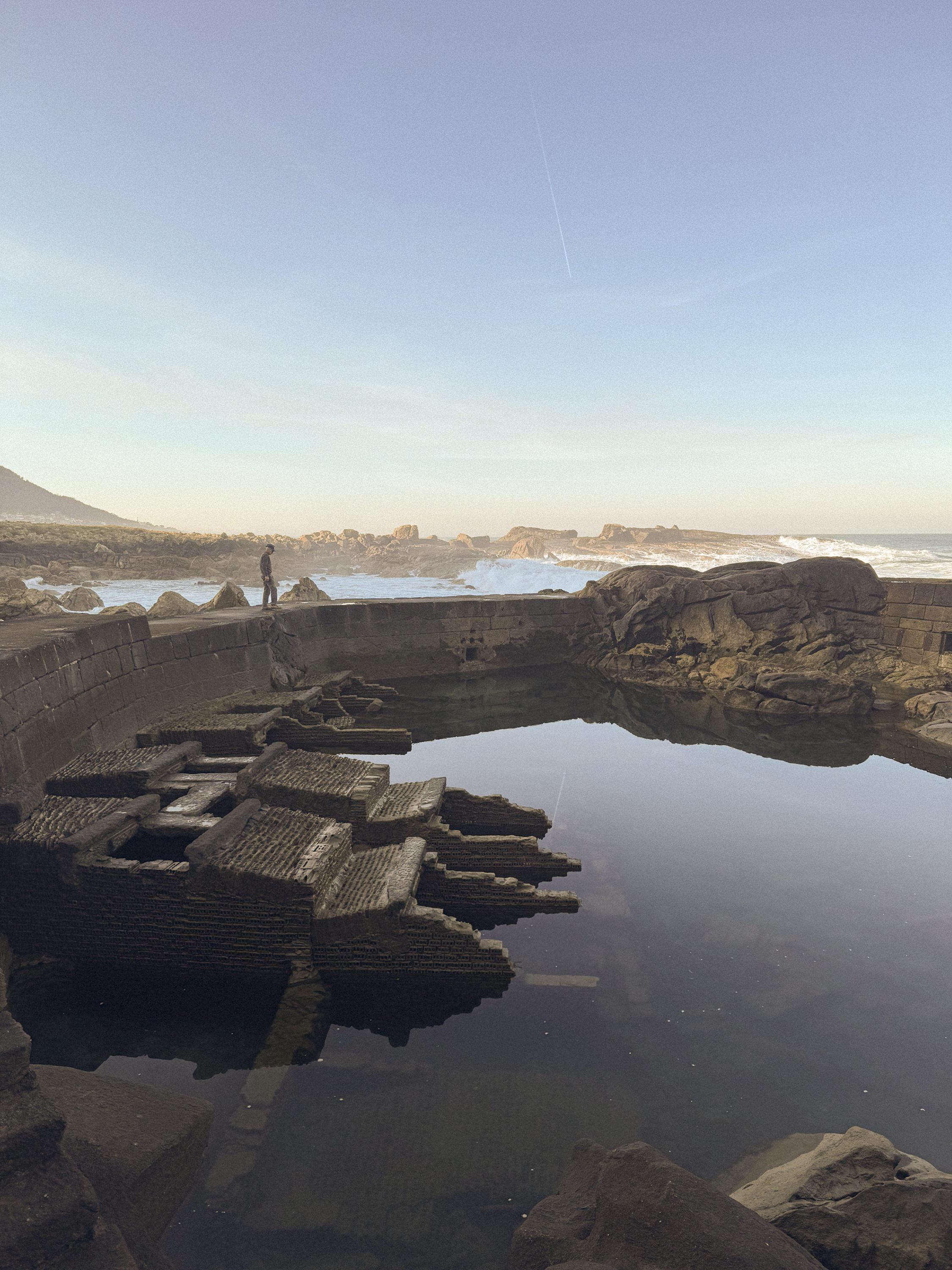
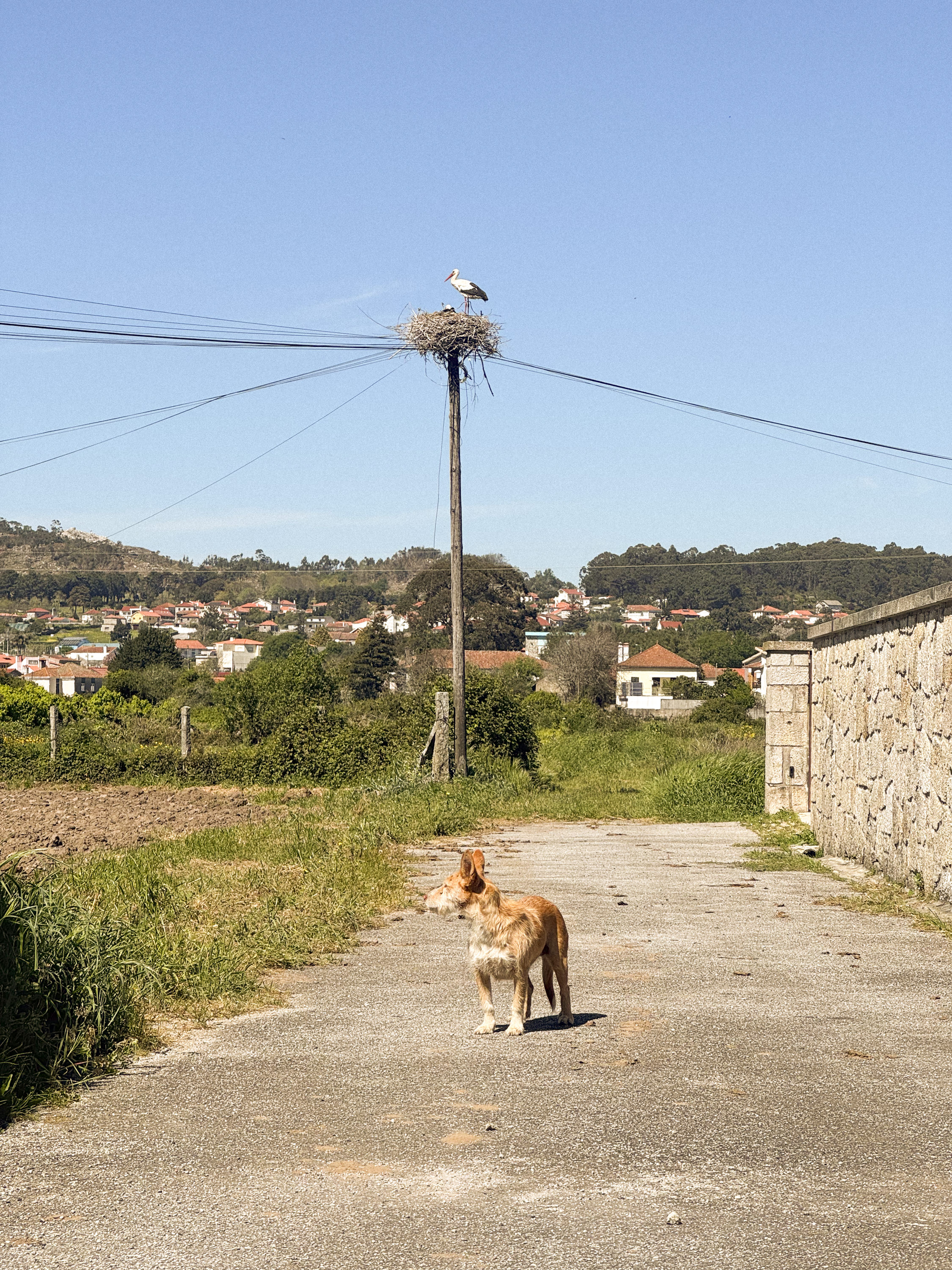
On this Portugal walk, every single day we woke up, opened our shutters, and sang to the heavens: Thank you, dear weather gods! Perfection! Truly, it was. Every single day presented to us an endless, cloudless blue, temperatures in the sane mid-teens to lower-twenties, a gentle breeze (sometimes a little less gentle by the shore). The walk hugged the rugged coast but also skirted towns and villages, went up into the low hillsides, crossed rivers, took us past farms. Between A Guardia and Oia we saw ancient concrete bins, Cetáreas, of alien construction once used to capture sea vermin as high tide retreated. Everyone we met was kind, helpful, patient. There was no feeling of “overtourism” or imposition, the entirety of that northern Portuguese coastline is suffused with pervasive yoyū of the highest quality.
But in Portugal, aside from one night where 150 British (again, those Brits!) high school students descended on the hotel (football camp?) and proceeded to make me think of the limited series, Adolescence, again and again — aside from that one night of chaos so chaotic all you could do was laugh (and switch dining locations three times), we had pretty much ideal talking environments every single night (it didn’t hurt that we were eating at six or seven p.m., an unimaginably early hour for the locals; we called ahead and begged most of the restaurants to open early for us).
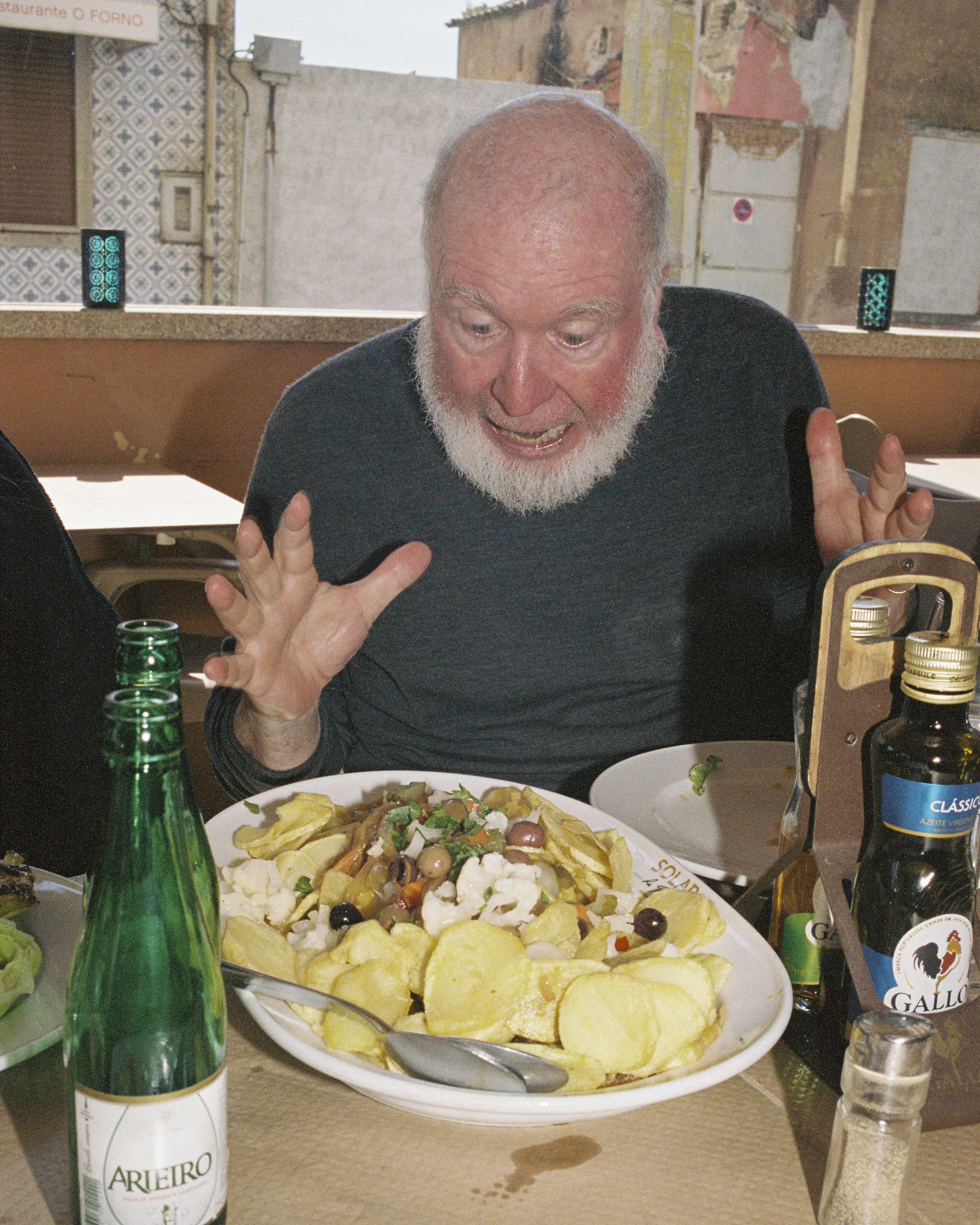
The food was exceptional, if a bit too large. “Single portion” was more like triple portion for mere mortals. After a couple of days of fumbling, we finally dialed in our family style order bedlam, grilled fishes and grilled chickens, duck, clams, scallops, french fries (so many french fries). We ate more deserts in that week than any of us eat in a year. At the end of each day of walking, we’d beeline for the highest rated gelato place before checking into our hotel. I am a mint chip sort of guy. (Sometimes it can taste like Listerine (named after Joseph Lister!), though.)
Many of the early discussions had an air of the macabre to them, maybe it was something in the water or something in the global air or something in the gelato. We talked about what we’d want someone to say at our eulogy (!!) and what we wanted our legacy to be. “He lived the most improbable life!” someone said. We talked about “placefulness” and which places thrill you. I remembered how when I was living in California, I kept the key to my dingy little six-mat tatami room apartment in Tokyo on a shelf in view. Just picking that key up (which I did many times) filled me with a kind of warm-happiness-in-the-gut “coming homeness” that was shocking. It was like holding a magic totem — containing the potential of an entire city, an entire life — that could open a portal into a place my heart always wanted to be. That was pretty powerful placefulness. We talked about what of that we’ve done has had the “biggest impact”. I spoke about Morioka and the New York Times recommendations, of course. Kevin is convinced that his thousand true fans essay (from 2008!!) may be the thing, in the end, he’s most remembered for (certainly most cited for?). We talked about an experience / person / event that had a profound impact on us before the age of 18 (pre-18 because you are probably not yet self-aware enough to understand that the thing is shaping you, and only in hindsight can you see the effect). For my, my adoption certificate looms large as an object, a story, that profoundly knocked my brain in certain directions (directions, it turns out, that were misguided once I found out the truth). For someone else, completing some difficult task and then proudly telling her mom, to which her mom responded, “Great, now do it again tomorrow,” turned out to be a turning point in her young life, may have defined her entire mode of being since. We talked about the value of humans in fifty years. I bet Kevin that humanoid robots will be able to beat humans at soccer by the year 2041. Someone in the group tried to argue that maybe coal mining wasn’t such a terrible job. Kevin noted that time / history adds complexity and intrigue to an object / tool without altering its function. I thought that was a nice observation. We talked about heresies, as we often do, because it’s such a fun topic. Should you need a license to post on the internet (like a HAM operator)? (In England, laws are already passing that make this de facto for younger users.) Someone said they believed no animals should be kept as pets — I wonder if the spoiled cats would agree. We talked about beauty, and where we’ve found beauty in the most improbable of places. One walker found intense beauty in spreadsheet software. She waxed extensively and poetically about the infinite possibilities of the grid of cells. One walker was inexplicably moved to tears by giant, precise, lifelike sculptures in a museum in Wellington. Another talked about how beautiful things seemed to “strike the tuning fork of his soul” — you know it when you feel it. Another walker was adamant: Beauty is just anything pleasing; don’t overthink it.
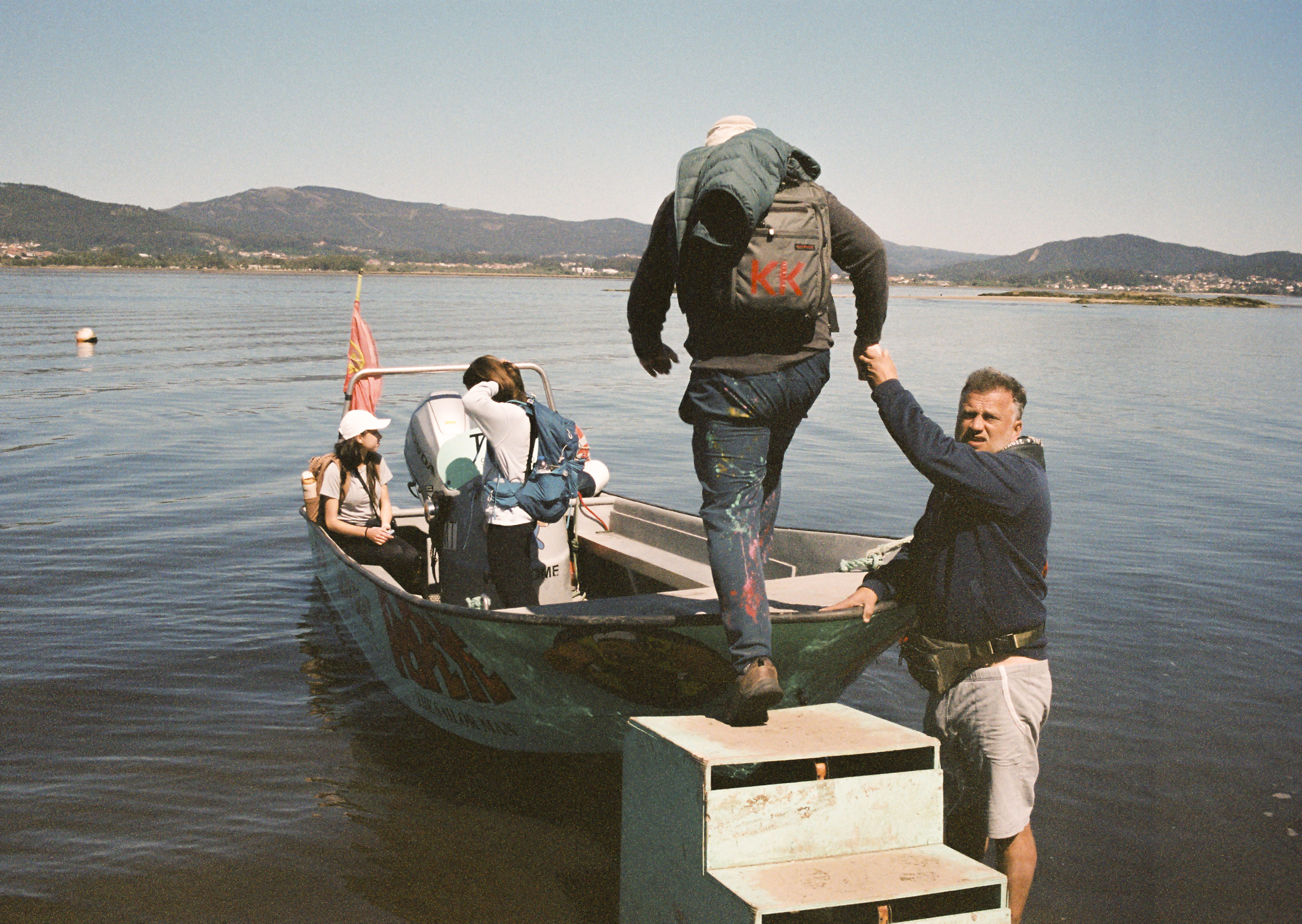
And finally we talked about what we’re going to take back from this walk, which, you might be surprised to hear, is the first time we’ve had this discussion. Kevin said something like, “I used to think walks like this were the bonus to ‘real life.’ But I’ve come to realize that, no, this, these walks, being here with folks like you, is the real life, and much of the other stuff is the interruption.” Personally, I continue to take away a sense of awe of what happens when you bring six or seven kind, passionate, accomplished strangers together for a week. I’m always amazed that they come, that they trust in the process. It’s a big leap! It’s a weird trip! And quickly, over the course of just seven days, you find the group coalescing into something familial. Quirks become endearing, less quirky. You find yourself softening. (Me, anyway.) Your generosity blossoms. You feel a kind of bonding that I think is rare in adult life, and more akin to what happens at summer camp as a teenager. So I’m constantly taking that away — faith in in-person events, faith in pulling together great people, faith in the power of the walk and the power of vulnerable, honest conversations night after night. Do it again tomorrow.
We finished the walk in Santiago on Easter Sunday morning. We dropped our bags at our hotel and walked into the desolate city. It was 8:45 in the morning. Still the witching hour for the Spanish who start dinner at 22:00. Nothing moved. We didn’t know where to go, so we strolled to the Cathedral of Santiago de Compostela. They were letting folks in. There wasn’t a line. We figured we’d go in. We did. It was packed. We nabbed the last few seats and within minutes of sitting, the mass began. So it was, we lucked into seats, without waiting, for Easter Sunday mass at the place you’re supposed to be. We got all blessed and whatnot (it had been maybe twenty years since I’d been to a full mass like that) and after that 9:00 mass, the line to get into the cathedral was in the hundreds, maybe thousands, stretched all around the square in an inscrutable squiggle of writhing humans. (I suspect that it’s because the 11:00 or 12:00 mass (it was unclear what everyone was waiting for) is when they let loose the Botafumeiro, the giant incense ball that swoops throughout the entire cathedral, which is sort of the “thing to see.”) But our early mass meant we caught the start of the Procesión del Cristo Resucitado (Procession of the Risen Christ) at 10:30 am, departing from the Campiño de San Francisco. And the Procesión del Encuentro — where two omikoshi-style floats are carried on the shoulders of dozens of hood-wearing (terrifying, honestly) adherents. One carrying the Risen Christ and another carrying the Virgin Mary; they converge in a dramatic “meeting” in a plaza. It looked like a baby was exchanged. It was all atavistic and lovely.
So we saw all that, without having planned it, just by bumbling into it. We are bumblers. It was the perfect finish to a perfect walk. A walk I wish had been longer. Now I’m scheming about walking from Lisbon to Porto. Scheming to finish the last 100 kilometers or so to Santiago from the lighthouse where we broke off. If you get the chance, go, walk Portugal. Do it during Easter for bonus points.
Now I’m back home in Japan. Hiding, burrowing by the sea for the rest of April and start of May, working on a new book. Publishing a weird little daily pop-up newsletter about the writing process for members of my SPECIAL PROJECTS membership program (and for myself, too). From May 7, for about two months, I’ll be in Brooklyn doing Brooklyn things. With hopefully a week of pop-up walking across New York thrown in somewhere.
More soon,
C
Not subscribed to Ridgeline?
(A weekly letter on walking in Japan)
This essay is from the Ridgeline newsletter, mailed out April, 2026. Thoughts? Email me@craigmod.com.
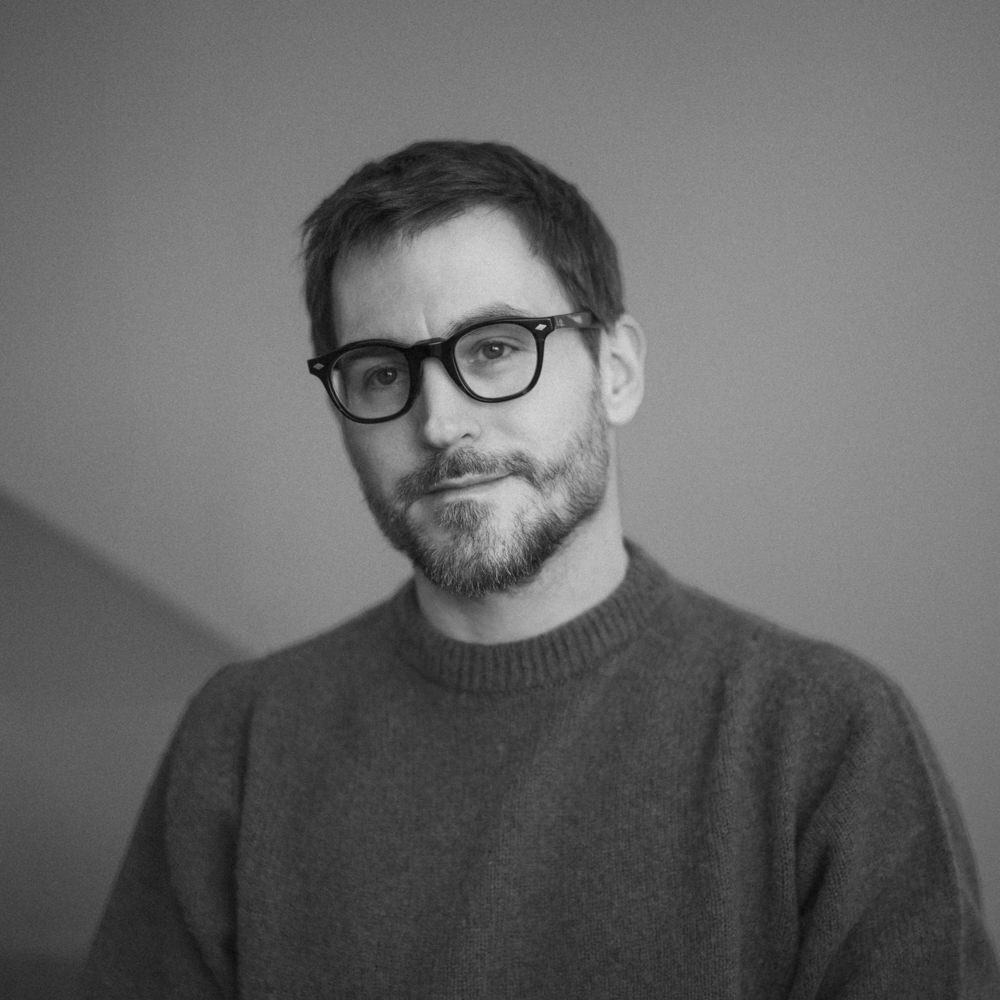
Craig Mod is a writer and photographer based in Japan. He's the author of the books Things Become Other Things and Kissa by Kissa and is a MacDowell, Ragdale, and VCCA writing fellow. His essays and articles have appeared in The New York Times, Eater, The Atlantic, California Sunday Magazine, Wired, Aeon, New Scientist, Virginia Quarterly Review, The New Yorker, The Morning News, Codex: Journal of Typography, and elsewhere.
He writes newsletters, oh yes, newsletters: Roden & Ridgeline.
The work on this site is supported 100% by paid memberships and book & print sales.
Whatever you do, don't follow @craigmod on Bluesky or Instagram.