SHŌWA COLOSSUS — A Jazz Kissa Pop-up
21 days of searching for Shōwa in Kyūshū
Ridgeline Transmission 239
Ridgeline subscribers —
From next Wednesday, November 25, I’m starting a new pop-up newsletter: SHŌWA㍼COLOSSUS — a tour of the last remaining classic jazz kissas of Kyūshū. It will run for about twenty-one days and then, like any good pop-up, all your emails will be deleted.
Sign up for SHŌWA㍼COLOSSUS here:
SHŌWA㍼COLOSSUS is a continuation of my BASIE!BOP!JAMAICA! tour from 2023, where I visited jazz kissas in Tōhoku and Hokkaidō. This time we’re going south (or west, as Kyūshū sits in my mind).
Why now? Because everyone is dying! Because it’s ending, the last gasps of the colossus that was the Shōwa. These jazz kissas are some final vestiges of Shōwa-era Japan. As I wrote in my book Kissa by Kissa:
Kissa are inextricably linked to Shōwa, an era that spanned the years 1926 to 1989. Shōwa is generally looked back upon as the “golden age” of modern Japan: Technicolor, hardworking, patriarchal, industrial, with the romantic focus squarely on those postwar lean years. Shōwa is the jumble of alleyway bars in the now tourist-overrun Golden Gai nook of Tokyo. Shōwa is an old-school barbershop with hair tonics and hair liquids tucked between gleaming Mori and Mitsui skyscrapers. Shōwa is, above all, kissa.
Several of the owners of places I visited in BASIE!BOP!JAMAICA! have passed away in the last three years. Every year, we lose more. In ten years there will be, effectively, none left. We lost Shinjuku DUG’s Nakadaira-san at the end of 2024 and DUG itself in June of this year. The clock is ticking and I want to sit in some of these places for perhaps the last time.
While I love kissas and jazz kissas (and all other types of kissas), my interest is less in what record player or speakers or wires or cartridge they’re using1 and more in the meta-ethos of postwar Shōwa Japan. It just happens that kissas are a beautiful, unexpectedly resilient manifestation of that ethos.
Goals and rules are good, and here they are, similar to BASIE!BOP!JAMAICA!:
- Our main goal — the goal above all else — is to listen. Shut up and listen. Twenty-one days of pure listening. How utterly, fabulously indulgent. Yes, please. Focused attention, gentle attention. Attention directed towards the air vibrating into our ears. Eyes closed, stomach full of bitter black coffee and maybe some mixed nuts or giant corn. Will we smoke a cigarette? We might smoke a cigarette. Inhale. Listen. What’s playing when we step over the threshold? What comes next? And then what’s after that?
- The reason to listen closely: We’re interested in the men and women behind the counters. Lives committed to a genre, to low-key proselytization, to spreading musical gospel. Who are these folks? What does it feel like to develop a decades-long intimacy with vinyl and the patrons that gather around the turntables? In listening to the music we hear some of their story. And then, if they’re up for it, we hear some more directly from them.
- Portraits when possible, and only after an hour+ of sitting.
- No screens. Writing in notebooks.
- Binaural audio and video “postcards” when possible.
- A multi-thousand-word dispatch to y’all at the end of the day.
What typifies jazz kissas? For me, the standout quality is the lack of hedging.
It’s easy to be hagiographic about the past. I’m not trying to do that — not trying to look back through rose-tinted glasses at a “better” moment. But I do think we’ve lost something … “human” or empathetic … in the last twenty years (and in the last ten especially, and the feeling is that this loss is accelerating) and I don’t think I’m being hyperbolic. You see it acutely in Tokyo — mass developments bulldoze neighborhoods, replacing a hundred small shops, true community, with giant mega-nothings in which it’s impossible for community to flourish. Where the passing of time is scrubbed because the philosophy of contemporary mega-developers is fundamentally incompatible with community building or the human touch.2 (It turns out, the human touch is less profitable than anodyne boxes.)
We see this scrubbing of “the human” from media, from music, from art. As scale and abstraction increase, the sense of the human is diminished. With AI, we see this scrubbing and diminishing accelerate. A good kissa — like a good diner in the US — is all human touch. The surfaces, the design decisions, the grumpiness, the regulars — they all add up to something that’s increasingly difficult to pull off today. (Almost impossible to pull off today.)
What I love about these Shōwa-era jazz kissas is they’re chips-all-in. There’s no hedging. Keith Jarrett is just a mumbling, wacky pianist, and all of humanity benefits from that focus. He also doesn’t run a gin business or hawk cell phones, nor has he yearned to become a headphone billionaire. These kissa owners also committed, also decided: JAZZ. And jazz for life. Not for a weekend, not until jazz fell out of favor with the public, but jazz forever. Everything for the music, for creating a living shrine to the music, a swaddle-space for the music. I love that. I have hedged many things in my life; I am as guilty of hedging as any random person, and so to be in the presence of these no-hedgers is, for me, deeply inspiring. Ahh, this is what full commitment looks like. It’s also what “enough” looks like. (If Instagram represents anything, it represents denting your brain with a trillion hedges, the sense that enough does not exist.)
In SHŌWA㍼COLOSSUS we’ll explore subthemes of: quality, community, persistence, commitment. There’ll be a bit of Zen and the Art of Jazz Kissaing. But hopefully, we’ll just have some fun and visit a bunch of places I’ve never before visited.
To be able to spend twenty-one days sitting with these folks, that ethos, listening also to musicians who did little hedging themselves — well, that’s quite the honor. A tour like this is made possible by my SPECIAL PROJECTS membership program. Thank you to everyone who has joined over the years. I suspect we’re going to learn a few things along the way. At the very least, I hope to take a few good photographs. Each night, I’ll be sending dispatches from the road. So, again, sign up here as we think about the colossal impact Shōwa has had on Japan and the world. And let’s see if there’s some way to pull a smidgen of that ethos forward and apply it to our lives today.
C
Sign up for SHŌWA㍼COLOSSUS:
Noted
-
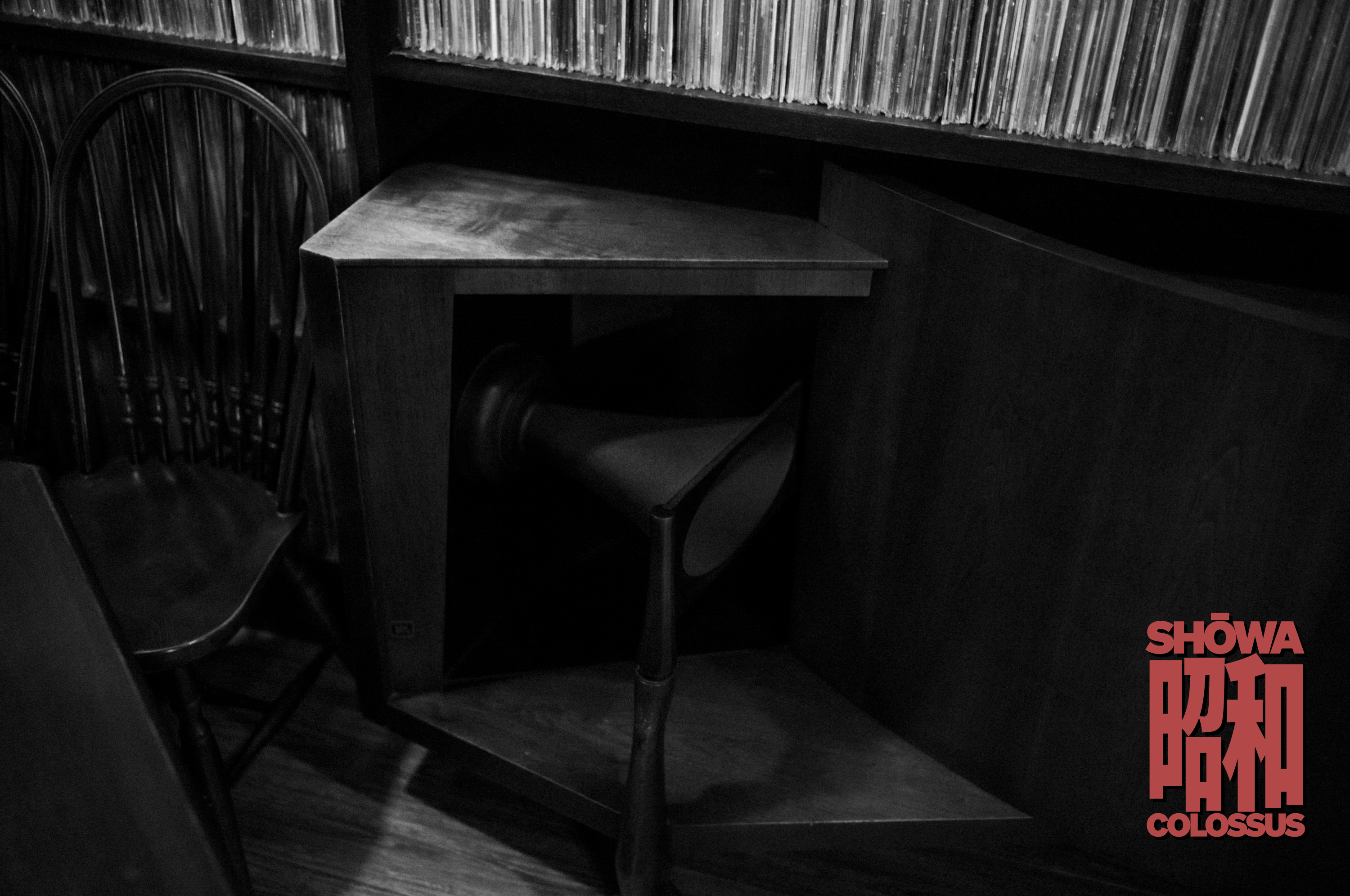
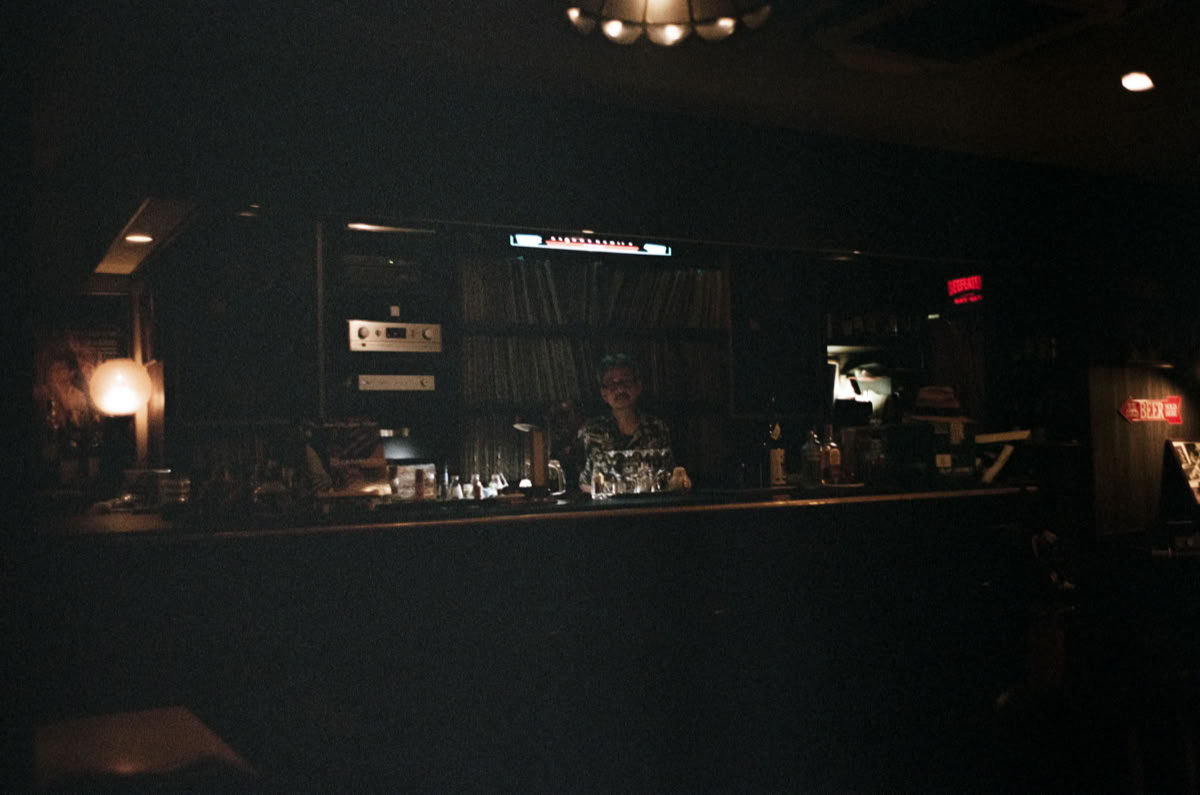
The technical aspects can be curious, and at one point they truly were the focus of jazz kissas — back when they operated as arbitrage agents between hungry listeners and difficult-to-find, expensive records. The listeners would almost never have a chance to hear these records on their own, let alone see these great jazz musicians live, so finding a way to make the records sing — to teleport the greats into the room — was a critical part of the experience of a jazz kissa in the ’60s and ’70s. As time has passed, the thing that stands out today isn’t the fidelity of reproduction, but the fidelity of commitment, the personalities of those who ran these things, the unhedging nature of the business, and the regulars who acted, in a way, as physical patronage to the spirit of the place. Also, I realize the irony of my using a JBL Paragon speaker up in the top image, but a) I’ve yet to photograph anyone in Kyūshū (outside of that one fuzzy Milestone shot), and b) it’s the most Shōwa of Shōwa speakers, IMO. ↩︎
-
I like to believe there is a bizarro world, a mirror world, close to ours, in which you can have both extreme levels of development and also still “hold space” for individuals to thrive. This would require, I suspect, some intervention into standard capitalistic mechanisms, and so ain’t something I’m holding my breath over, but an Azabudai Hills with three dozen amazing, gritty shops could exist, just probably not on our timeline. So what happens to the smaller shops? They get pushed out to the edges. And so in Tokyo today you see neighborhoods like Hatagaya — a neighborhood I lived in 26 years ago and one that was down and out, to put it lightly — suddenly flourishing with the kinds of shops that used to open inside the Yamanote Line. ↩︎
Not subscribed to Ridgeline?
(A weekly letter on walking in Japan)
This essay is from the Ridgeline newsletter, mailed out November, 2026. Thoughts? Email me@craigmod.com.

Craig Mod is a writer and photographer based in Japan. He's the author of the books Things Become Other Things and Kissa by Kissa and is a MacDowell, Ragdale, and VCCA writing fellow. His essays and articles have appeared in The New York Times, Eater, The Atlantic, California Sunday Magazine, Wired, Aeon, New Scientist, Virginia Quarterly Review, The New Yorker, The Morning News, Codex: Journal of Typography, and elsewhere.
He writes newsletters, oh yes, newsletters: Roden & Ridgeline.
The work on this site is supported 100% by paid memberships and book & print sales.
Whatever you do, don't follow @craigmod on Bluesky or Instagram.