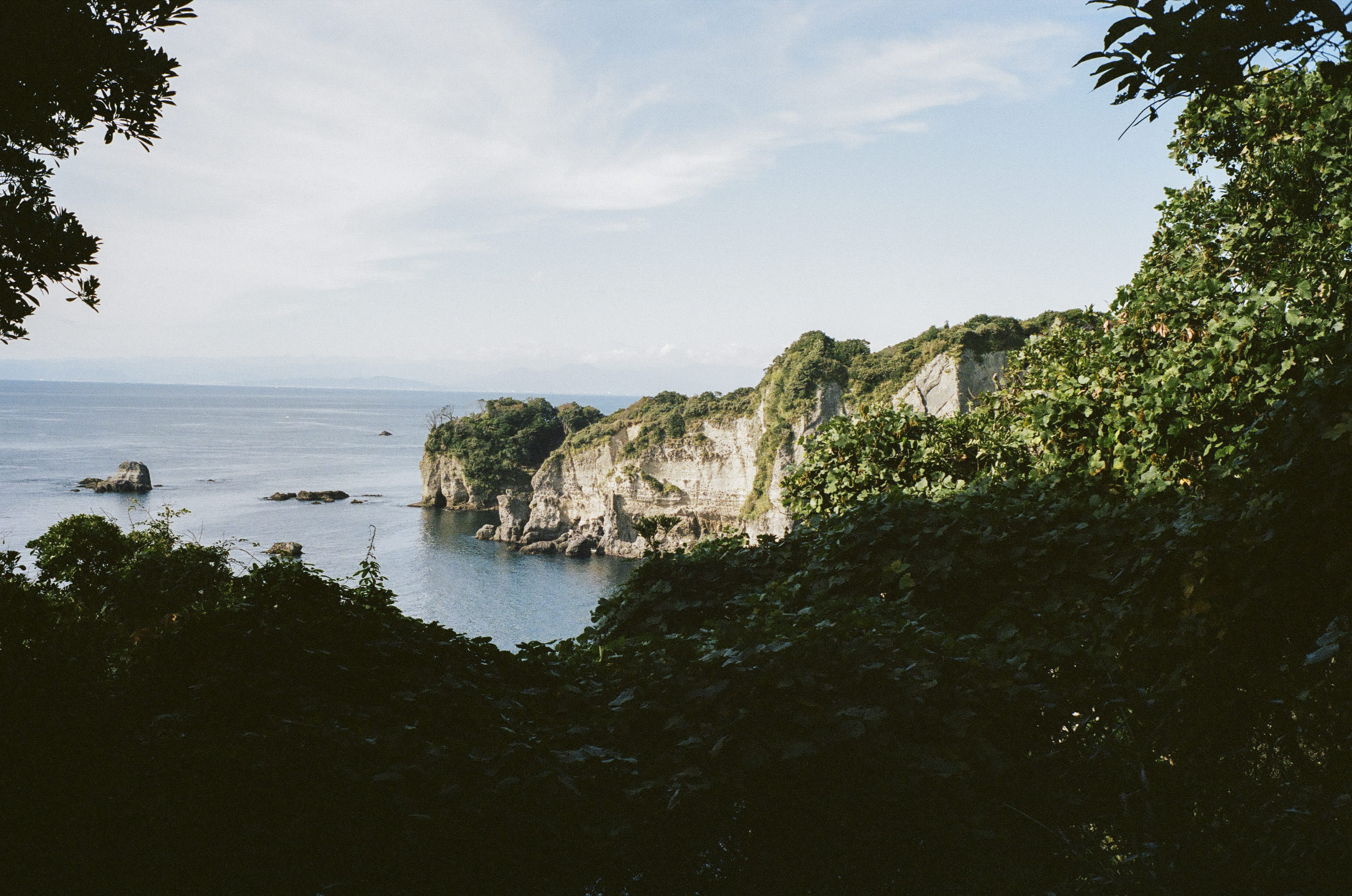
Walking a Bit of the Izu Peninsula
Izu is full of natural beauty, great old inns, and a lotta wasabi
Ridgeline Transmission 238
Ridgeline subscribers —
A little note to begin:

A buddy of mine, Nick Dwyer, is running a Kickstarter campaign for his A Century in Sound documentary. He’s looking at 100 years of Tokyo history through its music cafés (classical, jazz, rock, noise, etcetera). He’s collaborated with photographer Lee Chapman on a companion book. I am a backer. Nick handed me the book in person last week — it’s stunning. They nailed it. What makes this project extra special is that Nick has truly put in the shoe leather for cultivating intimate relationships with all the shops they feature. He’s been working on this documentary series for a decade. The shop owners adore the hell out of him. (I’ve seen it in person.) I also got a sneak peek at half of the doc in August — it’s fabulous, and deserves to be seen all over. Consider giving it a back and grabbing the book. It’s a good’un. Six days left, and they’re almost at their goal.
And now, Ridgeline:
Thank you for coming to Japan, he said, thank you for reading Kawabata. It makes me — as a Japanese person — feel good to know you have read him.
The guy saying this was at least ninety, quite possibly a thousand years old. He was old in the way the trees of Yakushima are old — embodying majesty and the promise of wisdom from having seen it all twice over. We were in a bath together. Baths reduce and amplify simultaneously. He was a tiny, pale, gentle, Yodic creature. So gentle and intelligent, this little guy in the bath who seemed very happy to be speaking with us. Many things seemed to be growing on his body (as they do on all old creatures). Our biomes and minds commingled in this steaming space of shared nudity. He had reached symbiosis with the world. He had worked hard. Had gone to Tōdai. He had built up a big and loving family.
The last time I stayed here, he said, was forty years ago. I met the Okami-san then, he said, the grandmother of the current one. I have a photo! She would have met Kawabata, he said.
I felt a little bad. I had just lied to the guy. He had asked me if I had read Kawabata Yasunari’s short story Izu no Odoriko (“The Dancing Izu Girl” or “The Izu Dancer”). I had meant to but still hadn’t. But I couldn’t bring myself to say that, so I said: Of course I did! I loved it! He was tickled by this.
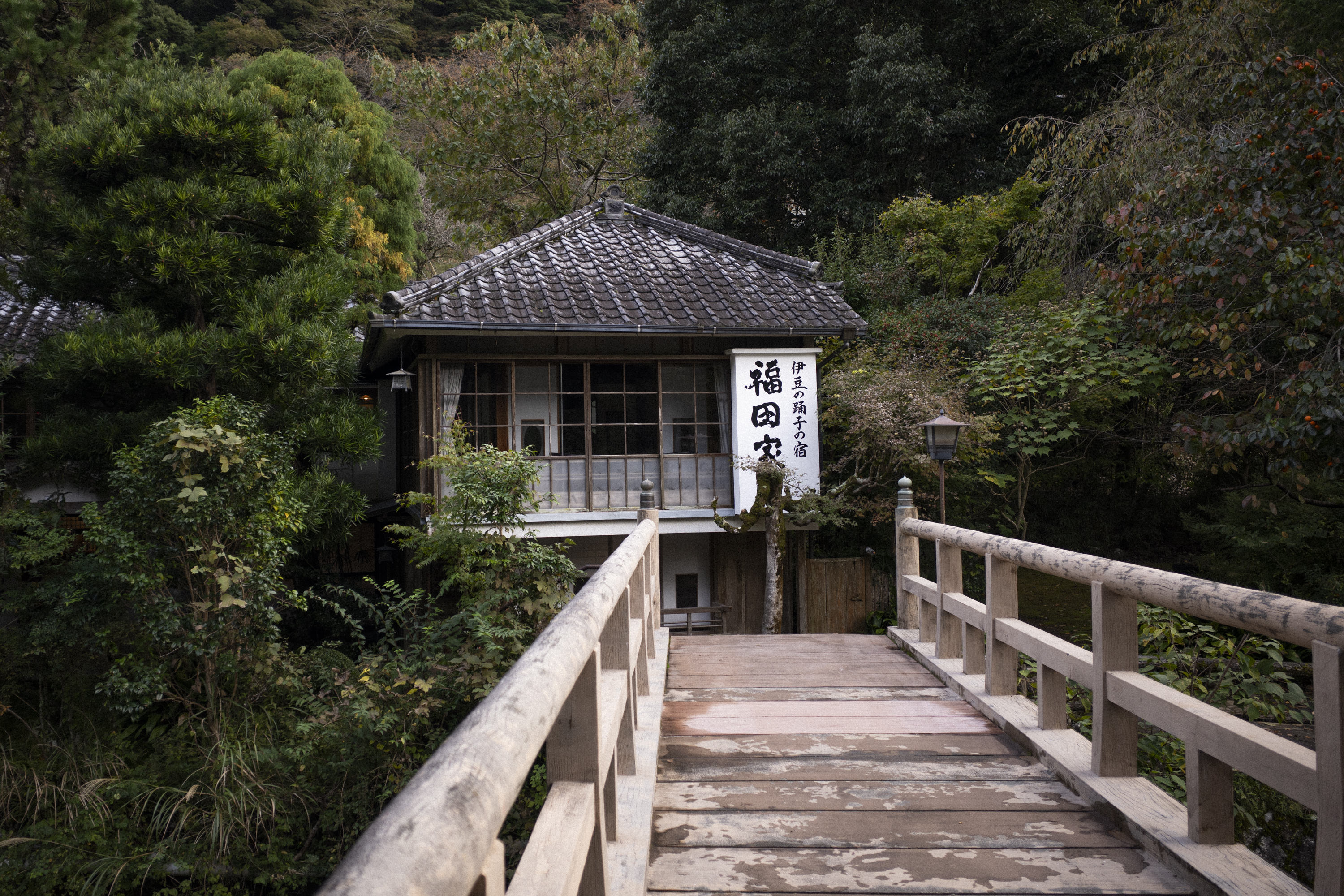
The Book of John and I were staying at Fukudaya, which is where Nobel laureate Kawabata is said to have stayed and written in the past. Izu no Odoriko was actually written up the valley at Yumotokan, not Fukudaya. Fukudaya, however, sits on the very path of the story and is where a key part of it takes place. John and I had walked part of the route the story features earlier that day.
There are many photographs of Kawabata in the lobby of the inn. Three years before he received the Nobel Prize in 1968, a monument to his literary successes (in particular, Izu no Odoriko, of course) was erected next to the inn. He returned to the inn for the monument’s unveiling. Here now was Kawabata sitting in the lobby. Here now Kawabata waving from the top-floor window (of the room John and I were staying in). Here now Kawabata in front of the monument just around the corner from the inn. Alongside him in the photographs was a beautiful young girl in a kimono; a real-life Izu no odoriko, specially for the ceremony, perhaps.
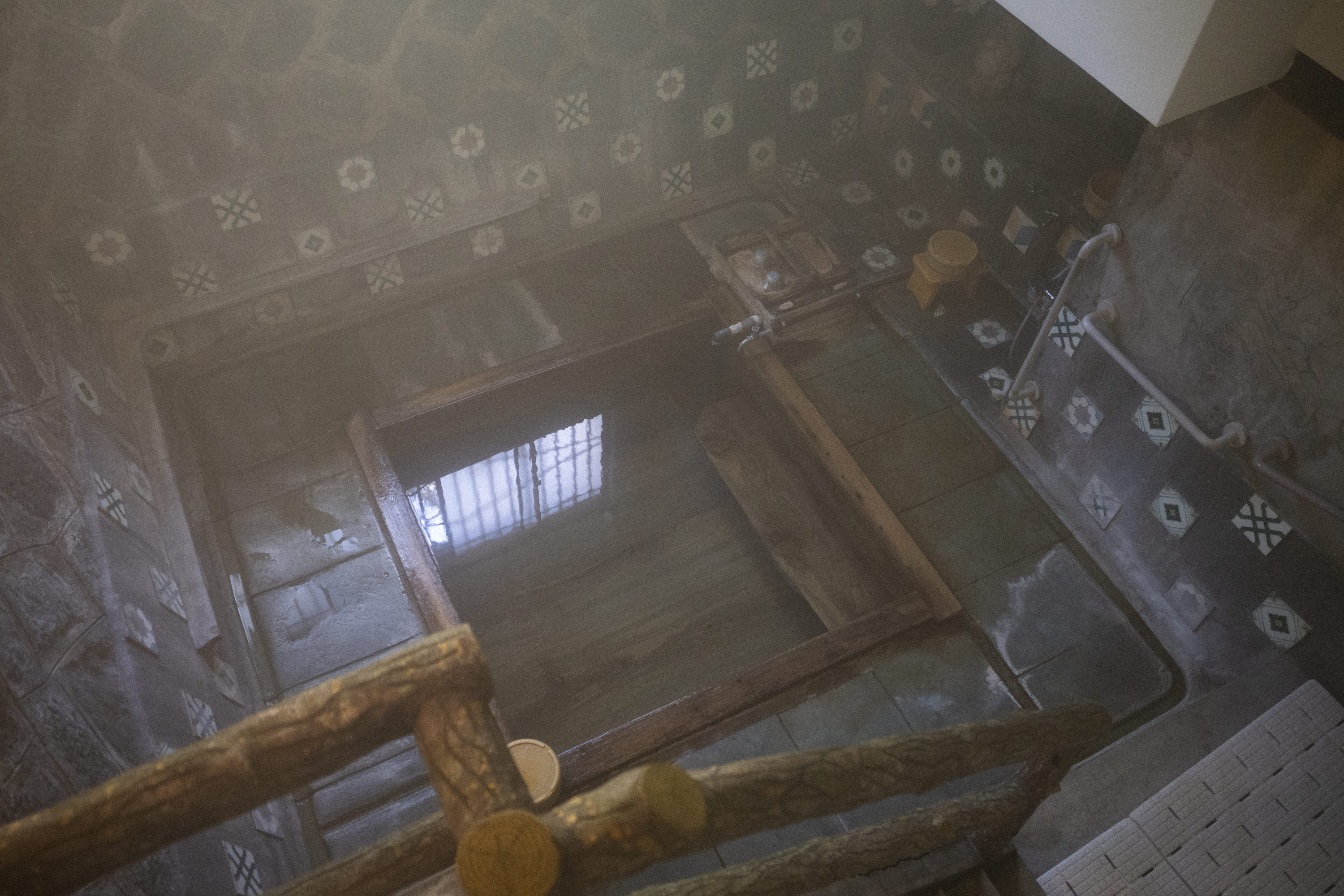
The old man in the bath was a Kawabata fan, a bit of a literary gourmand. He had come back with family to stay in Kawabata’s room, the room where he had previously written. Has the inn changed much, I asked. No, not so much, he said as we cooked in the bath together. He was wistful but lucid. I hoped to be half as lucid at his age.
Riddled with the guilt of having lied to the guy, that evening I tracked down a translation of the short story. The Atlantic had published a slightly abridged version of his short story in 1955, translated by Edward Seidensticker. That’s right, I thought, The Atlantic used to publish fiction. The story was originally published in Japanese in 1926 when Kawabata was twenty-six. It’s autobiographical. The protagonist is nineteen, a kind of “bocchan” or rich kid. A university student, brooding, full of pathos. He comes to Izu in the late fall to walk and brood. He meets a dancer that’s part of a traveling troupe at an inn. He falls immediately in brooding love. Her hair! Her face! Then he sees her naked, bathing in a river, and realizes she’s about thirteen, at which point his love becomes paternal. He ends up walking with the troupe for a few days, and stays at (in the story) the very inn we were staying at. Eventually he gets on a ship at Shimoda to go back to Tokyo, to return to his “real” life, and he cries and cries as the Izu Peninsula retreats, knowing he’ll never meet the dancing girl again.
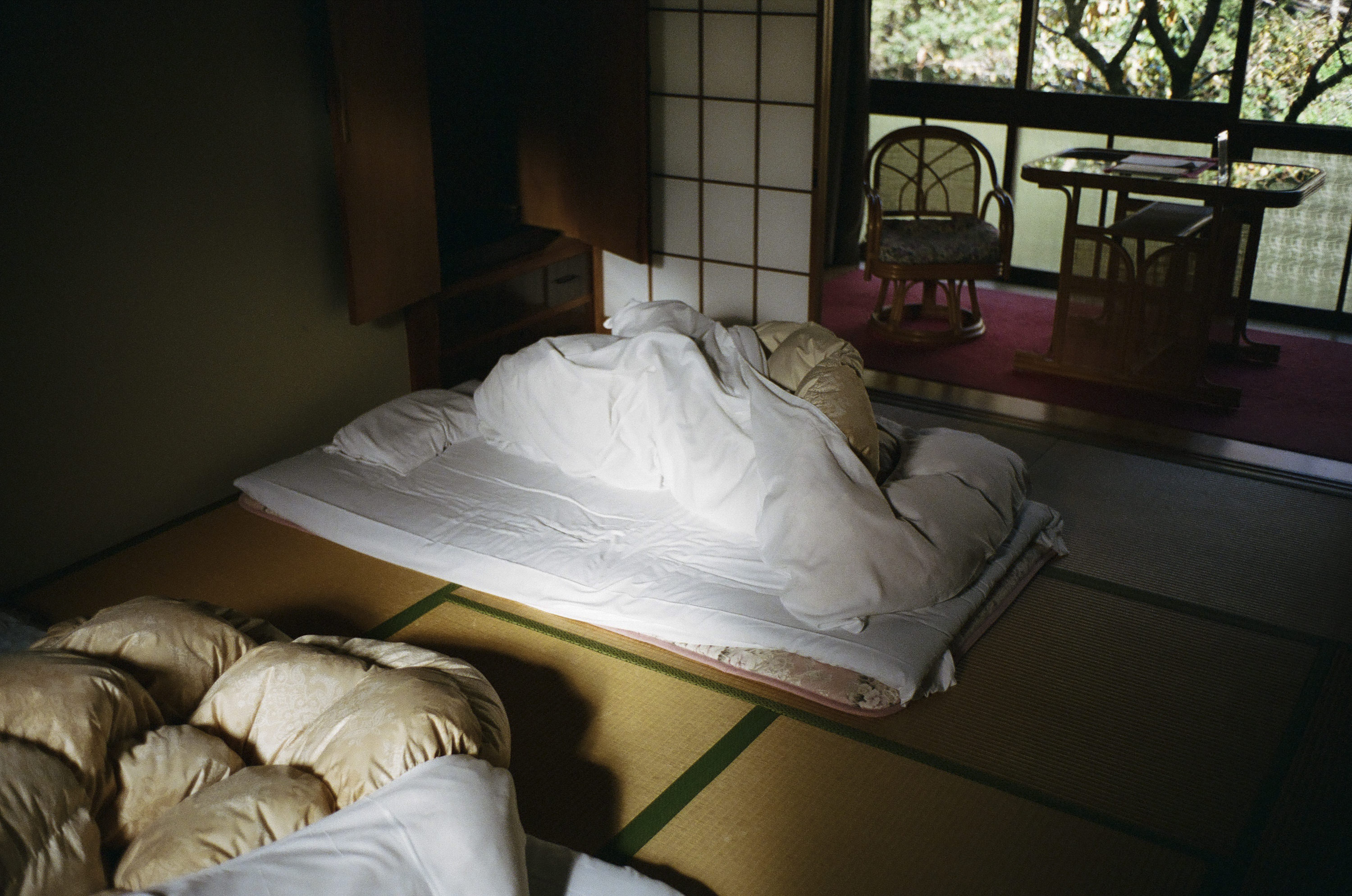
It’s a good little story. Brisk and economical. It moves quickly and wastes no time (he finds out she’s a child almost immediately, although a hint of creepy undertone does remain). It was surreal to read it in a futon (a very thin futon, I might add, very much living up to the senbeibuton adage, probably not unlike the futons they slept on in the 1920s) in the very inn where part of it takes place. Earlier in the day John and I had walked from Jōren Falls to Nikadaru through the Kyū-Amagi Tunnel, the first cut-stone road tunnel in Japan, and the longest one still standing. It’s an Important Cultural Property. The story begins right before the entrance of the tunnel. The tunnel’s about half a kilometer long, but doesn’t get more than a glancing mention in the story. Had I found a half-kilometer-long tunnel as a teenager in middle-of-nowhere Japan, I personally would have written more about it. I’m more of a tunnel guy, I guess.
So: Built in 1905. 445.5 meters long. 4.1 meters wide. About 710 meters in elevation at the pass. It was the main road (if you walk it, you quickly realize how insane that must have been) until 1970, when the new Amagi Tunnel opened. It’s sometimes easy to forget the recency of modernity.
I finished the story in bed. I could see the whole thing with total clarity in my mind. It felt satisfying to rectify, post facto, my lie to the gentle old guy. All throughout dinner we heard him recount the bath encounter to his traveling companions. I met a very big man in the bath! he said. The doors in between the dining rooms were paper thin. And a novelist! he said. (That was me; it was easier to just call myself a novelist, which is vaguely technically true in that I have written novels, just haven’t published them.) He walked to Kyoto! he said. And on and on. John and I smiled. I was terrified we would hear something we couldn’t unhear.
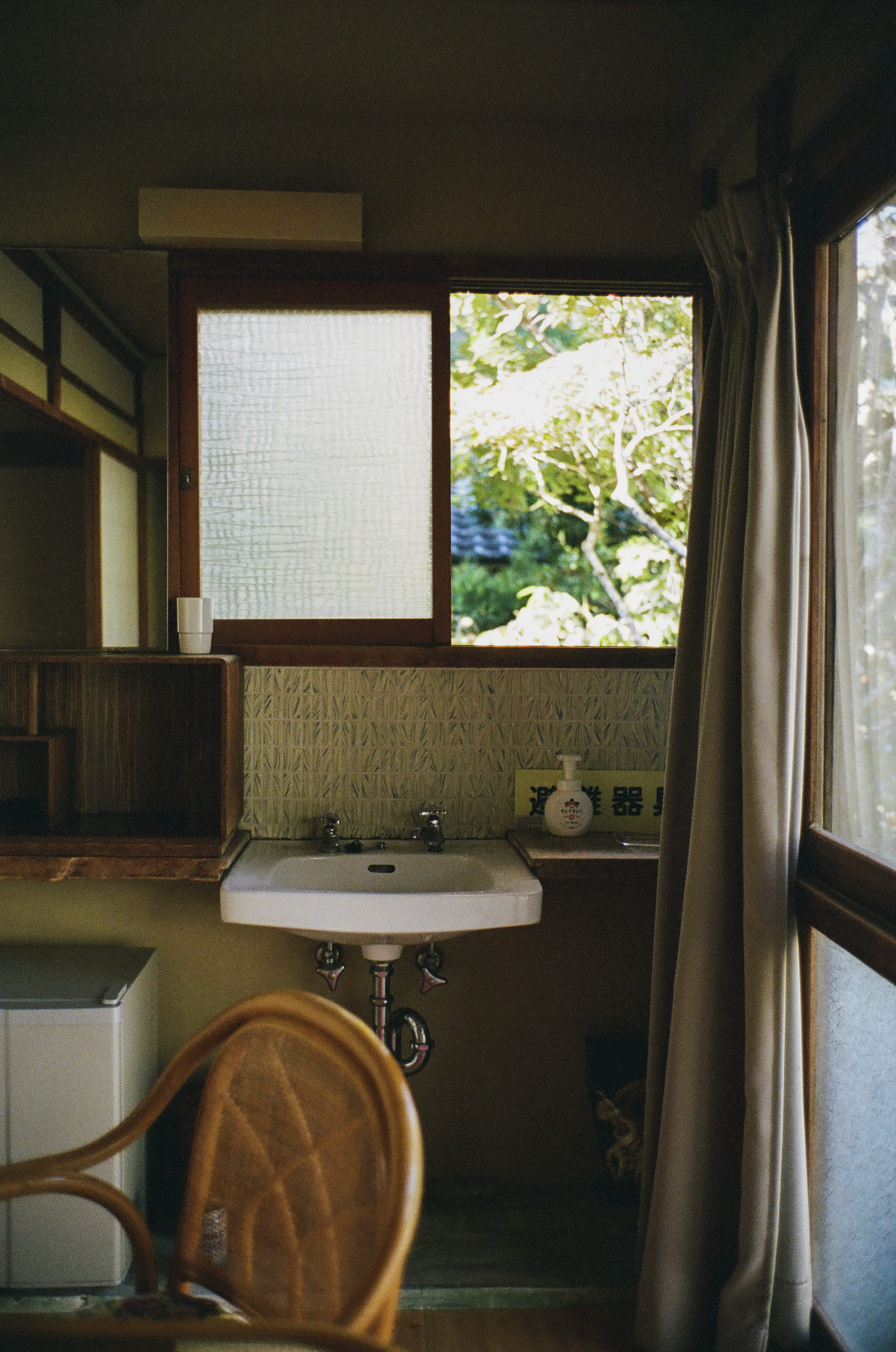
The next morning, we checked out at the same time. It’s my “literary buds,” he said (「文学とも」) smiling, now clothed in hiking gear with a little backpack on his back. Thanks for chatting with grandpa, his traveling companions said. (We couldn’t figure out if they were wives, second wives, daughters, granddaughters, or secretaries.) They all gathered outside to take photos in front of the inn. John said, Go look at Kawabata’s room while they’re outside! So I did. I bounded up the stairs like a golden retriever to the room directly above the lobby, and saw the space where Kawabata had written. It was a simple six-mat room with a low wooden desk and a single zabuton. You could imagine a man there, ink and brush in hand. To one side of the desk, a stack of genkō yōshi paper with all the little squares, and the current manuscript page on the other. There wasn’t a view from the room; it had no immediate windows. It actually looked onto a sink. Maybe that was good for the writing. Staring at a sink probably stirs the memories of the forest and longings for love better than looking out onto a beautiful river.
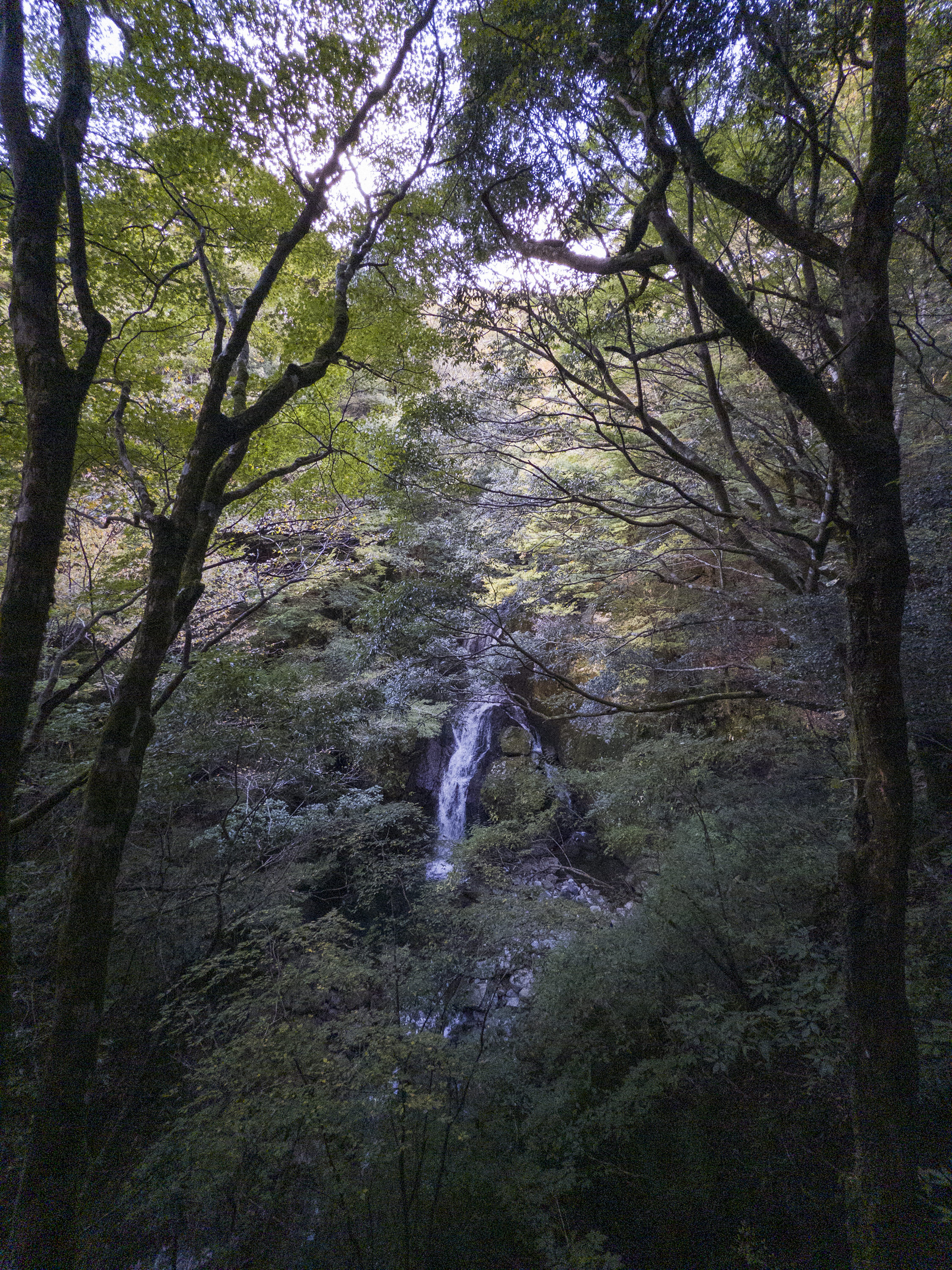
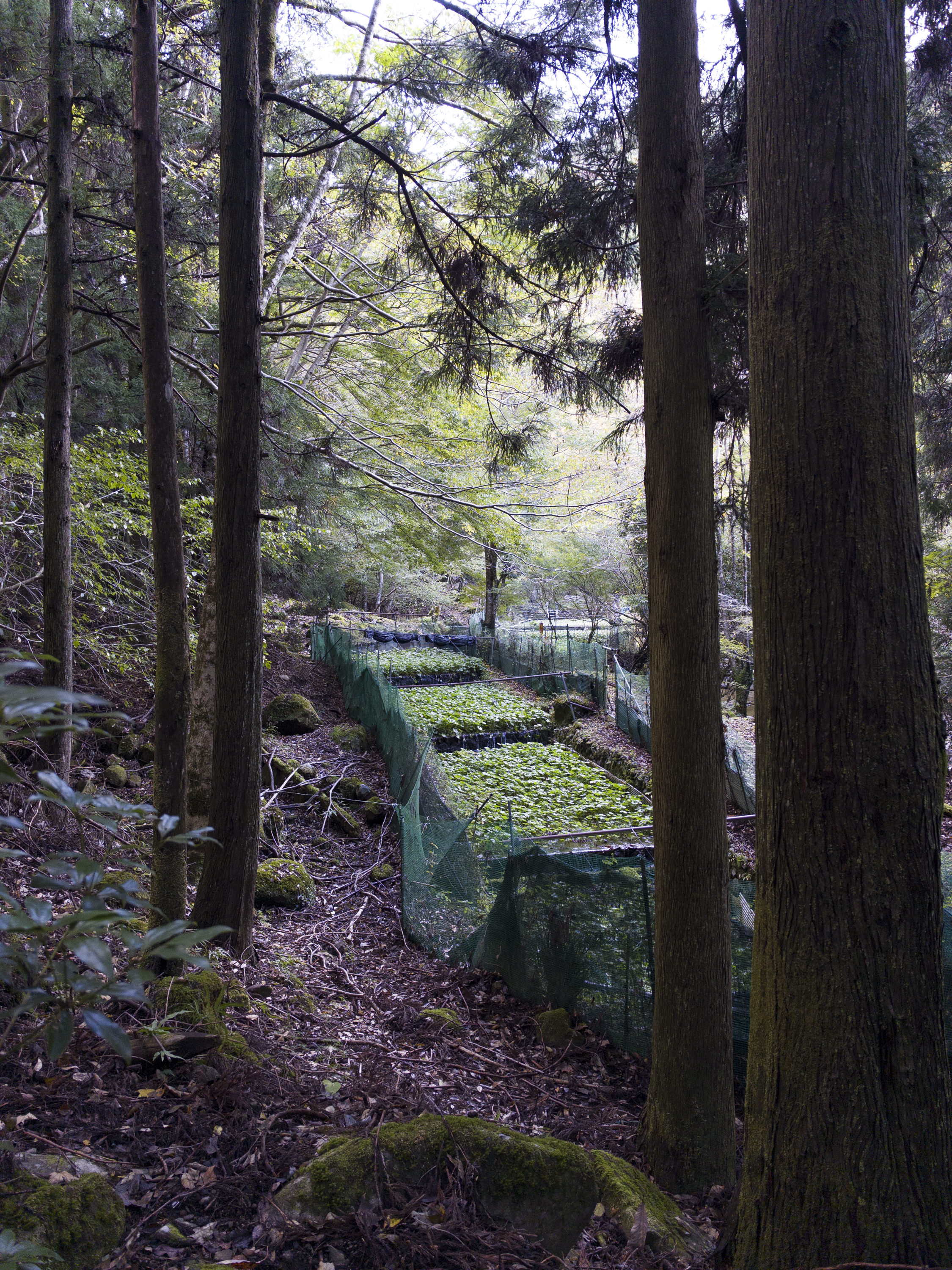
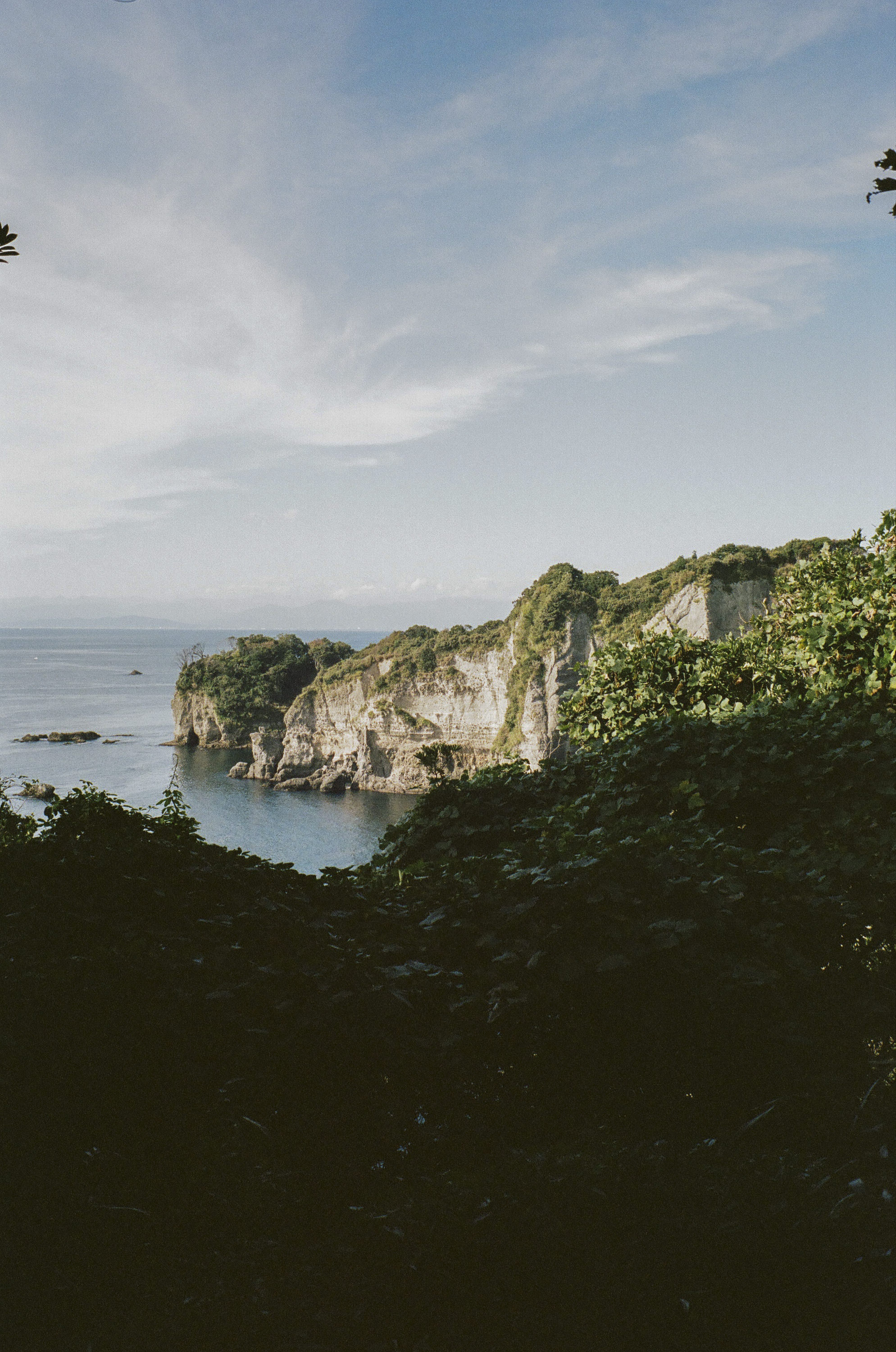
John and I ended up doing three small Izu walks. We walked a tiny loop on the east coast. We walked the Odoriko route down the center. And we walked a bit of the volcanic west coast. They were all quite different. This was my first time really “looking” at Izu in all my years. It’s a bit “out of the way,” enough so to require effort to get to. I think it’s worth that effort.
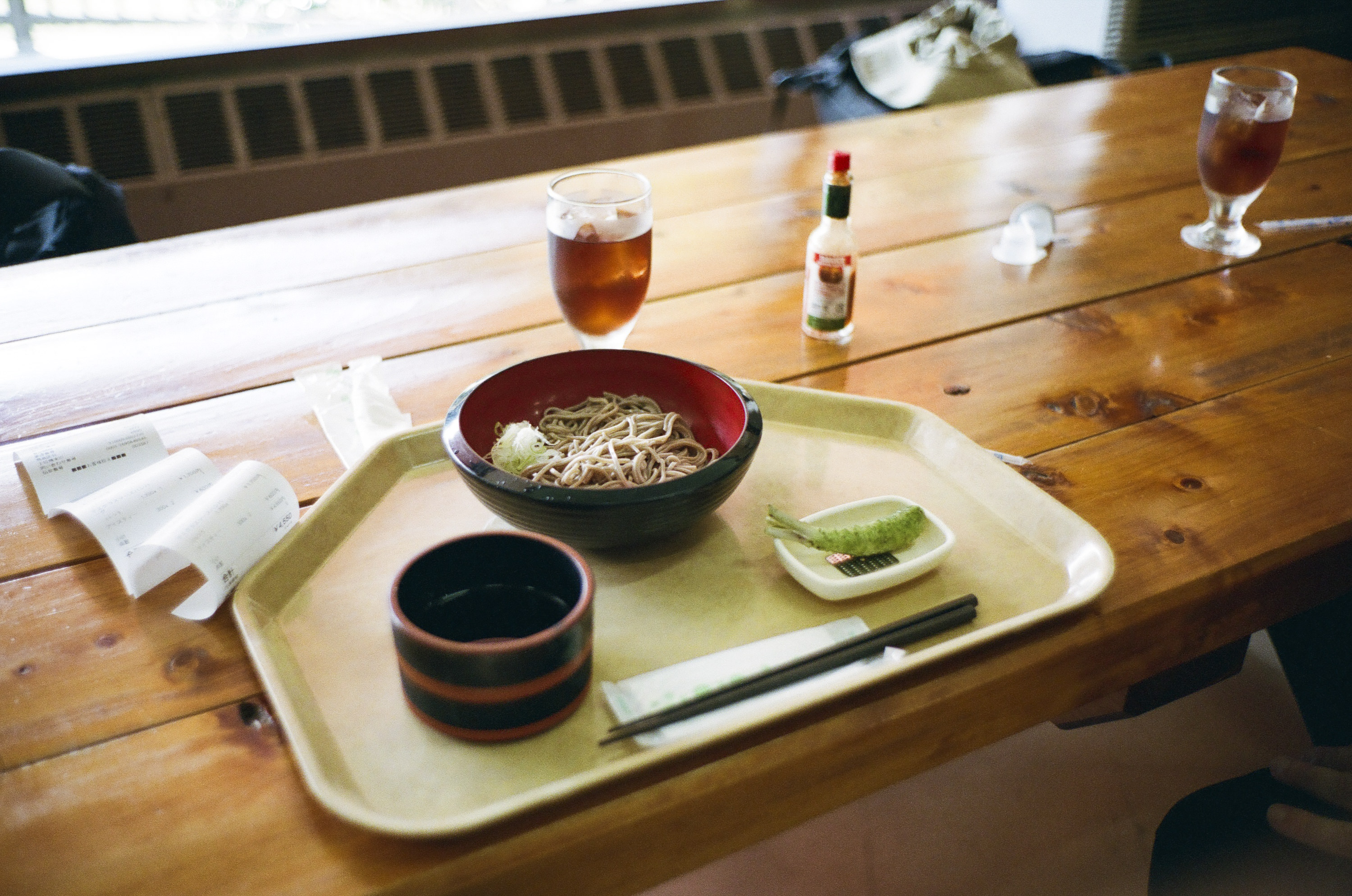
Thanks to its abundant fresh water, the peninsula is known for its wasabi. And fresh wasabi was grated and eaten at nearly every meal.
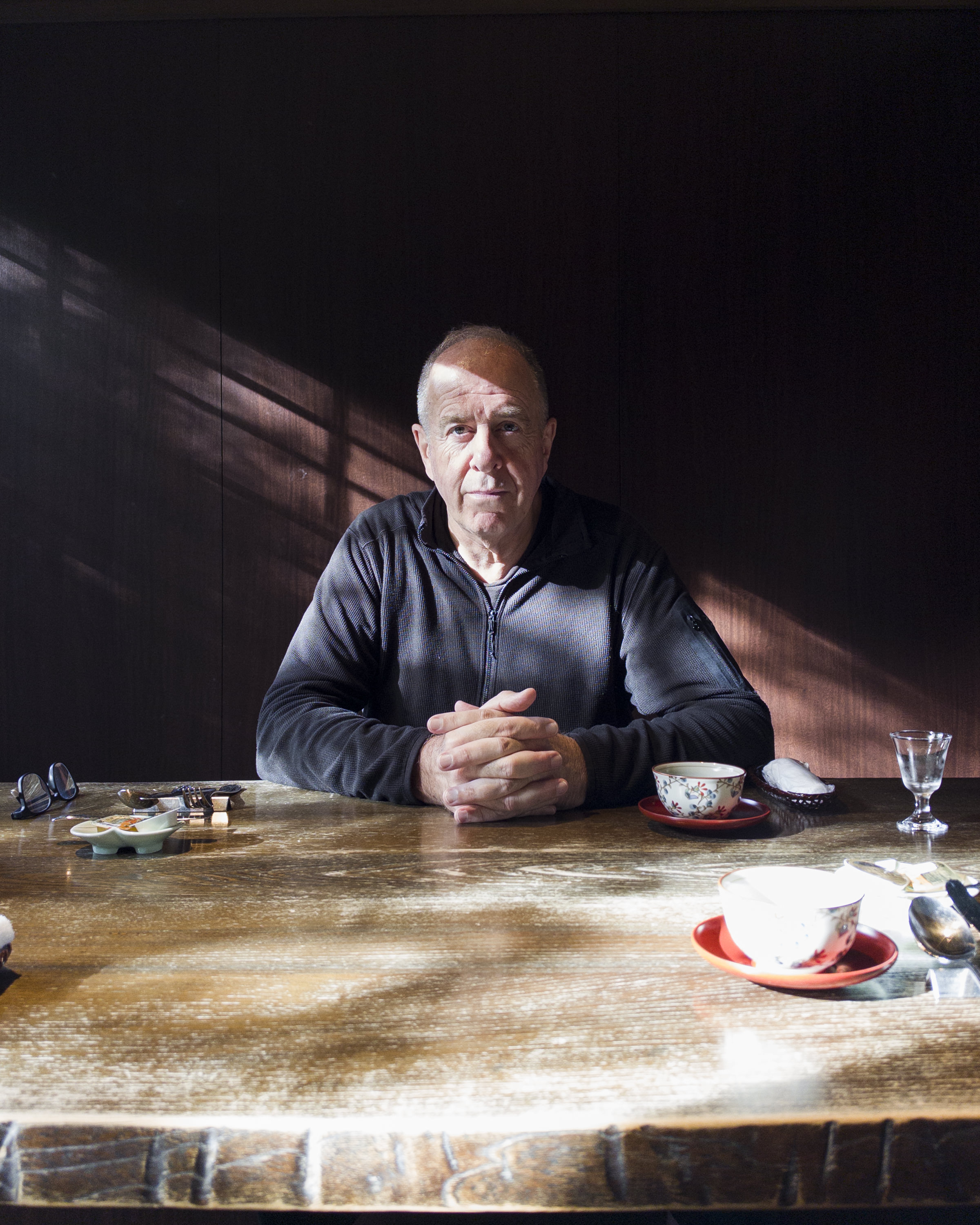
The last night we stayed in Shuzenji. Suddenly: Tourism bonanza. The second we drove up to the inn, extremely different vibes. The first and second nights had been so lovely, an almost time-slip level of pre-Covid tourism. Seiryūsō and Fukudaya were excellent, quiet, restrained. They made no big deal about who we were or weren’t. But Shuzenji? Crowds galore and not a single Japanese person to be seen. The dissonance shocked. The vicissitudes of touristic interest are baffling. I mean, Shuzenji is a nice little town, quaint and cute, but I’m not sure that I’d make a big fuss of going if I were flying from halfway around the world.
We went to a ramen shop in Shuzenji and they immediately thrust before us placards explaining the “rules” of the shop (complicated rules like, uh, you have to order something, and you can’t “sit and drink only water — you only get one glass of water”). They asked us if we wanted “thin” flavor for our ramen, since foreigners “can’t handle the full flavor” like a Japanese person can. We got full flavor thankyouverymuch and slurped down all the soup. That impressed the owner (Oh my god, you drank it all! Even at full flavor!).
It seems like Japan’s partial response to gluten-vegan-low-carb foreign visitors is to preempt all complaints, to straight up not allow modifications. I don’t eat mammals and one of the inns curtly informed us: We don’t recognize dietary restrictions.
I heard of one American going to a jazz kissa the other day, only to put in AirPods to listen to a podcast. The owner told him that wasn’t allowed. He couldn’t believe it. I truly don’t understand what goes through the heads of these visitors. On the way out of the ramen shop I asked — is the endless drinking of water a real problem here? And she (the owner) said, Oh yes, you wouldn’t believe it. And it’s all Japanese tourists who do it. They finish eating and then sit at their table drinking water endlessly.
It turns out, every kind of tourist is insane.
Outside of Shuzenji (and even in Shuzenji) folks were lovely. Gentle older couples walking the coastal hiking routes chatted with us. An eighty-three-year-old walked the edge of the cliff with his eighty-two-year-old wife. Amazing older owners (everyone was, sadly, quite elderly; its own complicated part of experiencing Japan today) of curry shops were cheery, and surfed daily despite being nearly eighty.
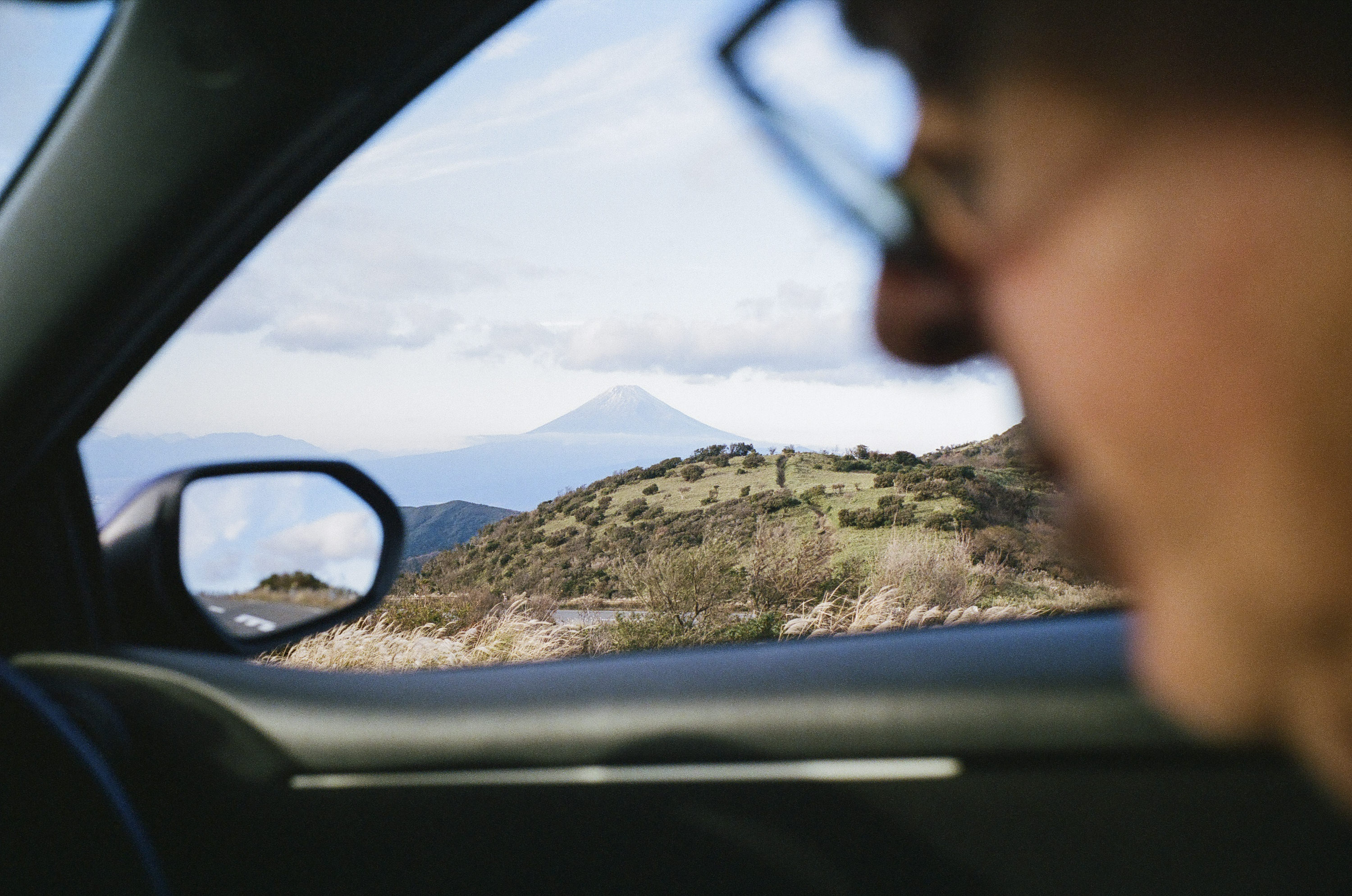
Anyway, what a place of epic fecundity, Izu. Volcanic, rising from the ocean a million years ago. Ōshima looked like you could swim to it. Fuji was right there, towering over it all. Depopulation, of course, plagues the peninsula, despite being relatively close to Tokyo. The Izu Mine Hechi trail — an old pilgrimage route circumscribing the peninsula — offers 300 kilometers of craggy coastal trails, cutting through villages and towns along the way. Consider walking some or all of it. Walk Japan offers its own Izu walk: Izu Geo Trail. The Odoriko Trail (Odoriko Hodō) is a great central option, much shorter at 16 kilometers, from Jōren Falls to Kawazu Nanadaru, and the one to walk if you’re a Kawabata head.
Shuzenji was the only “miss” and only because the rest had been so idyllic. Nobody in the baths in Shuzenji said they were happy to see us, and nobody asked us about literature. You have to go to the deeper, more remote inns for that kind of banter. It’s good to remember that it still exists, and how good it feels when you find it.
C
Not subscribed to Ridgeline?
(A weekly letter on walking in Japan)
This essay is from the Ridgeline newsletter, mailed out November, 2026. Thoughts? Email me@craigmod.com.

Craig Mod is a writer and photographer based in Japan. He's the author of the books Things Become Other Things and Kissa by Kissa and is a MacDowell, Ragdale, and VCCA writing fellow. His essays and articles have appeared in The New York Times, Eater, The Atlantic, California Sunday Magazine, Wired, Aeon, New Scientist, Virginia Quarterly Review, The New Yorker, The Morning News, Codex: Journal of Typography, and elsewhere.
He writes newsletters, oh yes, newsletters: Roden & Ridgeline.
The work on this site is supported 100% by paid memberships and book & print sales.
Whatever you do, don't follow @craigmod on Bluesky or Instagram.