Ridgeline subscribers —
I walk fast, he said and he did, he did walk fast, as fast as I walk when I’m walking one of my big walks carrying a giant pack and trying to knock out forty kilometers before sunset. But we were not knocking out forty kilometers before sunset, we were leaving shoe leather all over the Met, or the Metropolitan Museum of Art, or that place where everyone gathers “in the name of charity” once a year like it’s the Hunger Games. That Met. The Met with the line to get in not because it’s popular (though it is that) but because America loves guns. America loves guns so much that they (society at large?) think people are going to bring them to the Met (or the MoMA or the NYPL or a Broadway show or pretty much any other space that has more than a hundred people in it) and so you have to open your tote as a dispassionate guard barely glances into the darkness. A glance that — were I a betting man — I’d bet misses ten-out-of-ten guns people are trying to smuggle in.
Gun checks aside, I found the man I was looking for — a retired Columbia professor, introduced by one of you readers — and off we were. Or off he was, and I was nearly running to keep him in sight. Through the throngs he wove like a running back, glasses in hand, easily defeating the Chinese and European tourist defenses. (Side note: It was fascinating to see, basically: Zero Japanese tourists, so weak is the yen, so expensive is the NYC.) He’d rush and we’d stop before some object or painting. And the looking would begin.
This was a Met tour intent on looking and looking more closely than anyone else in the place. We were the uber lookers, undefeated in our concern for detail.
We first stood before a Greek “marble statue of a human” carved some 2,500 years back. Look at these patterns, he said, pointing out the subtle asymmetry in carving styles between the left and right sides. Two different artisans? He lifted his eyebrows and tilted his head. And look at this stance, he said, I’ve always tried to find this footing but can’t quite get it. It was true and strange: The more you looked the more the statue seemed to vibrate between poses.
On we ran, like this. Now before a Roman statue, now before something else. (I was so bedazzled by the running and the looking I wasn’t taking any notes.) Posited: Was this not a throwback in style (look at the way the hair is carved) to something more ancient? A kind of antiquing in antique times?
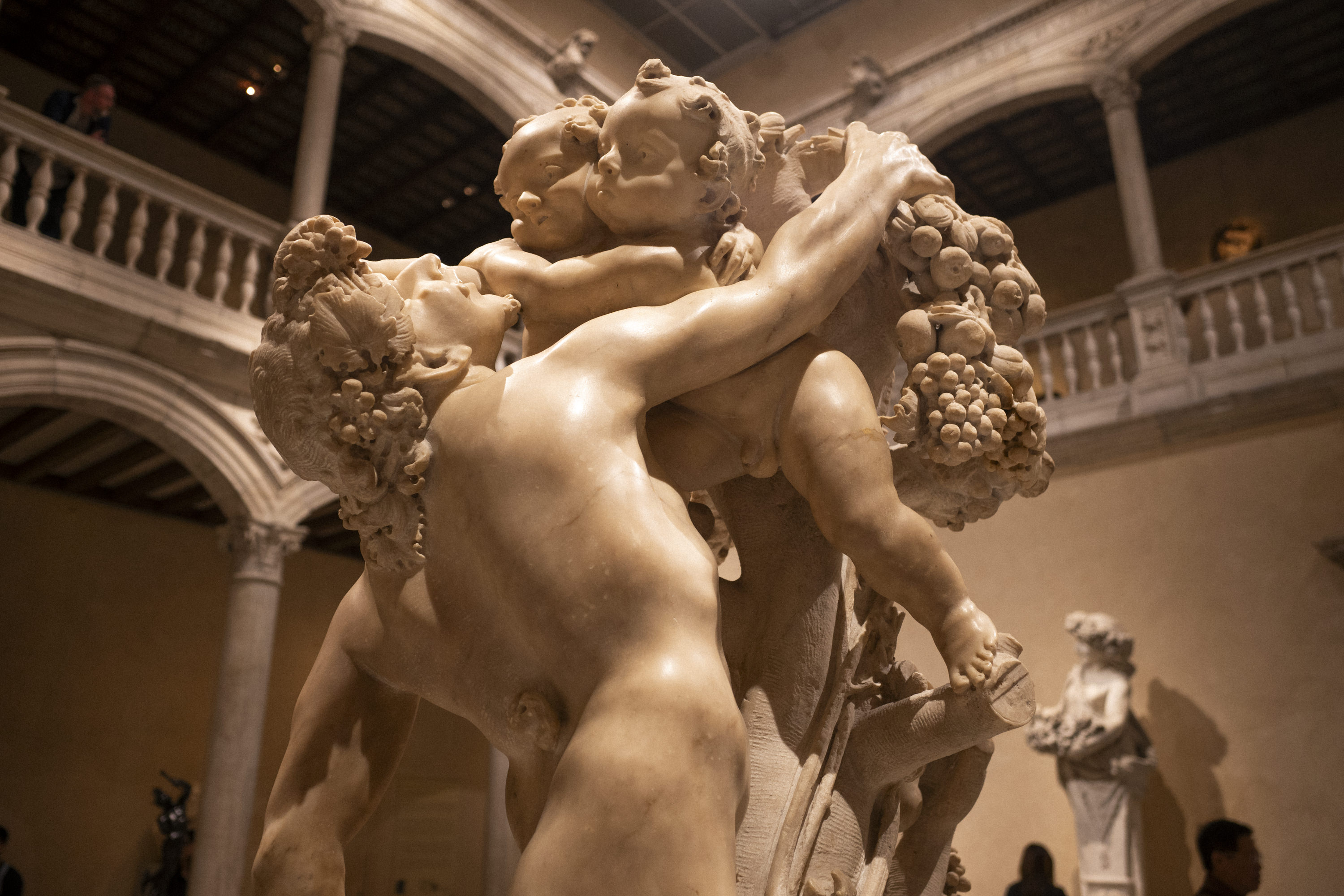
Dash! Up and around and through various doorways and then, boom, a Bernini. “Bacchanal: A Faun Teased by Children ca. 1616–17.” Throughout all of this I couldn’t shake the notion: Same brain. That kept repeating in my head. Same (flawed) brain, making all these things. As in, there were no evolutionary leaps of note between 1,000 B.C. and 300 B.C. and when this Bernini was made, just four-hundred-or-so years ago. Same brain. But wow — WOW. This is our superpower, looking and seeing and believing: Oh, we can do that? And then taking that and raising it to the nth degree. Over and over. (And here am I, typing on a machine made from a seemingly infinite amount of compounding of belief.)
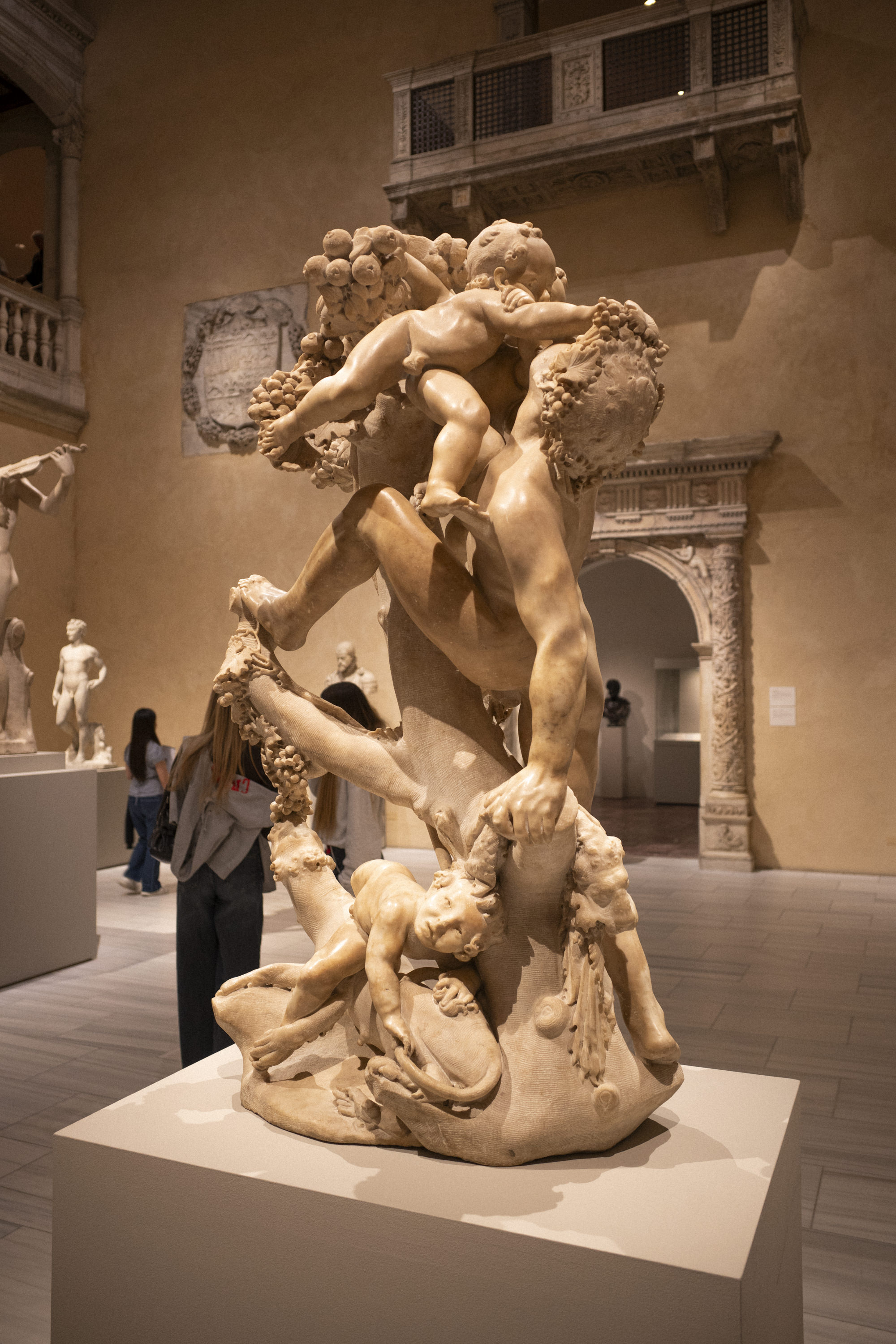
And standing before this Bernini: The perfection of the execution of this thing in stone, seeming to exist not just in three dimensions (the “marble statue of a human” just barely seemed to step out of the second dimension) but also time itself, like it was moving as you moved around it, action unfolding, still unfolding, legs and arms intertwined in unexpected ways and ways you could only see by revolving around the thing, running around it, looking for how all the appendages connected or were supported. It was beautiful and joyful and masterful and fun.
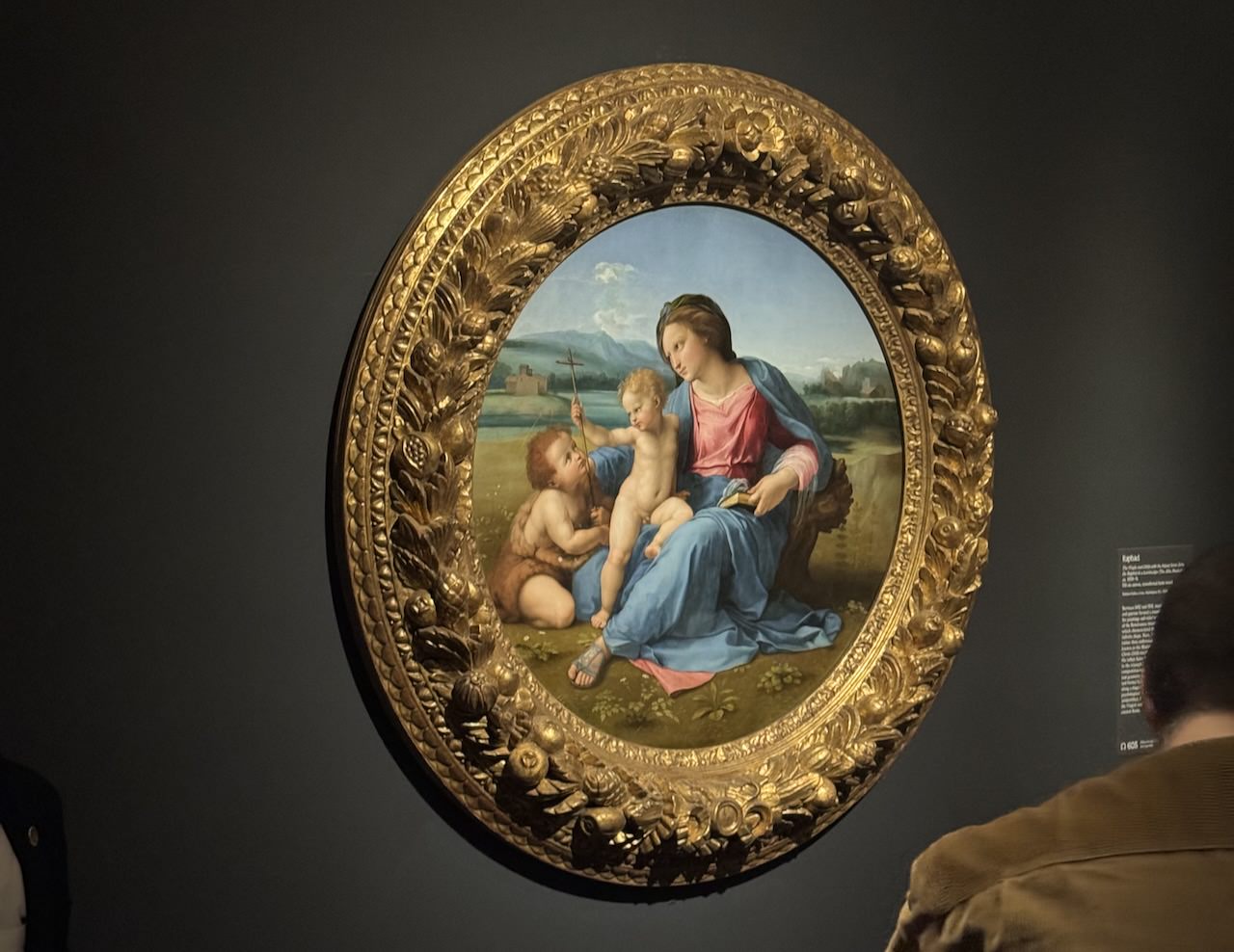
We passed the entrance to the Raphael exhibit, the one “everyone is talking about” and, strangely, it didn’t have a line to get in, you could just wander right into its guts. Let’s do it, the Professor said. He had two things for us to look at. (Not that there were only two things worth looking at, but we were just going to peek at two given our time limits.) First was one of his early drawings, and second was the “Alba Madonna,” painted around 1510. “Tondo” (round) format, “Madonna of humility” sitting on the ground, etc etc. The room was crowded but we got close and for a moment I thought we might sniff the thing, and then backed off and looked from a distance. I was entranced by the halo. There was something almost … digital? about it. Incredibly gossamer, despite it being this object of “eternal divinity” or from “another realm” altogether. It looked like a rendering glitch, like the sync-lines had shifted between television on heaven and television on earth. Like the signal powering the halo wasn’t operating at full tilt. Like it was a radio station coming in and out of the universe’s fuzz as you drove between state lines in a Honda Civic with hand-crank windows in 1998. Basically: It looked contemporary in a way nothing else in the painting did. I enjoyed that gap greatly.
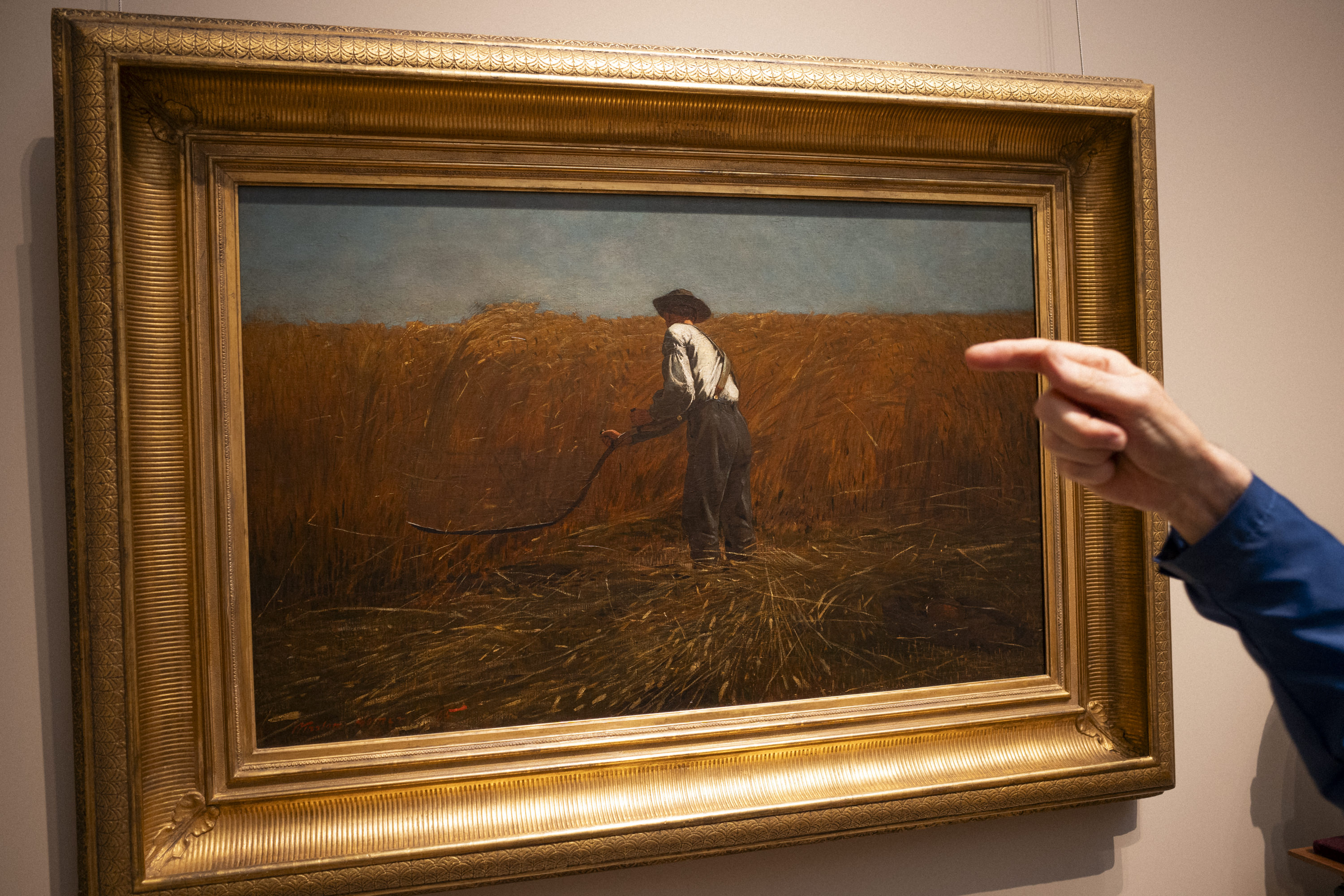
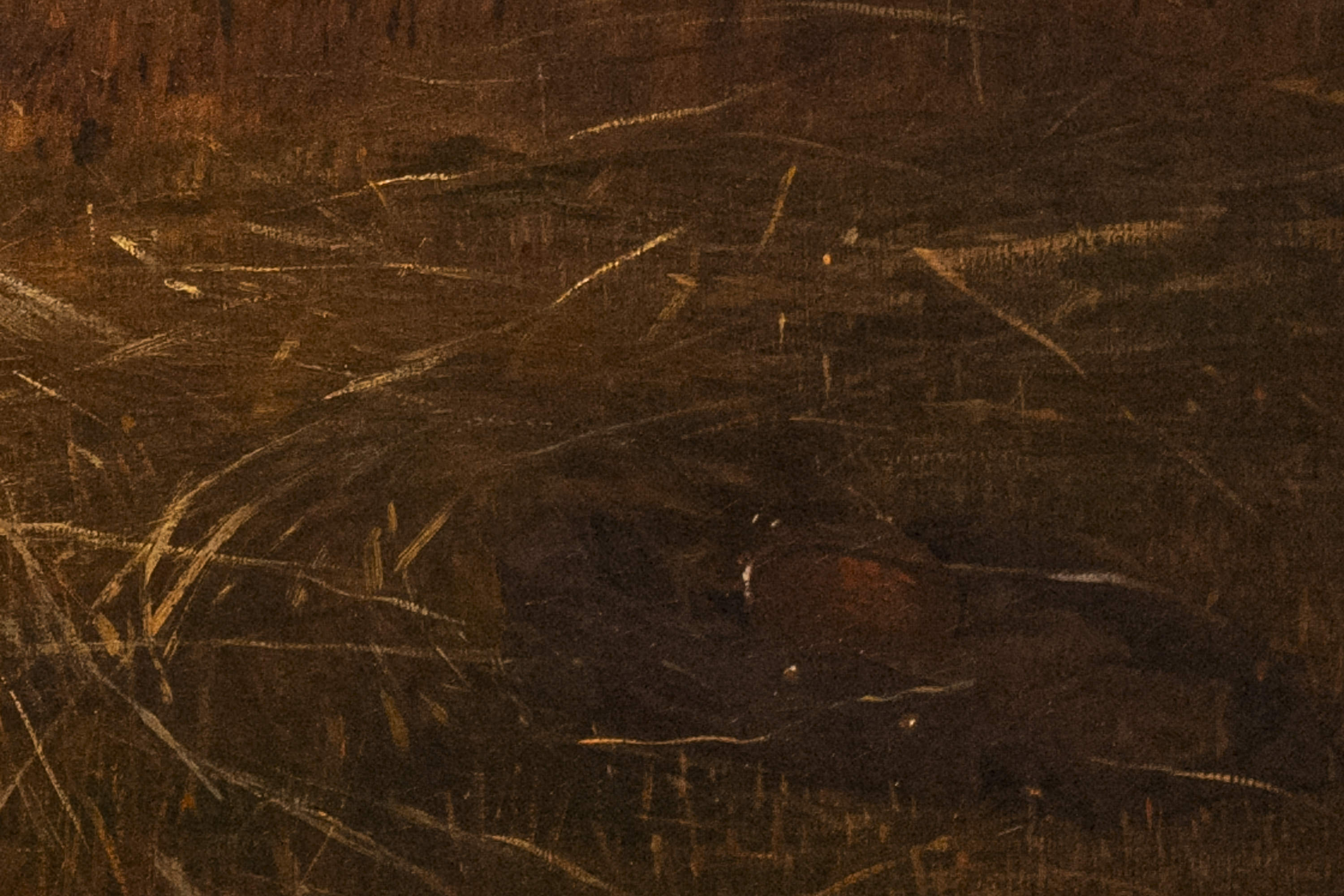
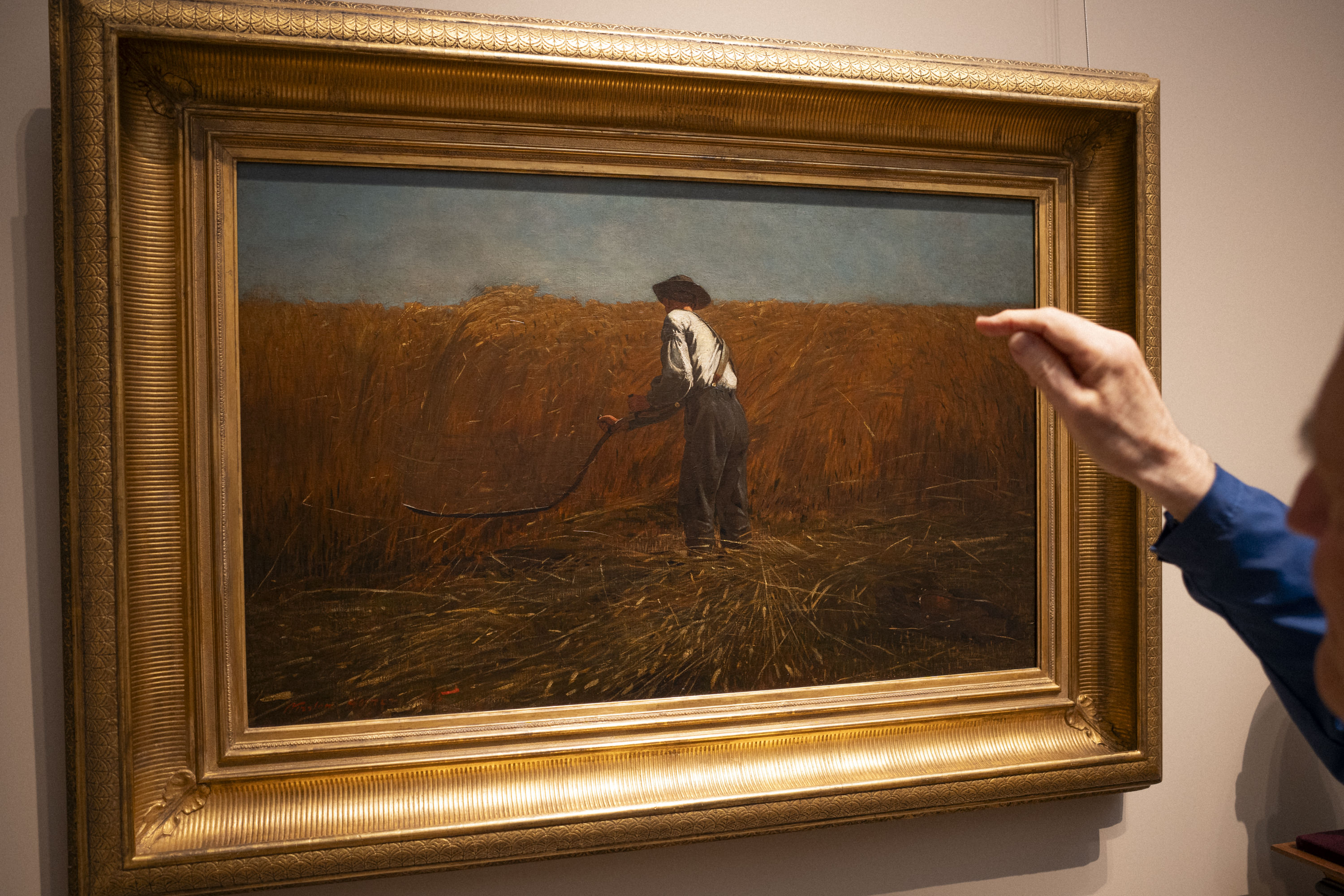
On we ran. We stood before Winslow Homer’s “The Veteran in a New Field,” painted in 1865. Light, the light hitting the veteran’s hand holding the scythe, light on the stalks, the stalks themselves, the sense of movement and the falling of the stalks. Noticing he’s not wearing suspenders so much as a kind of harness to hold the scythe. Oh, and in the corner, dull, almost invisible (to me at least), his uniform jacket and hat cast off.
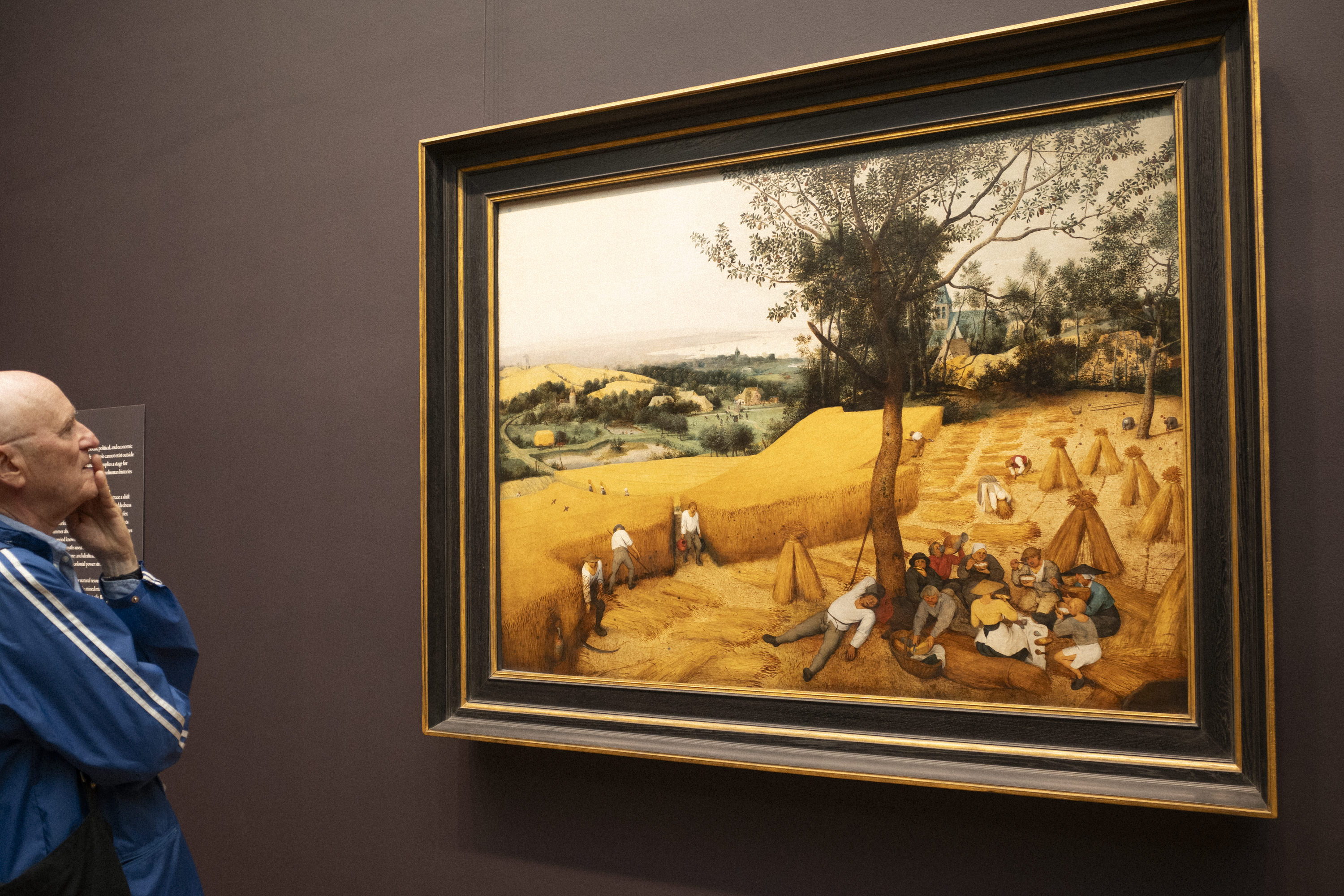
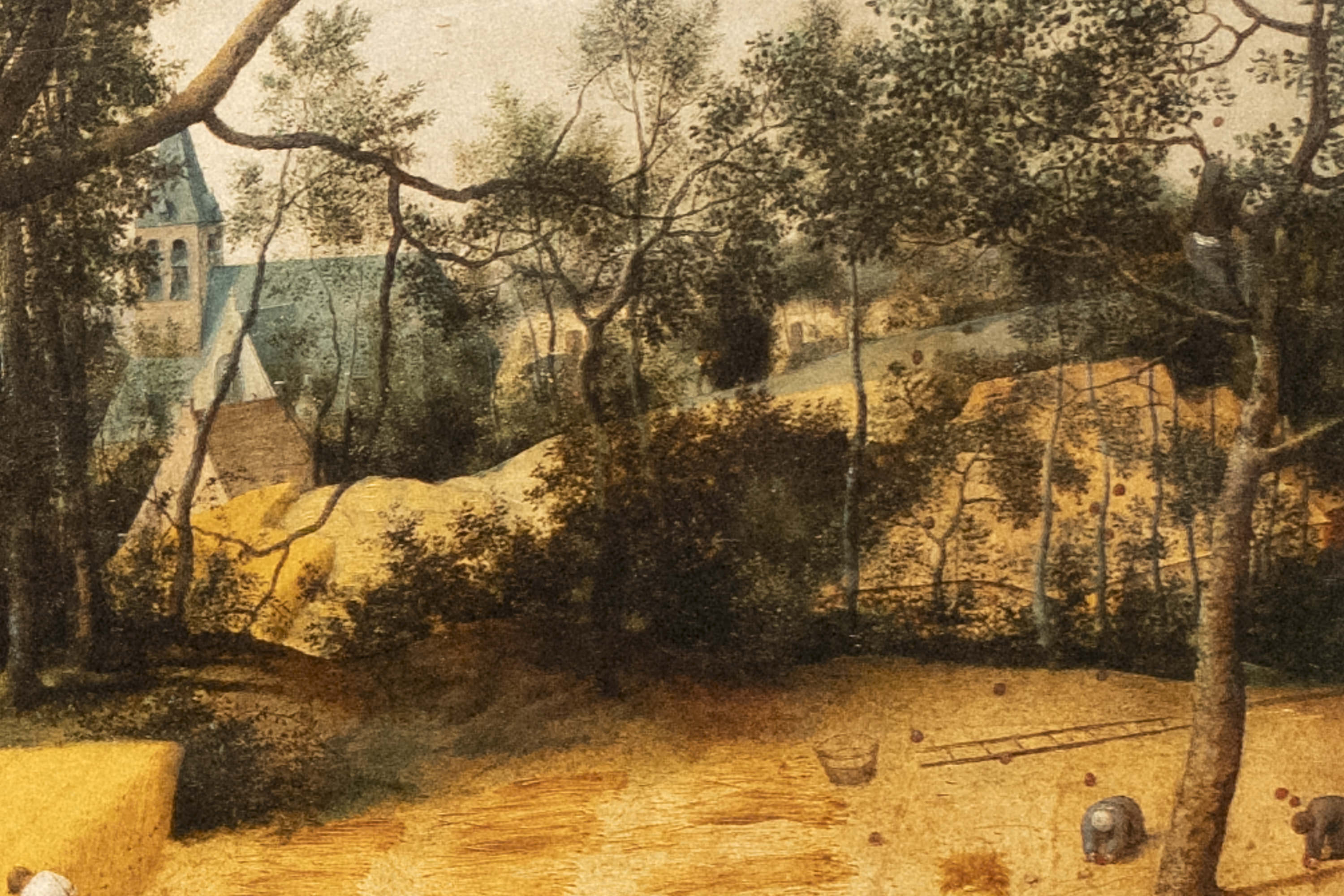
And then finally Pieter Bruegel’s “The Harvesters” from 1565. Making note of the geometry of the fields, the fields in the back, the echoes of the geometry again on the left, the general drunkenness of life in that time, the man up in the tree (inverted?!) knocking apples down, the ladder having fallen, wondering how tough it would be to shimmy back down or if those women down below would put the ladder back up for the guy. Perhaps he was just going to live on up in that tree forever.
That day, the Met was closing at five, and so we ended up having only a couple of hours of speedwalking it. The Professor was apologetic, but I felt like it had been an ideal experience. I can only handle, maybe, a few hours of “real looking” before I need a break. And museums lower that threshold even further, since the fire hose of stuff to apply attention to is so vast. The running (so invigorating!) through the museum, dodging tourists, feeling the ebb and flow of crowds (they disappear so quickly!) and finding yourself before some incredible, thousand-year-old piece of art … well, that was a lot of fun.
Also, what a place — just overwhelming architecturally and in terms of cultural density. Open, basically for free, to residents. A great gift. And, it turns out, a pretty good place for zone 2 cardio.
More soon,
C
Not subscribed to Ridgeline?
(A weekly letter on walking in Japan)
This essay is from the Ridgeline newsletter, mailed out June, 2026. Thoughts? Email me@craigmod.com.
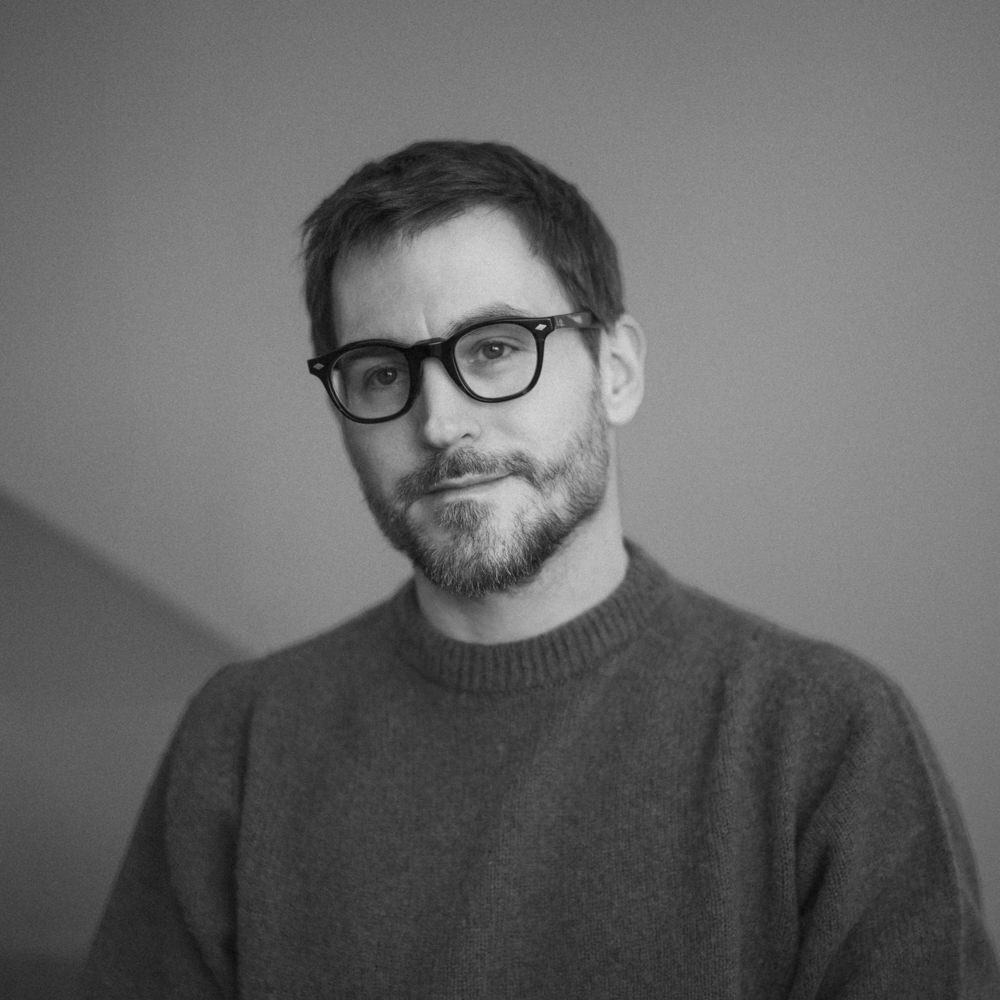
Craig Mod is a writer and photographer based in Japan. He's the author of the books Things Become Other Things and Kissa by Kissa and is a MacDowell, Ragdale, and VCCA writing fellow. His essays and articles have appeared in The New York Times, Eater, The Atlantic, California Sunday Magazine, Wired, Aeon, New Scientist, Virginia Quarterly Review, The New Yorker, The Morning News, Codex: Journal of Typography, and elsewhere.
He writes newsletters, oh yes, newsletters: Roden & Ridgeline.
The work on this site is supported 100% by paid memberships and book & print sales.
Whatever you do, don't follow @craigmod on Bluesky or Instagram.