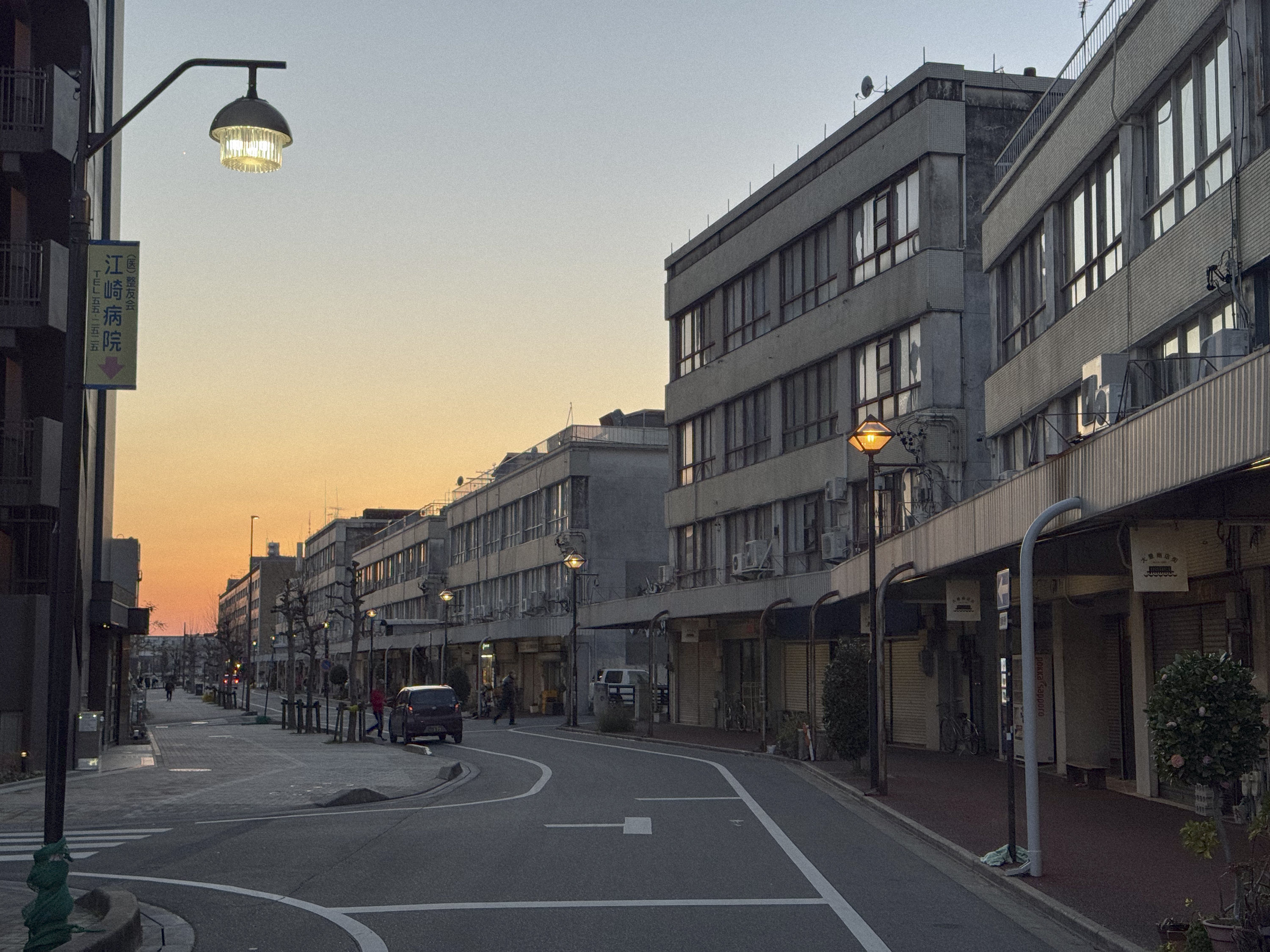
The Shops Atop the Canal in Toyohashi
Why the Suijyō Buildings in Toyohashi are worth a peek
Ridgeline Transmission 224
Ridgeline subscribers —
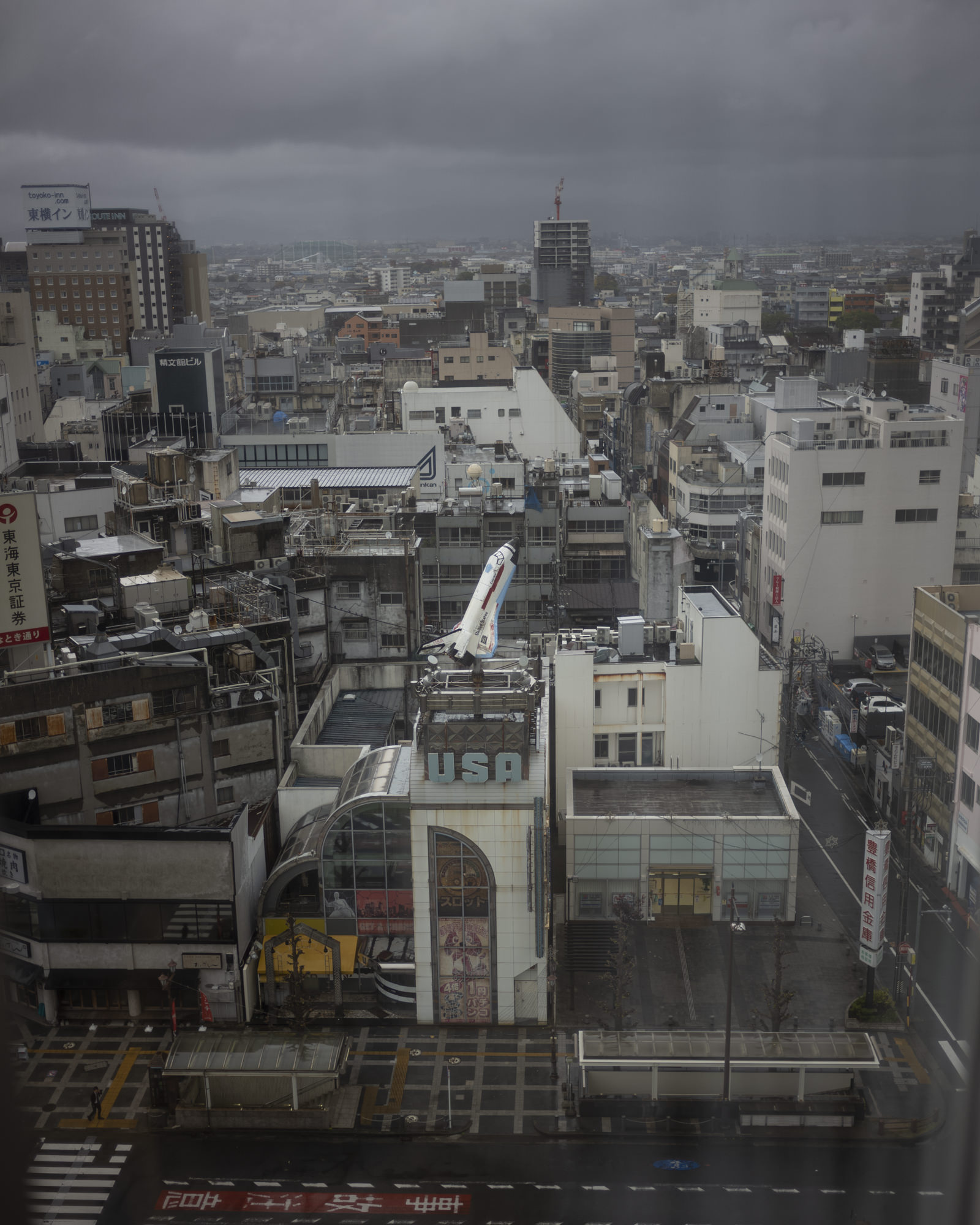
Hello from Toyohashi, a city between nowhere and somewhere else. A Tōkaidō city I’ve walked through on my two trips back and forth between Kyoto and Tokyo. A city with a space shuttle on top of a building and the letters USA strangely emblazoned below.
On both of my Tōkaidō walks, one particular bit of Toyohashi has stood out to me and has intrigued me in ways few other little bits along the old road have: A stretch of shotengai called (variously) Daiho Shoten or the Suijyō Buildings — literally, “Above the water.”
What began as a post-war black market is now a funky stretch of three, three-to-five story skinny buildings, about 800 meters long, southwest of the main station: Toyohashi Biru, Taihō Biru, and Ōte Biru. Built between 1964 and ’67 through the pooling of funds of fifty-nine shopkeepers, it must have been impressive as all hell when it opened, a beautiful, tiled, shopping and living bonanza. The first and second floors of the buildings have been reserved for stores. The others, government subsidized apartments.
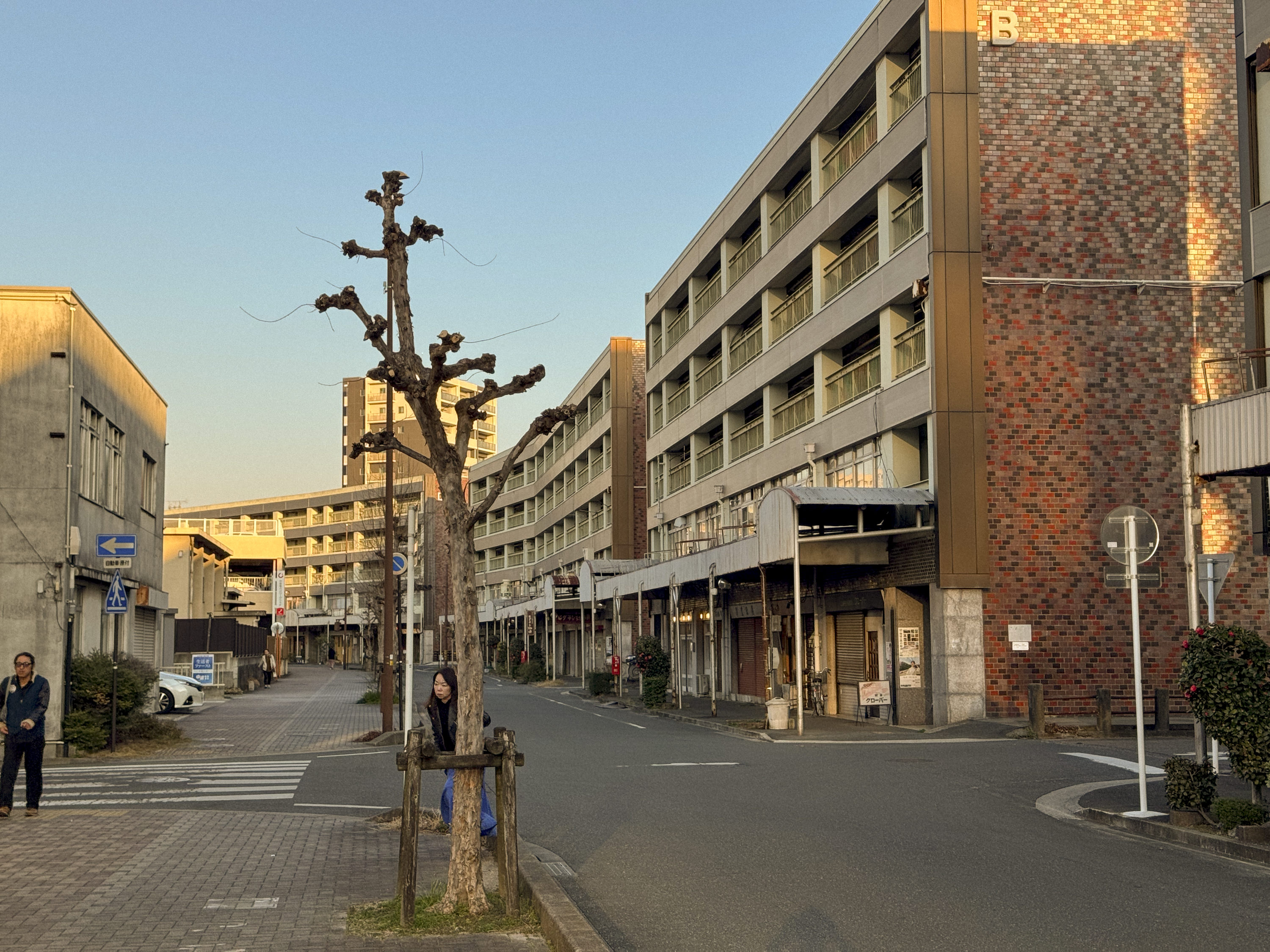
To be perfectly frank, it is not a particularly thriving enterprise at the moment. Because the upper floors are owned by the city, they’ve mostly gently evicted the residents due to crumbling infrastructure. The bottoms of the buildings have different owners, and so the shops persist. But all considering, the whole of the structure — the spine of the thing — seems to pulse magnetically with a strange energy of the last six decades. And each time I’ve walked through Toyohashi, I’ve been drawn to it like a sweaty walker to a salt lick.
Turns out, in 2004, Kurono Yūichirō — an architect who grew up in the buildings — returned from working in Tokyo to initiate a revitalization project called Sebone. It worked, sort of, in that it did revitalize things for the next decade.
Today, there are a lot of shutters. But there’s also a few new shops popping up, somewhat surprisingly. I popped into a record shop called LIE Records, run by a blonde-haired dude with pink spectacles forever on the end of his nose, wearing, today, a kind of black fur vest. He had opened only three years ago. They DIY ripped the space apart and rebuilt with “Art Deco vibes” in mind. It’s impressively packed with records. Feels a bit like outer space.
And then a few shops down there’s Nekoze Shoten, a cute-as-cute-can-be bookshop. Run by two of the most straight-out-of-a-Ghibli-film bookshop owners ever seen:
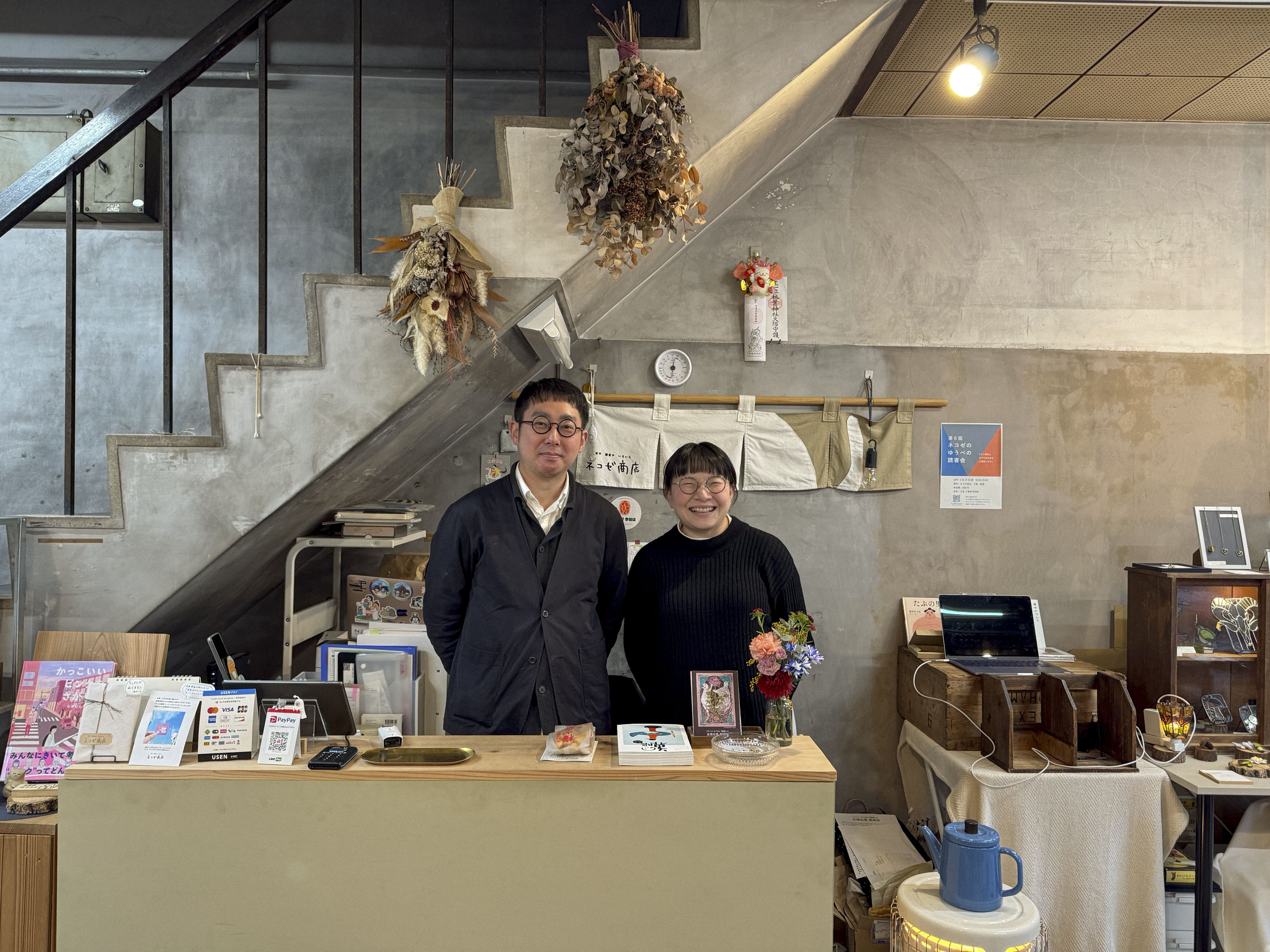
Takeuchi-san and Nakagami-san run the shop from 4 pm - 8 pm on weekdays because Takeuchi is actually a high school science teacher. They opened a year ago. Are you Mr. Kissa by Kissa?! Nakagami-san asked. Turns out, they had been carrying the Japanese edition of my book, recently sold their last copy. I loved the feel of their shop, the extreme hand-selectness of it, and how they were taking part in a larger national renaissance of independent bookstores across Japan. I bought some ume-infused arare and happily chomped on them as I walked around town.
One place I’ve returned to over and over has been Kissa Caron — as spicy and smokey as it sounds — which today, sadly, I missed (it closes pretty early). But it’s been going since the inception of the buildings.
The question I have for everyone, though, is: How much longer? How much longer can this place continue considering how everything else around the station is being ripped up and redeveloped with the same, bland, soulless impulse so common across the country (across so much of the world). You know, that glass-and-nothingness cheap modernism that will age like a plastic shovel.
Kurono Yūichirō has been thinking about this, too. The council managing the structures recently had a “kanreki” birthday party for the whole complex in 2024, when it turned 60. Kurono estimates it has 20 years left. Eighty being about the limit for a lot of concrete structures. But why hasn’t it been torn down already? That’s the interesting bit: Because it’s built above a river / canal, it’s technically now an illegal structure. And so if you rip it down, you can’t rebuild. In a weird way, the water beneath has protected it and continues to protect it. There’s something wonderful about that — the old Muro rice irrigation canal keeping alive a crumbling set of concrete buildings — buildings from a very different era, an era of growth and hope and future-thinking, an era of rebuilding and quirkiness and personality in architecture, rising out of literal ashes of war (Toyohashi was firebombed to dust). Kurono is already planning how to “gracefully” wind it all down when the time comes and the concrete starts to come apart.
I knew none of this until a few hours ago. But I felt so much of it in my brief moments passing by. Little by little, the post-war era of the country is being removed, erased, replaced with things taller, and better insulated, and probably safer in the event of a quake, but without any personality or texture or life. And certainly without the infrastructure allowing hundreds of different shops — all run by their own special breed of weirdo, selling everything from fireworks to coffee to tobacco to books to gardening implements — to thrive, gifting us with the joy of their presence, all oddly shaped and so intensely human. For now, it’s still here. I wouldn’t say you should make the trip all the way to Toyohashi to walk up and down the spine of shops and history, but if you happen to be in the area, it’s definitely worth popping in for a coffee or a craft beer.
More soon,
C
Not subscribed to Ridgeline?
(A weekly letter on walking in Japan)
This essay is from the Ridgeline newsletter, mailed out March, 2026. Thoughts? Email me@craigmod.com.

Craig Mod is a writer and photographer based in Japan. He's the author of the books Things Become Other Things and Kissa by Kissa and is a MacDowell, Ragdale, and VCCA writing fellow. His essays and articles have appeared in The New York Times, Eater, The Atlantic, California Sunday Magazine, Wired, Aeon, New Scientist, Virginia Quarterly Review, The New Yorker, The Morning News, Codex: Journal of Typography, and elsewhere.
He writes newsletters, oh yes, newsletters: Roden & Ridgeline.
The work on this site is supported 100% by paid memberships and book & print sales.
Whatever you do, don't follow @craigmod on Bluesky or Instagram.