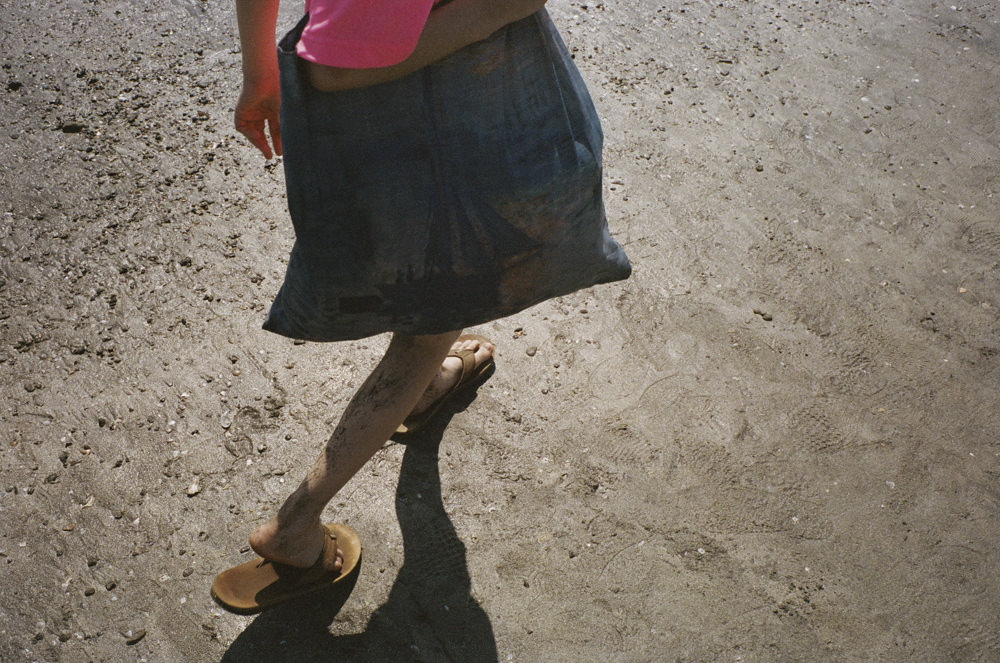
There is sweat and then there is s-w-e-a-t and the out-of-doorsness in Japan is presently a natural machine that produces nothing but sweat and sweat and sweat and swelter. Dryness has been eradicated. Fire is impossible to start. Blowtorch any single thing and it will laugh in your face. The implicit ubiquity of moistness inspired Japanese dictionary publishers to excise “dry.” A useless word. The only sane response is to find a cool cave at the top of a mountain and hibernate until November. (Or go to Victoria, Canada, which I did; more on that below.)
TBOT Fine Art second printing (1000 copies, signed; silver foil stamp + new afterword) will be going live soon. The first-to-know one-off signup list is here.
The Good Place (TGP), our SPECIAL PROJECTS members-only social network, is better than ever. I keep saying this, but I truly can’t believe how nice it is. (X / Threads / Bsky all feel … uniquely poisoned?) It’s basically the only place I post these days. Thanks to everyone who has popped in and shared cool projects / thoughts / ideas / queries for advice.
I continue to make A Good Book (AGB) — our SPECIAL PROJECTS’ Goodreads replacement — more gooder. Here’s how it now works:
The central premise is to share only books you love, so by dint of that, there’s no need for “ratings” — everything you add should be a five-star book
When you add it, you must write why you added it or it doesn’t become visible to the community until you do
Everyone has a shelf
You can add books from others’ shelves to your own; those also should only be five-star books for you (and you have to write why you’re adding it to your shelf!)
You can browse the shelves of other users
If someone has a shelf on AGB, it appears as a little linked icon next to their name on TGP. The shelf shows all the books and all the WHYS for the books. I know I’m biased in that I built this thing, but I love browsing and reading why others have added different books.
#Jet-Lagged Culture Shocks; How Much Risk Is a Useful Amount of Risk?
If you come to Tokyo expecting New York, you’ll be sorely disappointed in some ways (and utterly delighted in others). And if you go to New York with Tokyo expectations (or even “classic New York” expectations), you’ll probably have an aneurysm as you run screaming from the city. (Famously, a variant on this has been documented re Japanese visitors to Paris: Paris Syndrome.) I love both of these cities — New York and Tokyo — in their own idiosyncratic ways. But having just spent nine weeks in NY, I haven’t been able to stop pattern-matching — in particular around risk and “risk tolerance” between the two. It feels like they’re more divergent than ever. In fact, in my twenty-six years of popping back and forth, the cultural gaps have never felt quite as wide.
As my plane descended into JFK on my return flight from that strange Florida trip (as if a Florida trip could be anything but strange), it looked as if New York was at war with itself. It was nine p.m. on the Fourth of July and we were banking over Queens. I pressed my nose to the window. Across the boroughs, tiny explosions were popping off on every block; little bursts of light and sparkle. In the distance, towards the East River and beyond, gargantuan displays of fireworks — almost hallucinogenic in size, like an afghan knit from stars, draped from the heavens — covered large swaths of the sky and cast the skyline glass in wild colors of the coruscating variety.
A few days later I returned to Japan. I booked my ticket to coincide with Kamakura’s annual summer fireworks event. But: the “waves were a bit too high.” So said the loudspeaker announcements in robotic tones on the afternoon of the event. The show would go on but the forty-five-minute event would now be thirty minutes. No, fifteen minutes. No, ten minutes. Maybe. Maybe it would or wouldn’t happen, the announcements continued to announce. I could see the waves from my window; they were fine. Fine waves. Nothing to worry about. Obviously, Japan’s caution isn’t baseless; the country has a hard-earned memory of the power of the ocean. But these were not those waves. On the other side of the ocean, during that Fourth of July chaos spectacular, rockets were shot off from street corners and rooftops in Prospect Heights — likely hitting homes and cars — and, in fact, so many fireworks were ignited with such impunity that the Brooklyn Bridge itself caught on fire.
In the end, Kamakura city set off about twelve (12) fireworks in batches of four, separated by roughly five-minute breaks. And only “low fireworks” — sea-bound fireworks that never gained altitude. The crowd on the beach was a purported 100,000 people. Japan Twitter was a curious mix of violent incredulity and praise for the city refusing to “take a risk” without pristine working conditions.
A park in New York City is a ridiculous place. Anyone can kind of do anything (for better or worse, but mostly for better). They’re filled with every imaginable kind of person. I went to parks all over Manhattan and Brooklyn and never once wasn’t delighted by the formal/informal disorder. Technically, yes, there are “rules” in the parks, but nobody follows them explicitly and nobody enforces infractions. I’ve seen cops smoke in parks (technically illegal). Beside the smoking cops, citizens rollerblade in polka-dot suits, mimes with mohawks juggle, gold-painted dudes do their gold-painted dude thing. In New York, people jog through parks with so little clothing on you wonder why they bother with any (it reminds me of the naked bike gangs in Portland who do away with everything but the bicycle seat). There’s an unstated agreement between everyone in the parks — just don’t be a huge piece of shit, and everyone will mostly work together to accommodate. A friend and I absentmindedly walked through a random patch of Central Park and found ourselves in the outfield of an active softball game (there was no fence, nothing to make you think you were wandering onto the field). (They paused for us to finish grazing by.)
Back in Tokyo, after the fireworks spectacular, I went to Yoyogi Park. An announcement was playing: “Rollerblading is dangerous, make sure you don’t do it! And be sure to not play catch! And stay off the bike paths! And don’t run in the non-running areas!” I was barely ten feet into the park when I heard those broadcast rules in both Japanese and English. As the rules were sermonized overhead, people moved with heat-stroke torpidity, smartphones cradled near their faces. Last fall, while walking through Yoyogi, I counted: 97 out of 100 people were looking at their phones. Nobody was doing anything that looked particularly fun. Never have I felt it more acutely: The world doesn’t need a park that bans rollerblading. It needs one that bans smartphones.
You could argue that both countries are overcorrecting in the wrong direction. Japan has always loved rules. The first thing you saw when you entered a town in the Edo period was the kōsatsu edict board with exhortations of Confucian morals, bans on Christianity, various other prohibitions, and more. But when I arrived in Tokyo in 2000, the city felt far less rule-bound than it does now. Of course there were a host of ambient cultural norms as there are anywhere, but there was also a looseness. Take Yoyogi Park: my friends and I used to set up and play music on the street around the park next to dozens of other bands. The park had ad hoc yatai vendors grilling up questionable food. People ran wherever they wanted and smoked and cavorted with a general silliness. You could probably have rollerbladed back then and no one would have batted an eye. Those rockabilly geniuses danced their genius rockabilly dances. Nearby, Harajuku was once a sneaky epicenter of risky fashion improbability.
Meanwhile, that risky improbability is still hiding over in Japan’s matsuri festival culture — a cultural nook where folks take risks that make New York parties feel like grandma’s house. Men in fundoshi — often very drunk, and drunker by the minute — haul perilously heavy portable shrines around town, carrying so much weight they develop grapefruit-sized welts on their shoulders. Outside of Tokyo, things get even more intense. At the fire matsuri in Shingū, men routinely break limbs and get in fights as they sprint down a mountain carrying torches. Around Suwa, during their Onbashira festival, men ride logs down a mountain. Deaths are not unheard of. At Nada no Kenka Matsuri in Himeji, participants deliberately smash two-ton shrines into one another. In 2009 a forty-nine-year-old city official had his head crushed between two of them.
Knowing how wild matsuri can get makes the increasingly demure nature of Tokyo’s day-to-day all the more puzzling.
Japan (to me — a “me” that comes with a lot of latent pathologies and projections) feels like it’s folding in on itself more and more. These last ten years in particular. As the population contracts and the yen weakens, as Japan loses its economic foothold on the global stage to countries like China, Japan seems less willing to take risks. (You can see this in the startup scene over the last twenty years; it never really popped in a way we all expected it to (there was much excitement in the early 2010s); SoftBank’s Son lives not in Japan, but on Risk Jima, Kiken-ku, Abunai 1-chōme, apart from everyone else.) Though: Now that inflation has arrived and the stock market is booming, maybe we’re at a turning point.
Tokyo is a city of more rules than ever. The IOC (an international organization for generating new laws in Olympic host cities) and overtourism are partly to blame — hordes of wannabe influencers descending on the city not knowing to be hush-hush quiet on trains or to carry their garbage properly will cause many a sphincter to tighten. But the tourists are an easy excuse. It feels like something is happening psychologically, spiritually, and generationally that’s causing Tokyo to lose its human texture, in ways large and small. The Mori developments are replacing entire superblocks of the city — once filled with small shops and homes — with anodyne glass nothingnesses. (Of course: an issue not unique to Tokyo.) Many Shōwa-era stalwarts are closing (the venerable and beloved DUG — the first jazz bar I ever went to in the city back in August 2000 — just closed at the end of June). Shops run by a single family for a lifetime are the shops we’re losing fastest. And many new laws seem to target the wrong acts. Instead of stricter car regulations, they go after cyclists. Weirdly (paradoxically, given the image of NY cabbies), drivers in NYC seem to respect red lights more rigorously than drivers in Tokyo. And yet cops in Tokyo are handing out more tickets than ever … to people on bikes. (I do applaud the effort to finally get bicycles off Tokyo sidewalks. When they were human-powered mama-charis, it was a quaint anachronism. But with the advent of hulking electric bikes, it’s nonsensical.)
On the New York side, you could easily argue that it’s too much the opposite. People are too open, tumult and havoc are too on display on every corner. On a daily basis, you’ll see things and smell things you’ll never be able to unsee or unsmell for the rest of your life. But there’s a kind of vibrancy of life (these skater kids are a wonder, my favorite thing I’ve seen in ages) and openness within that New York mess that simply doesn’t exist on the Tokyo side, though a version of it used to be more present — which makes the feeling of Tokyo’s contraction, its losses, all the more heartbreaking.
If you’re going to optimize for Too Much Risk or Too Many Rules, I’d choose to land on the side of Too Much Risk. It’s easier to dial back risk than dial back rules. Citizens become inured to and dependent on rules, so much so that rolling them back becomes difficult or impossible (the cameraphone shutter sound in Japan (.PDF) is a prime example of an impossible-to-revoke rule that isn’t even a law — its original purpose was usurped by technological advancements decades ago, and yet all the phones still make noise; on the American side, look at all the idiocy around gun laws).
One benefit of a slightly elevated capacity for Collective Societal Risk is (among other things), I believe, a greater sense of humanity (via evidence of humanity) — of life and sex and sport and business and music and art and culture more readily on display. Risk-taking (even on a minor scale — rollerblading!) reminds us of what’s possible, and helps us continually reassess our personally held boundaries. It’s difficult to feel “free” if you’re constantly being watched and judged, measured against the phonebook-sized rulebook. Which makes retreating into the phone all the more enticing. When I think of walking around New York I think of an absence of judgment; nobody “caring” in either direction. That is: People don’t care what others think of them, and most of us don’t care what everyone else is doing. There is a playfulness to it all, present on every block. Eat a bagel on a pogo stick next to Bryant Park? Sure, why not. Jaywalk your brains out — cars respect those red lights and pedestrians because they know humans have the right of way, and those pedestrians are willing to take very dumb risks to assert it. New Yorkers are as phone-poisoned as anyone else, but if they don’t frequently look up, the chance of being maimed is significantly higher.
Also, despite the elevated risk — despite seeing a guy zoom by on a Onewheel with a baby strapped to his chest — I didn’t witness any actual injury or violence or danger those two months I was there. (I am amazed that a thousand helmetless people a day aren’t dying on Citi Bikes. You’d think they would be and yet …) A corollary of being surrounded by a little spice: you realize it’s largely going to be OK. The Knicks won and I wandered through the night for hours and, yes, everyone was a bit nutty, but amidst the nutty jubilations — amidst the streets teeming with humans moving in groups of thousands like starling swarms — I didn’t see anything bad happen. Rules were being broken left and right, and most everyone was … fine?
Meanwhile, in Tokyo, those incredible skater kids would be scolded by a dozen cops before they could make it down one block. As entire generations are sucked into their phones, as casino dopaminergic loops are normalized, as AI foments existential doom, we need more kids doing more jumps off more broken sidewalks. (And environments and parents that encourage that kind of calculated and purposeful risk taking.) It’s certainly better than being stuck inside — brains broken by short-form videos — even if outside the kids might break an arm.
One particular New York moment continues to pop into my mind every few days:
I was sitting out on a pier near TriBeCa, next to the Holland Tunnel vent. I was alone, reading, admiring the early summer clouds (and luxuriating in heat sans humidity). An older woman came walking by. Nice out here, I said. I love it, she said. And then: Do you live nearby? And I told her no, I was just visiting for a couple months. And she stopped and said: You know what, you should live here all the time. It’s amazing. And off she continued on her walk.
Given enough time, New York will drive you insane. It is frequently loud and often very stupid. Yes, it is embedded in a country that is run by embarrassing morons and kleptocratic buffoons. But: NYC is NYC — a country unto itself. At times it feels held together by centuries-old fishing wire. But goddamn, is everyone hungry and “going for it.” Granted, I was in the city in arguably the greatest two-month period of the last fifty years: Mamdani — “my mayor” as everyone seemed to yell — was doing his charismatic thing, the Knicks won, Taylor was getting hitched, the World Cup had arrived, the weather was chef’s-kiss perfection. It’s pretty easy to overlook the many (many) deficits of a place when all that’s going on.
But here are my hopes for the next twenty years: I hope that Tokyo loosens up a little, that it remembers what it used to be: a pressure cooker of weirdness and creativity of the sui generis style of Japan. A synthesizer of global trends into fabulous inverted Japonisme. I hope the citizens of Tokyo become less wary of visitors (many are amazing despite the annoying ones being obviously annoying), and find a way to allow more creative people from around the world to make this miracle of a city their home. A city where housing is still affordable, where you never worry about safety, where investment in public transportation and infrastructure is nonpareil, and where everyone has access to excellent health care for a song. Can you live in a Brigadoon and still take interesting risks? (Intuitively, you should be able to take more risk given the safety nets.) That question seems central to Tokyo’s future.
Many of Tokyo’s charms are in its silences and quiet interludes. The city’s prizes are often behind closed doors in a room the size of a closet, not out on the street on manic display. There are more amazing low-key, small-scale, high-quality shops, restaurants, ateliers, and cafés per capita than in any other city in the world. But in the same way that a random New Yorker kvetching to you for the tenth time in a day can be grating, so too can the lack of small talk in Tokyo. Sometimes you really do just wanna bullshit with someone for a hot second, and not feel like a nutjob for doing so (or wanting to do so).
And for New York, I hope the health care gets better, that those struggling with addiction get real treatment options, that homeless people are given better support. I hope housing and meals become less insanely priced. But I hope the city never loses its crazy heart, its messy ability to make a ten-block stroll a buffet of bizarre delights. Even as Manhattan is hit with the scourge of Duane Reades, as Blank Street private-equity coffee displaces old-school diners (you would not believe the number of people who told me not to go to Blank Street), as Downtown Brooklyn gets Towers of Sauron filled with AI engineers, you get the sense that there is some irreducible New Yorkness that cannot be displaced (or at least not any time soon). I asked many an old New York head still living in the city if they longed for the days of yore. And they were like: No, people can complain about New York today, but this is really fucking good right now.
Oh, and I hope that Kamakura figures out how to shoot off fireworks, even if conditions aren’t 110% perfection (the display was also canceled last year, also because of wind; I was there: it was not windy). Sometimes what 100,000 people need is a dumb display of rockets shot high into the night sky, carrying with them a bit of risk, a bit of danger, but also a whole lotta collectively shared beauty and awe. A small trade with a big payoff, almost always worth the gamble. Sometimes the Brooklyn Bridge catches on fire, but don’t worry, we know how to put it out pretty quickly.
I’ve been working over those thoughts for almost a month now. I don’t want to come off as overly negative, but simultaneously want to capture the energy differential that feels so apparent between Tokyo and New York right now. I felt something similar in 2007 when I was going to Shanghai a lot — it was alive and everyone seemed to be taking risks (opening little cafés, starting fashion businesses, etc.). I wish I had written more about my experience with that special, somewhat fleeting period in Chinese history.
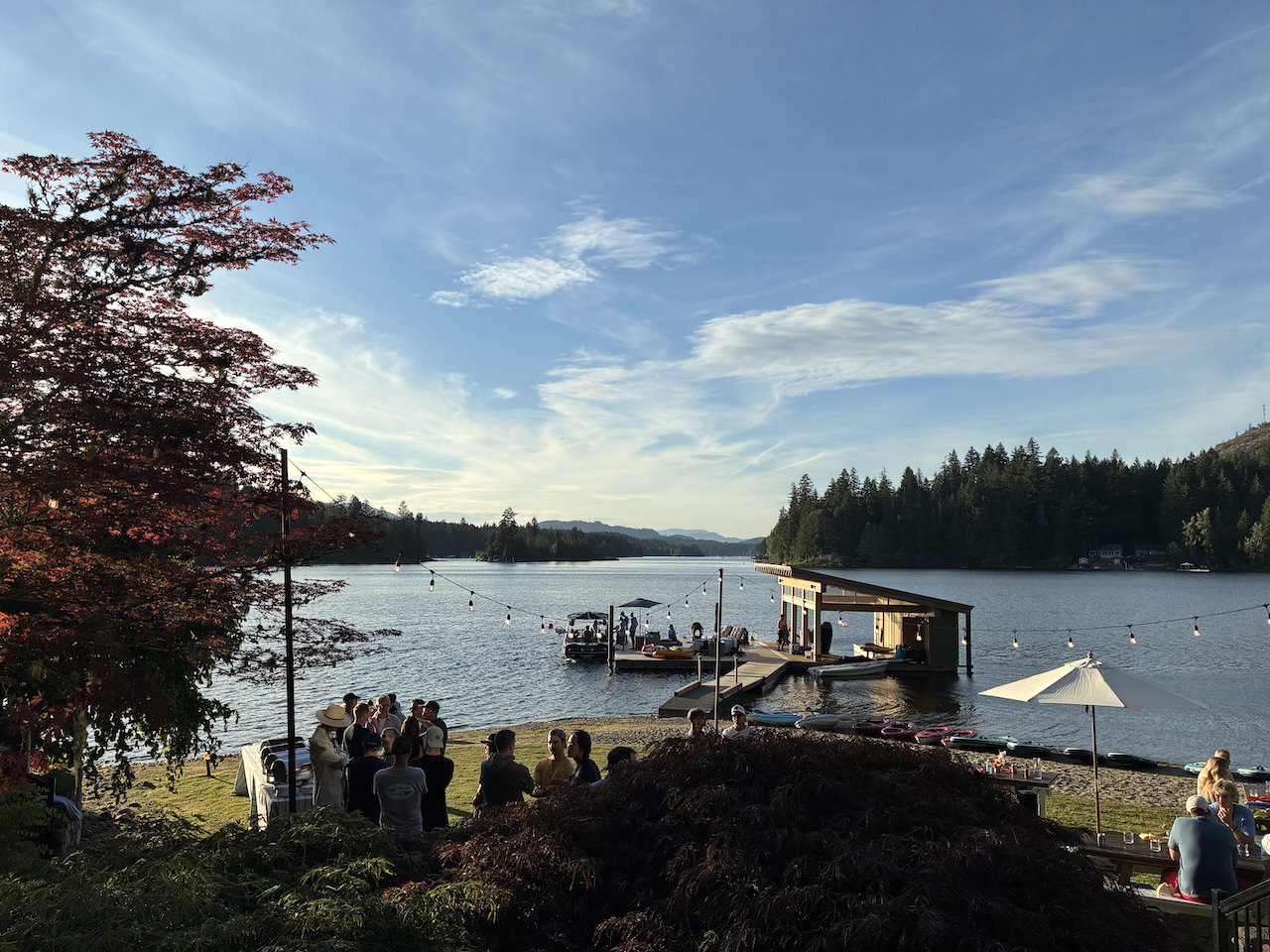
Out of the blue, I was invited by event founder Andrew Wilkinson to the so-called “Interesting People” conference/gathering. My MO this year is to try and spend as much time as possible with people I love, and it turned out a bunch of people I love were going to be there. Also, it was in a place that promised: Cool! Crisp! Air! So I rallied, hustled, and over to Victoria, Canada I went. A scant six-day trip all in from Japan. I definitely suffered some irreparable jet-lag brain damage. But it was a great little gathering. 150 people or so. Some highlights:
Meeting Scott Burgess, who pulses with infectious energy; I’m not entirely sure what he’s building, but I think it’s going to be good
Chatting with Connie Yang and listening to how a life of side-quests can become life itself
Flying up seated next to the actor Ron Perlman, and going deep on film geekery for a couple hours; finally I met someone with whom I could talk about Kieślowski’s work, my abiding love for the Blue, White, and Red trilogy (and who was excited to blab Kieślowski in return)
Meeting Brit MacRae, listening to her recount her insane drive as a teenager, getting to Hollywood, and now doing her thing which includes acting, yes, but also founding a production company and winning awards; she and Ron are both thinking about the “future of Hollywood” in interesting ways
Meeting Will Mannon — a guy who taught himself Chinese and is obsessed with doing stand-up comedy in China; “it’s my flow state,” he said over and over, about learning Chinese and about doing stand-up in Chinese. “I call it the infinite game that keeps getting better the longer you play it.” I’ve never met someone so organically passionate about something with such a high barrier to entry.
And of course, meeting Matthew Dicks — the sixty-four-time Moth champion storyteller. He led a great workshop about “Homework for Life” — pulling little moments out of your day and shoving them in a spreadsheet, keeping it as simple as possible but being manically consistent; I realized I did a version of this on my big solo walks — homework for life raised to the 1000th power. Instead of a couple seconds, I spend a couple hours synthesizing all the beautiful little moments I encountered throughout the day; activities like this really do heighten your awareness of small moments of great beauty, present every day, almost everywhere.
The other takeaway from Matthew’s talk was people tend to “report” stories rather than tell them. So they report what happened and what was said, but they leave out what they a) thought, and b) felt. Add those two in and you’re doing better than most.
One of the big surprises of the event: how many readers / SPECIAL PROJECTS members I met. It was like a diffused / distributed book-talk event, wherein I gave no talk, and the event had nothing to do with my work. Thanks to everyone who said hi and offered some kind words to my broken brain.
All in, a lovely “unconference” gathering full of great food and inspiring conversations. Well worth the pain of flying halfway around the world.
Hugh Howey (of Silo / WOOL fame) makes some interesting points about publishing up until now, and publishing going forward: “The End of an Era”
Hugh was indeed extremely lucky to do what he did in the small window in which he did it; but I sort of feel the “best” time to have been a writer was actually in the ’60s, ’70s, ’80s, and ’90s, when the industry money was there, reading was a vast and popular social activity, and you could be Just a Writer (as opposed to a social media maven). You didn’t need every book to be a “mega hit.” Publishers gave you several swings if they believed in you. Sure, it was extremely gatekept, but assuming you could “get in” — and just considering the “best time” to have been writing books — I think it was a far better time than now. Now, there may be more implicit and political meaning in reading or writing a book — in that you are rallying against our descent into ever-present dens of gambling / dopamine. But for just “getting a book out into the world”? It feels like it was a more fertile time to do so, when you were more likely to find broad engagement.
Adjacent: I am obsessed with professional eulogies (Hugh’s essay is of the genre), the number of which has gone from zero to infinity in the last year. Many are for programming. Here’s one for mathematics: The Dark Night of Mathematics by Kirwin Hampshire. (The comments are good too!)
It begins with “I am going insane,” which I think is a brisk summation of how many of us feel these days. What I like most about this essay is how “vulnerably mystical” and “emo” it is, some of our best qualities as humans — seeing god in concrete or a turn of phrase:
There is something about mathematical discovery (progress, advancement, creation) which is vital to the spiritual, experiential quality of doing mathematics. The creation (or even the pursuit) of novel mathematics is one way that humans have historically accessed the ineffable and encountered the divine and mystical.
I also appreciate the hyperbole — I think hyperbole is a great way to examine and / or amplify / magnify small feelings of discomfort:
What about if the very second someone began composing a story in their private word processor, the demonic Master Librarian read their mind and completed their story in one million ways, then used some oracle to pluck the best for publishing. What then? The answer is probably the same no matter how bad I make it. The author still writes. But why the hell would we do this? Why would we force the author to endure this nightmare?
Indeed! I’ve been feeling versions of this to varying degrees these last eight months.
I think the core of all these eulogies, the reason for “feeling insane” or feeling some kind of “brain dent,” is simply: The Speed. It’s moving too fast. The changes are coming too quickly. I’m also not entirely certain there are a host of positive corollaries on the other side of things. Social media is a good precedent: it has proven, at scale, run by commercial entities, to be net negative for society. Whenever I open the big social networks I’m shocked by how vapid and reactionary they’ve all become. I’d like to believe AI will open up a billion new opportunities for us, but I’m also willing to concede it may denude us all of purpose.
Meanwhile, in the realm of things AI can’t disrupt: People are dismantling old kominka farmhouses and shipping them all over the world. There’s a bit of Ship of Theseus happening with these farmhouses. When you “ship the farmhouse,” you’re shipping a collection of Lincoln Logs. No walls, roofs, doors. Yes the core support beams are original, but halfway across the world, it is no longer “the same” farmhouse it was. Anyway, we’re going to see more strange things happen as populations age and entire villages disappear in countries across the world.
Phew, too long as always. But if I didn’t get this out I was going to fiddle with those notes on Tokyo and NYC until the end of time. Stay cool. See you on the other side of whatever we’re on this side of.