A Return to Nagasaki
Why Nagasaki should be on the top of places for you to visit when you come to Japan
Ridgeline Transmission 225
Ridgeline subscribers —
I love Nagasaki. The more I visit, the more I love it. It’s a city with a historical and cultural depth and complexity you don’t find in most big cities, let alone mid-sized cities. It rewards multiple explorations, and I look forward to exploring more of the city and prefecture at large in future trips.
If you’ve never been to Nagasaki, you should go. And if you haven’t been in a while, you should head back!
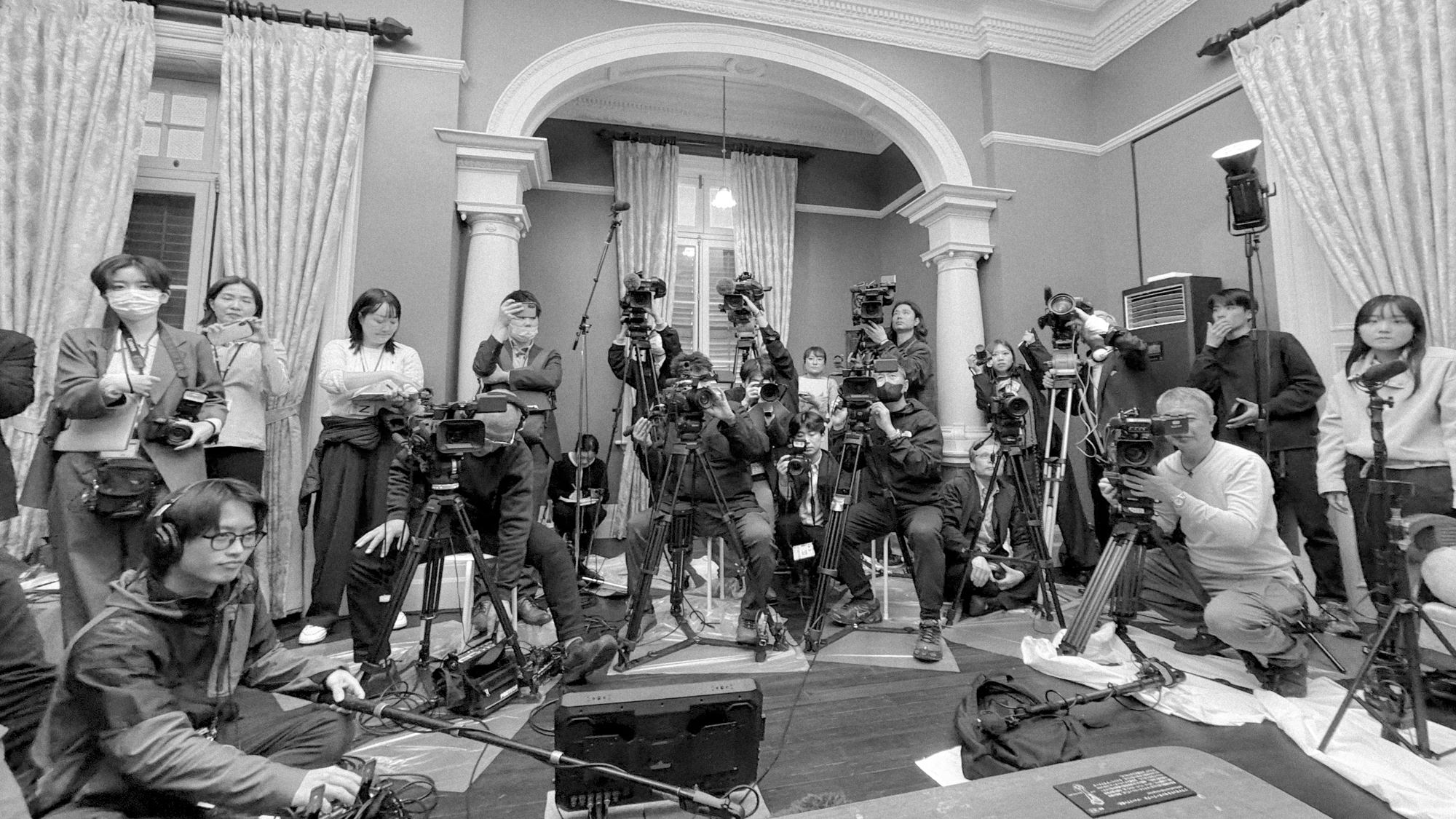
Hello from the other side of a post-Nytimes “52 Places” media / interview trip to Nagasaki. I am feeling — as usual, as I always feel after these things — delicate and fragile and a bit used up. Last week, I participated in an hour long taidan discussion with mayor Shiro Suzuki in front of a wall of TV cameras (see above photo), and then the next day did two more hours of media interviews, while walking around the historic Glover Garden.
I’m always grateful for the interest to talk with me, to discuss the Times selection. I think I’ve gotten better at explaining things over the years, but still, each time I participate in events like this, I worry I’m slipping up or missing some key point. My main purpose, always, in saying yes to these events, is to further elevate the city (I’d prefer to shrink down into the chair and disappear), and for the city to leverage my having pointed at it in positive ways for its citizens.
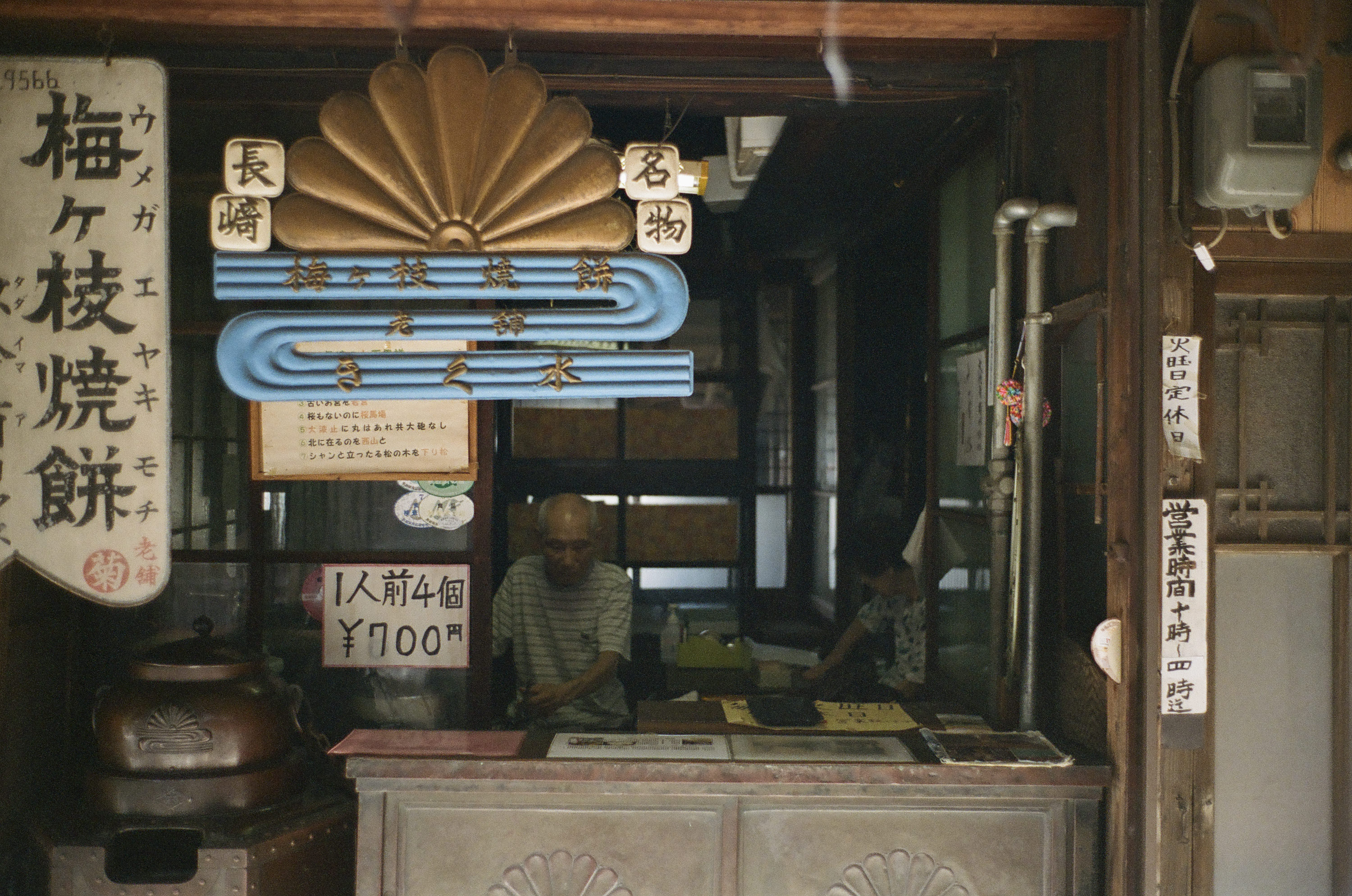
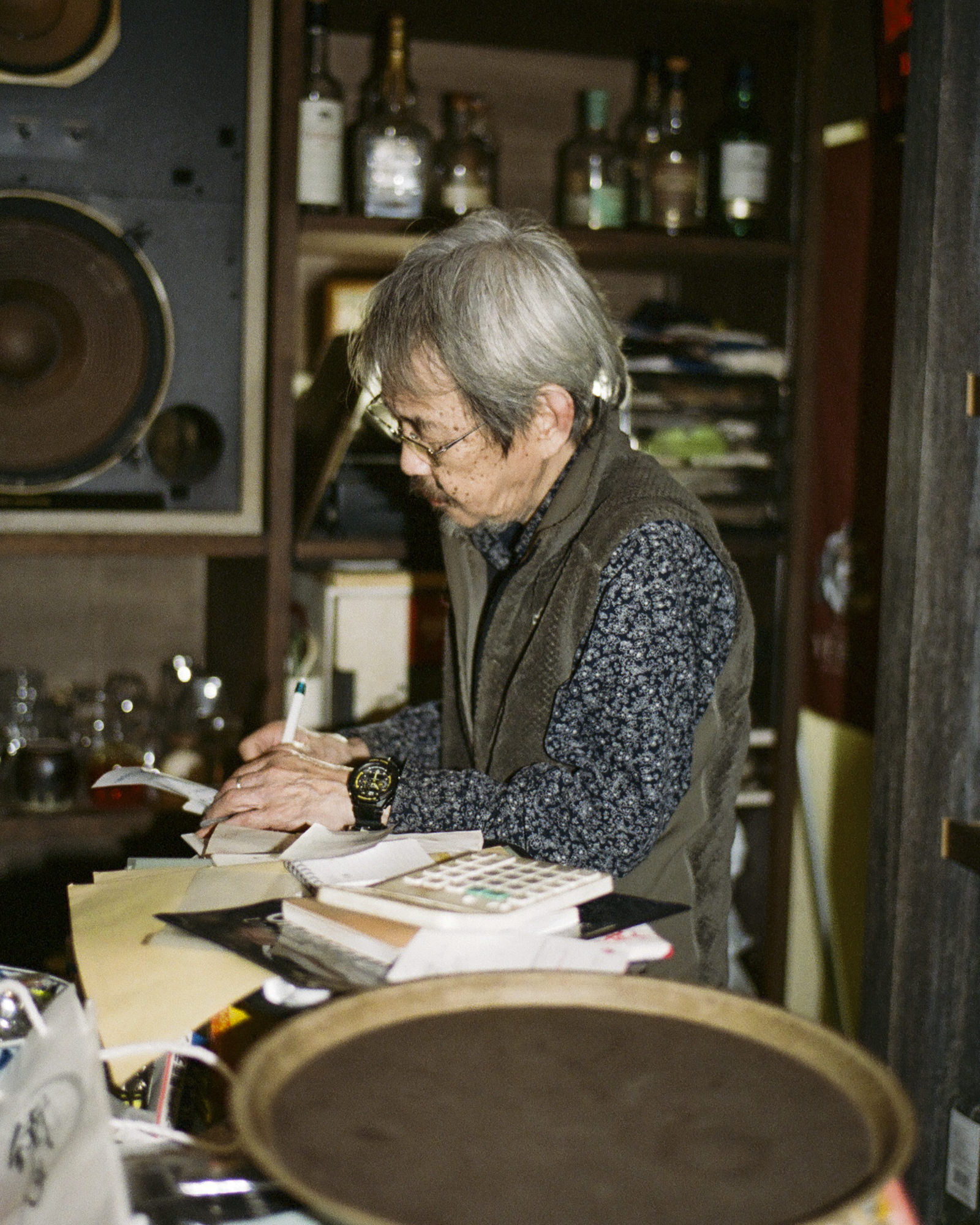
Selfishly, what do I get out of participating? I get an opportunity to return to a city I love, to look closer and closer still at its landscape, to talk to its citizens with purpose, and in this case, to ask its Mayor a few questions. Milestone was the first stop on my return. I had a lovely chat with the owner, who was delighted to meet the doofus (me) who put his jazz kissa in the Times listing. 2026 happens to be Milestone’s 40th anniversary, a lovely coincidence, and one the owner accepted as a gift, with a warm smile and a big handshake. I poked my head into Fujio and had an egg sandwich (with mustard) and a milk seiki, both of which were delicious. The milk seiki drink / milkshake being much more delicate than I had expected, way less sweet, a bit light, lots of “egg energy” mixed in with a little cherry on top. The café was full, and the staff looked harried and occupied with cooking and pouring coffees, so I didn’t “say hello” necessarily, but it was lovely to see the shop operating at full tilt. I went back to Umegae-mochi Kikusui. The father of the father-wife team had recently passed away. (I’m still grateful for his quote earlier this year; when told The New York Times mentioned his shop he replied, “New York WHAT?”) The shop was closed, but it looks like it was open last weekend, and will be open this weekend. It looks like someone is helping carry it forward. (Rumors of his son helping out?) My hope is for it to remain on its perch on the grounds of Daitokuji, next to that amazing camphor tree, for another hundred years. (One of my background goals for including it in my Times piece was to give it a push to continue, and not just fade away; something I think we were all worried about given the age of the proprietors.)
Overall, the city felt alive and vibrant. I went to Puha, a third wave coffee shop, and had a great chat with one of the (young) customers and the (young) manager. He had two kids and felt hopeful about Nagasaki, said he wanted to help push it forward as much as possible.
I popped into “1 1” — an (improbably, fabulously named) fifty-year-old kissa around Chinatown run by the loveliest of lovely ladies. We chatted for a while about how the area around her shop had changed over the years, the passing of her husband, the regulars she adores, and how she “gets nervous” when customers sit at the counter because she likes to consider herself an introvert.
At Milestone, on another night, a couple Nagasaki patrons were sitting next to me. We got chatting. Both were in their early 20s. One turned out to be an award-winning “rock dancer” — regularly touring the world, dancing. He was eager to find a way to help push Nagasaki forward as well. I connected him with the mayor on Instagram.
All around, I found Nagasaki citizens who loved the city and wanted it to do well and were actively looking for ways to help it do well. And yet, when I asked the mayor what the biggest concern was for the city, he responded: Declining population. Nagasaki’s population peaked in the late ’70s / early ‘80s with 500,000 or so, and today sits around 380,000. This is a concern for basically all Japanese cities outside of Tokyo and Osaka.
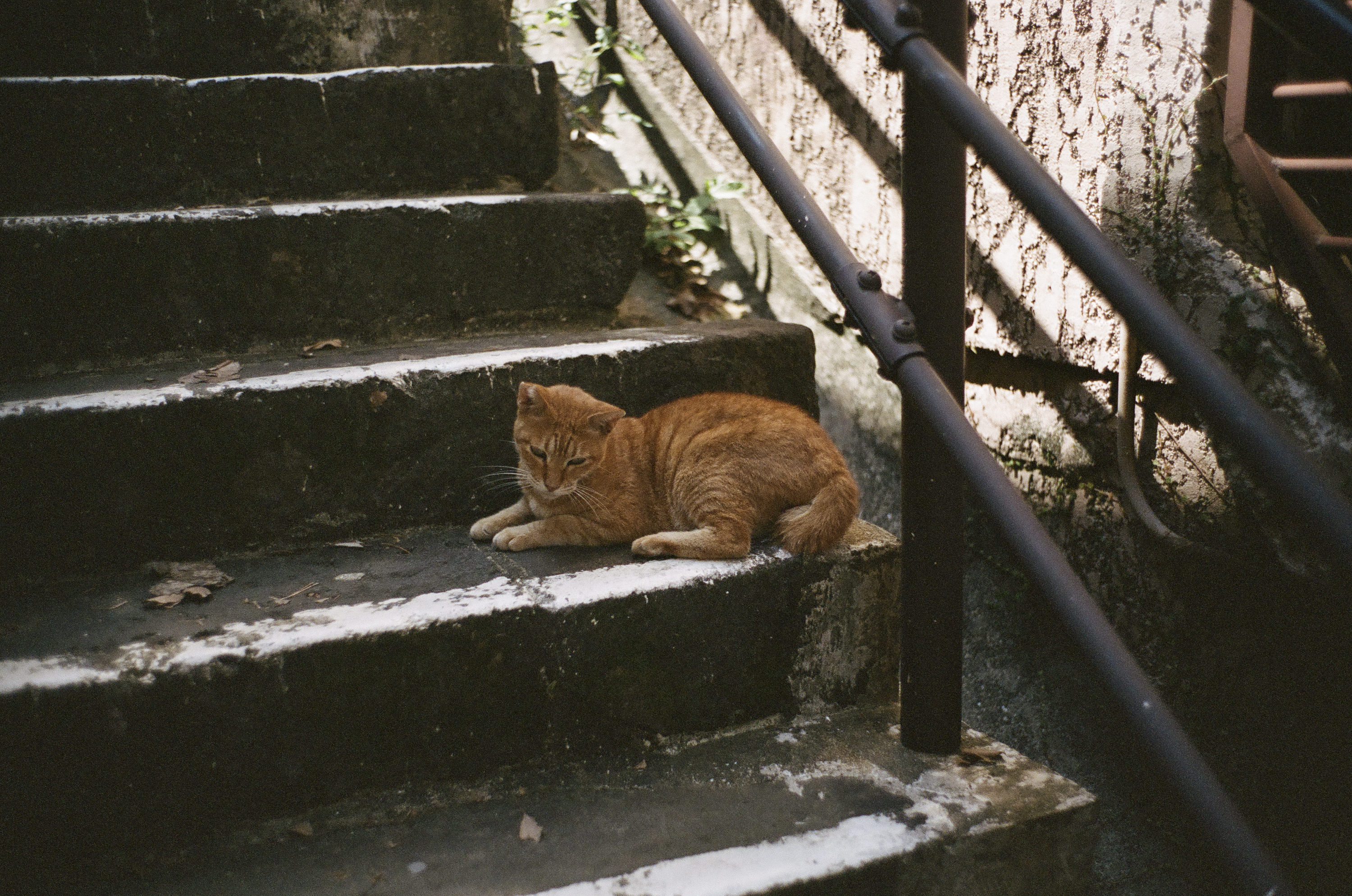
Still: Everywhere I walked, the city felt shot through with crisp spring light and life. Up and down the slopes of Nishizaka Machi and Tateyama I walked. I walked the south and east sides of Yamatemachi and truly, with each step the vistas beyond shifted and shimmied in a way that reminded me of walking a city like San Francisco. In the distance you felt the bay nearby, the water, always there, peeking out now and then, one big cruise ship docked and other smaller ships sliding in and out. The surrounding mountains of the valley and buildings, old and new, revealed and hid themselves again and again. The old city is composed of a bunch of skinny alleyways and concrete staircases, occupied by cats and marked by tiny, rusty torii shrine gates. The edges of some slopes seem to be littered with akiya — abandoned homes. This seems like an incredible opportunity for people looking to come, acquire some land, build a little business or start a family with views out over the city, and just a ten-minute walk to downtown. They’re mainly abandoned for the same reason many homes on slopes across the country are abandoned: Old folks can’t handle the climbs, and so they leave their homes behind when they move to retirement communities.
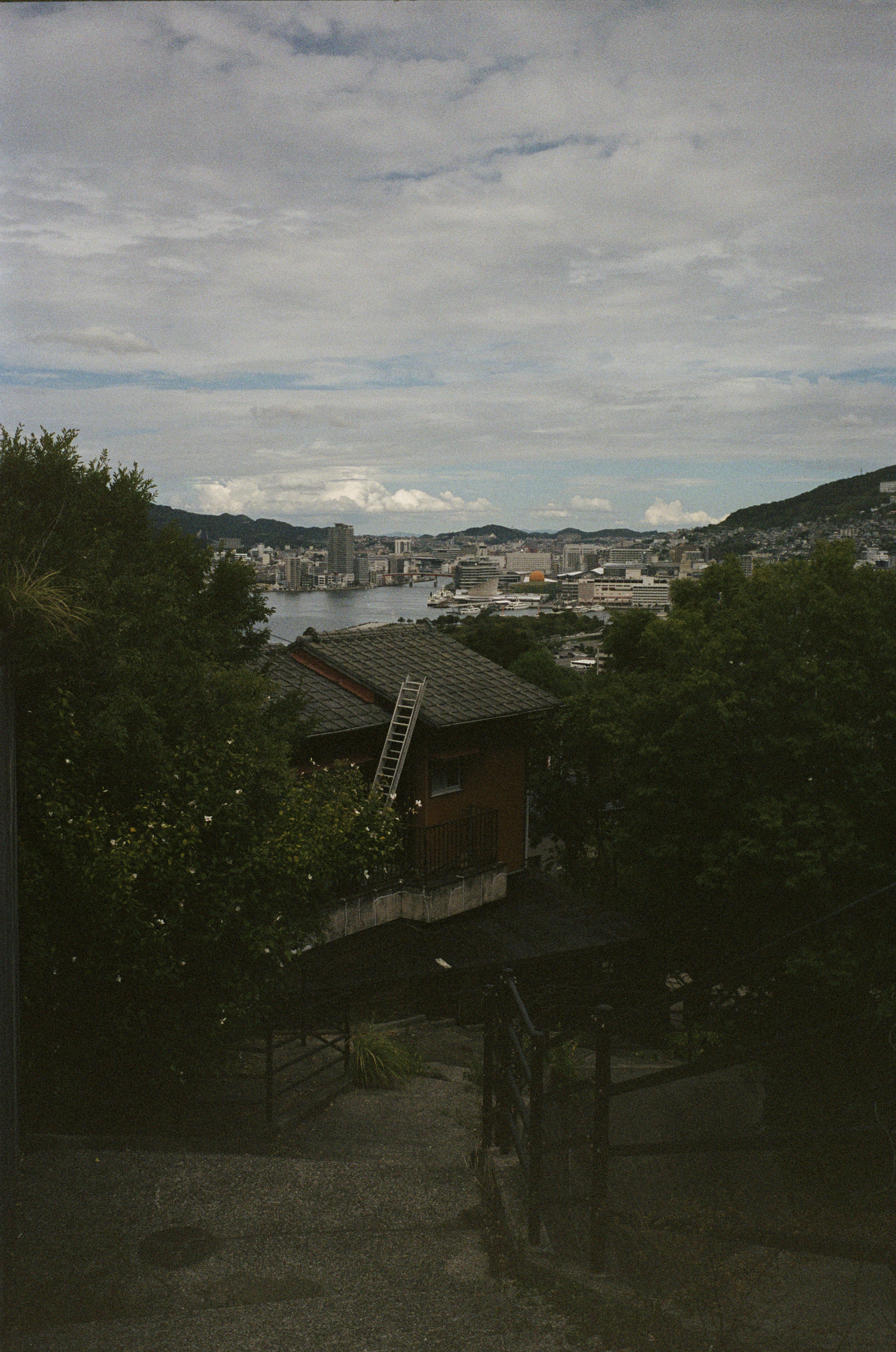
I went up to Fuku-no-yu, the beloved sprawling mega public bath of Nagasaki. Into the steaming waters I dipped, the whole of the valley spreading out before us rotenburo bathers. Nagasaki is a port town, but it’s a port town spreading down a valley, swaddled between mountains. Similar, in a way, to Yamaguchi and Yuda, but Nagasaki has the additional effect of water from the port scintillating in the distance. The result: Those incredible, award-winning views from Inasa-yama — the night view coruscant with the soft light of living room lamps up and down the sides of those valley-lining mountains, the port in the distance, boats gliding about, a real pleasure for the senses unlike few other cities in Japan. And Fuku-no-yu, too, is such a fabulous bath. Almost entirely locals. I partook of its many saunas, including the salt room — a sauna with a giant pile of salt in the middle. You take handfuls and scrub down. A random guy, a fellow bather said, Hey, I got you — and proceeded to scrub my back. Almost like a sansuke — an in-house employed sento scrubber — of days long gone.
At all these media events I’m constantly asked: What can we do as a city to get more tourists to come? And I feel like my answer always disappoints. Interviewers are always looking for some code, some insight. Personally, I’m concerned with durable tourism — that is tourism that operates symbiotically with the people of the place, and doesn’t displace or inconvenience those living there. So my answer is always: Invest in your people, protect your local culture. That should be priority number one. My having recommended a city means the city already has the ingredients for greatness, is already great. Nothing needs to be added. The critical point is: Don’t change for the sake of tourism.
Courting TikTok / Instagram social media influencers is a fool’s errand. It might bring a small blip of interest, but for the most part, social media driven tourism is not “durable” or long-term. Long term, great, durable tourism is built from word of mouth more than any single ad campaign. A city’s reputation for greatness comes from people visiting, having “authentic” experiences (that is non-social-media-mediated experiences, improvisational, unplanned experiences), feeling the yoyū of the citizens, feeling like they’ve participated, symbiotically, in their visit, and upon leaving, having felt elevated and hopefully having done some elevating themselves. They then go home and tell their friends: Damn, Nagasaki is amazing. The goal should be a million people going home and saying that. I think anyone who visits should, naturally, feel the impulse to do just that.
Discussing Nagasaki can be a delicate matter, though, and I worried as I spoke with the mayor in front of cameras. Citizens of Nagasaki may not entirely understand how the world sees them, certainly not how the average foreign tourist sees them. From my experience, talking with non-Japanese visitors in Tokyo, Hiroshima and Nagasaki are grouped together by dint of nuclear cataclysm. Hiroshima always comes first, and then Nagasaki tends to sit (in the minds of visitors) in the penumbra of the Hiroshima blast. A second blast. Lesser, somehow. Furthermore, they assume both cities had been totally erased from the map. And because of all these reasons, they tend to visit Hiroshima and only Hiroshima.
My first visit to Nagasaki, around 2013, came with a shock. Upon arriving, I realized that the bomb did not, in fact, destroy downtown Nagasaki, but because of cloud cover, was instead released a few miles north of downtown, above the Urakami valley. An area home to Japan’s largest Catholic community — whose Urakami Cathedral was then the biggest in East Asia — schools, hospitals, and tens of thousands of residents whose families had lived there for generations. Somehow the specifics of this were lost in translation — this gap between Nagasaki and Urakami. I suddenly realized how much I had had wrong in my mind. That while Nagasaki and Hiroshima were both uniquely tragic events, they were tragic in different ways, and grouping them together was a disservice to both. Nagasaki shouldn’t be thought of as “that city bombed after Hiroshima” but rather “the last city on which a bomb should ever be dropped on earth.” Lost in the war discussions is the fact that Nagasaki’s complex cultural history is utterly unique: It’s long held a preternatural ability to transmute foreign ideas into Nagasaki-specific forms. From the rich wa-ka-ran melding of Japanese (wa) and Chinese (ka) and European (ran — オランダの「らん」) cultures has come toruko raisu (“Turkish rice”) and shippoku ryouri and champon and western-style homes with thick kawara roof tiles and eastern proportions. A transmutation visible perhaps most profoundly in Urakami’s kakure kirishitan — hidden Christians who, cut off from Rome for over two centuries of persecution, developed a faith so thoroughly transformed by Japan that when missionaries finally returned in the 1860s, neither side fully recognized the other’s religion. This cultural nexus should be elevated and celebrated as something apart from war’s calamity. Even without the history of the bomb, Nagasaki should be on everyone’s list of places to visit in Japan. The fact that none of what you see today in downtown is supposed to be there — that the city was spared from firebombings because it was on the nuclear short list, and then on the day of the bombing, was missed because of clouds and winds — imbues what’s left with a freakish improbability. Bear witness at Urakami, just a few miles north of downtown Nagasaki — the incredible Nagasaki Peace Park, Shiroyama Elementary School, Hypocenter Park, the Atomic Bomb Museum, and the Urakami Cathedral which was rebuilt after the war — and then come back into Nagasaki center with a compounded gratitude for what remains, suffused with a duality present in few other places anywhere in the world.
A duality not understood by most tourists, until long after they arrive.
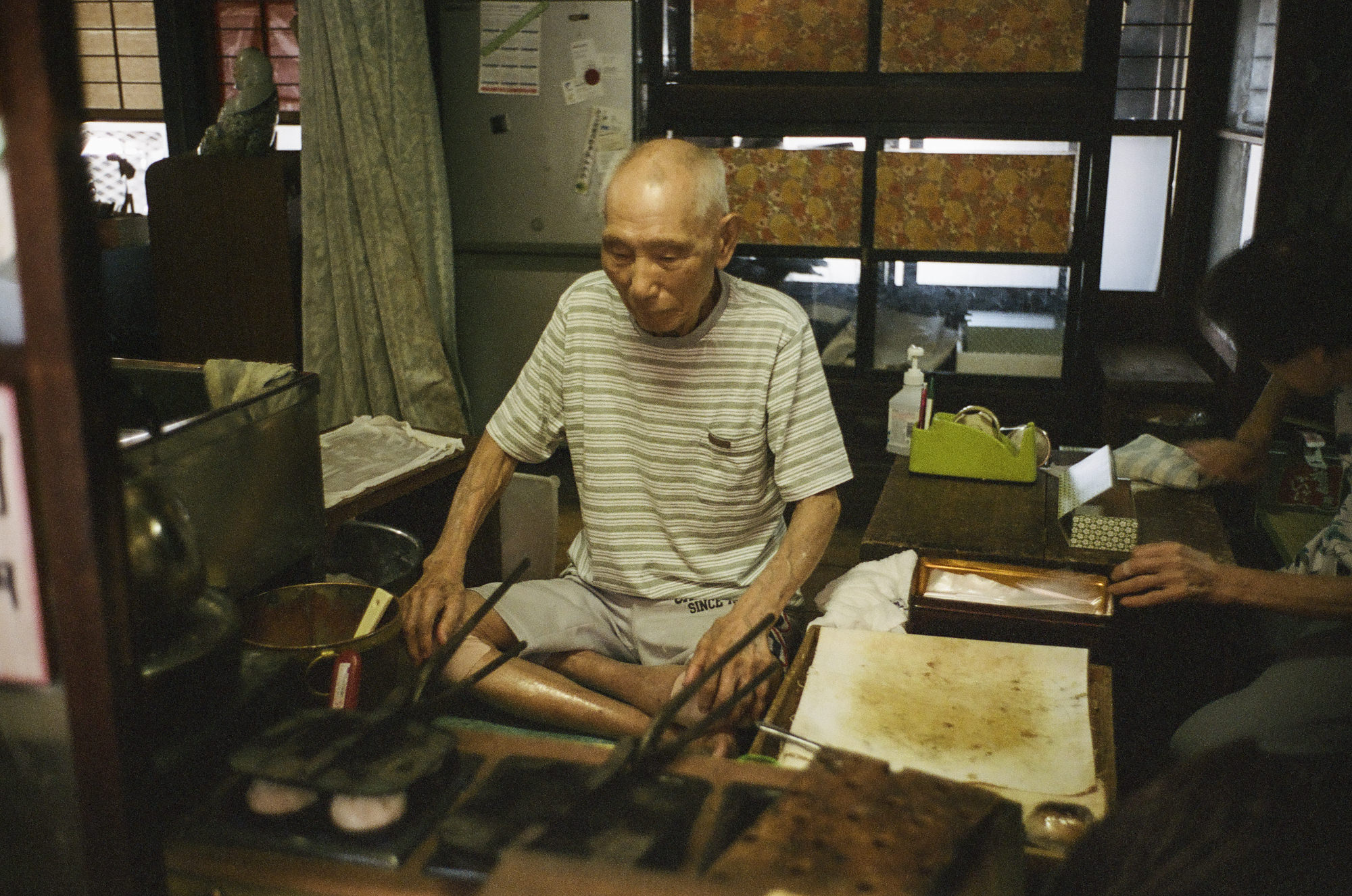
And this is why a place like Umegae-mochi Kikusui — that old little building in which their mochi has been grilled for over a hundred years, the majestic kusu-no-ki camphor tree towering above it all — feels even more important than it might appear at first glance. Its resilience is a testament — a tiny prayer in pounded rice to nuclear peace — to what should remain, and what can be lost. I hope it keeps going. And each time I pass by the camphor I’ll be sure to place a hand on it and meditate for a moment on what it has borne witness to.
So the next time you’re planning a Japan trip, consider Nagasaki. There are plenty of hotels, things to eat, matsuri to enjoy, historic buildings to visit, coffees to drink, jazz bars to relax in, baths to bathe in, and more. Rent a car. Explore Kyushu, an under-explored part of Japan if ever there was one. The tourists are thin down in these parts, the yoyū abounding in the smiles and generosity of the citizens. Come, come to Nagasaki — an easy place to love.
More soon,
C
Not subscribed to Ridgeline?
(A weekly letter on walking in Japan)
This essay is from the Ridgeline newsletter, mailed out March, 2026. Thoughts? Email me@craigmod.com.
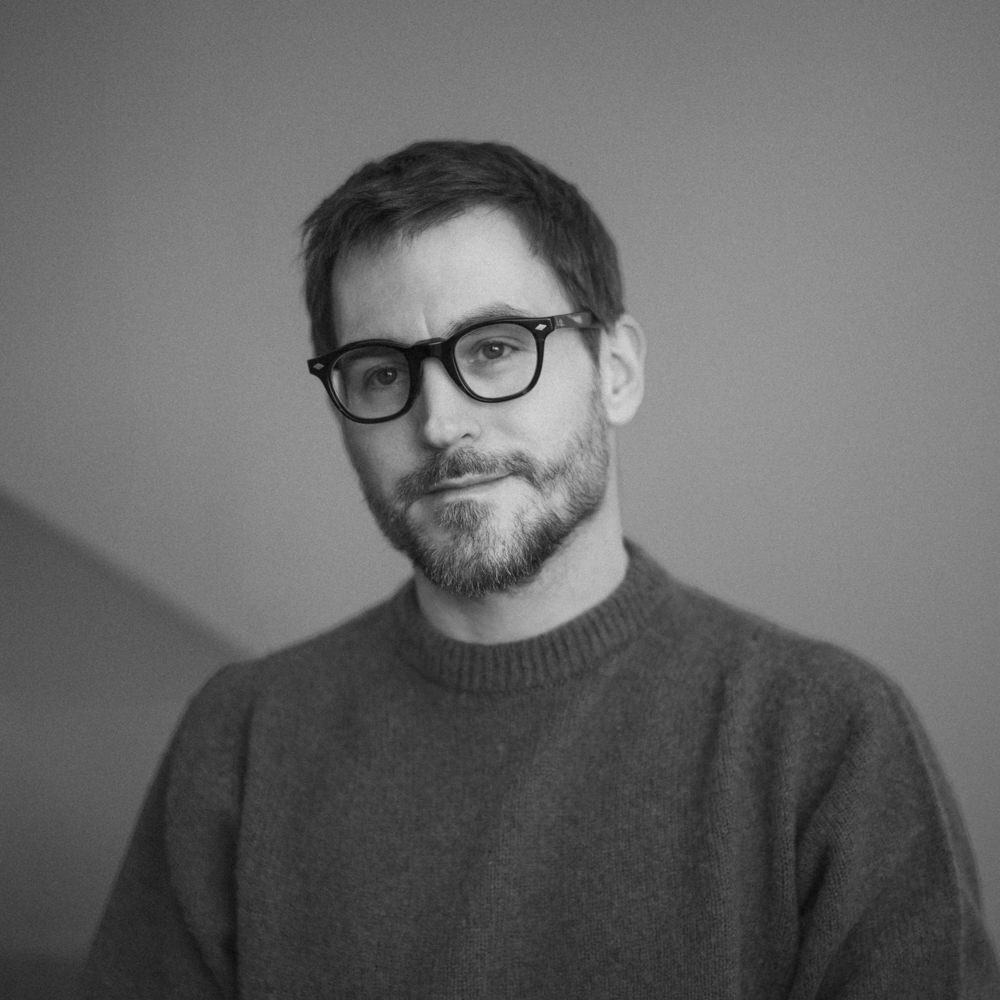
Craig Mod is a writer and photographer based in Japan. He's the author of the books Things Become Other Things and Kissa by Kissa and is a MacDowell, Ragdale, and VCCA writing fellow. His essays and articles have appeared in The New York Times, Eater, The Atlantic, California Sunday Magazine, Wired, Aeon, New Scientist, Virginia Quarterly Review, The New Yorker, The Morning News, Codex: Journal of Typography, and elsewhere.
He writes newsletters, oh yes, newsletters: Roden & Ridgeline.
The work on this site is supported 100% by paid memberships and book & print sales.
Whatever you do, don't follow @craigmod on Bluesky or Instagram.