Hi there from Sweatpantsland, population: me. Merry Christmas! I almost forgot it was Christmas. This is emblematic of my recent days, and maybe even my recent years — a disembodiedness in which, if not reminded, I seem to fall out from the flow of time. It’s foggy and kinda weirdly warm here in Japan today; the Christmas surfers are out, bobbing in the water, Mt. Fuji is somewhere out there in the distance. My sweatpants are cozy. (Now sending this out the day after Christmas and it’s freezing and crip and Fuji was plainly visible all day; “real” Japan December is finally here.)
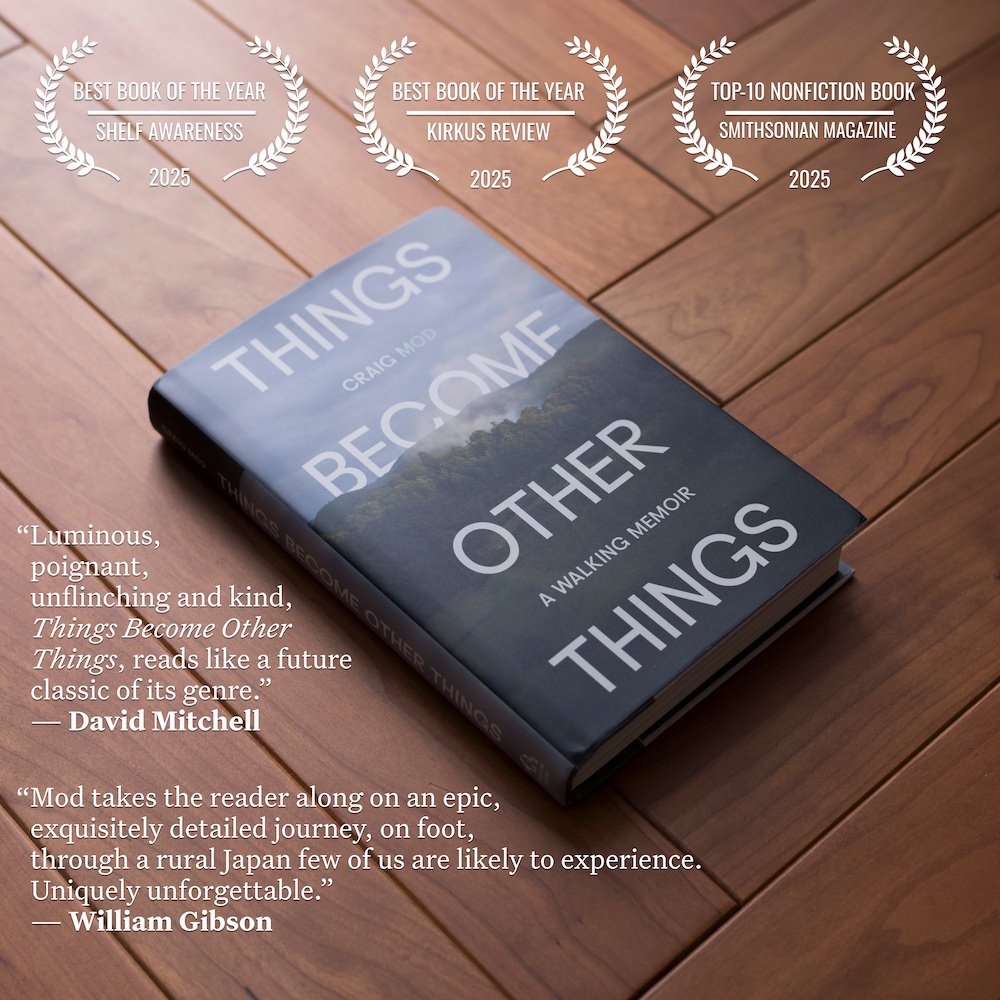
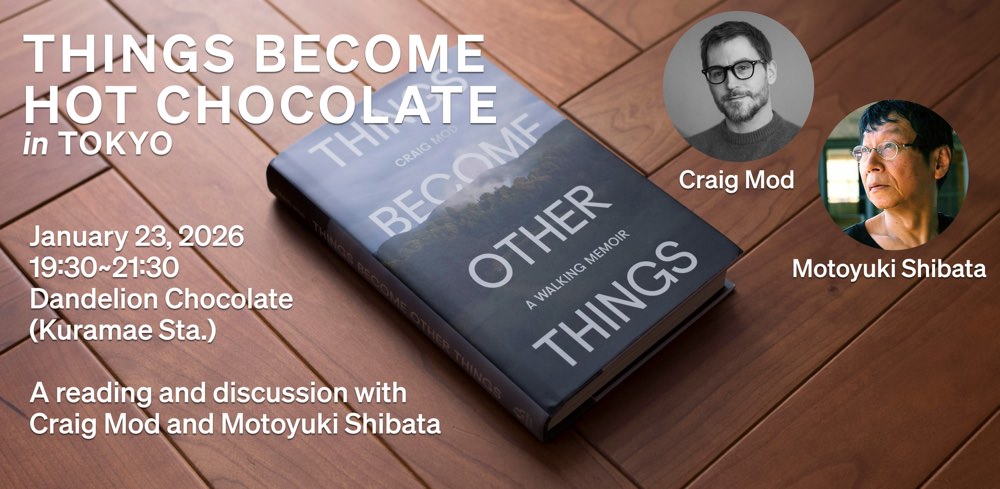
FINALLY — F I N A L L Y — we’re going to have a TBOT event in Tokyo. I wanted to do one in September, but there were no books in the country. I ended up importing a few hundred copies of TBOT (figured it would be good to have copies), purchased at half price (standard author discount) from Random House, specifically for events in Japan. Good lord, you would not believe the hassle of importing those books. The time, the cost. The cruel irony in the end is that the cost of books + shipping + importing was more than if I had ordered a few hundred copies from Amazon Japan, though I’m not sure Amazon could have delivered that many (it would have been fun to try). Thank you to my wonderful assistant Kawashima-san for handling all that importing chaos.
Space is limited to ~70 people. Tickets all come with a book and a hot chocolate. I’m sorry the tickets aren’t cheaper, but this is our break-even cost. SP Yearly members get a ¥3000-off coupon to use on the general ticket. I’d added a tranche of “student” tickets as well, for ¥3,000. As I’ve explained in the past, my definition of “student” is very loose, so if that helps you join, please grab one of those. I’m not making any money on this and would rather see a full room than “minimize our loses.”
Looking forward to gathering and seeing you in Tokyo!
Through a strange set of circumstances, I find myself selling a house in the Hase neighborhood of Kamakura. Incredible plot and location (fifteen-minute walk to Kamakura station proper; six-minute walk to the Great Buddha; two-minute walk to Yuigahama Station on the Enoden). It’s not yet listed publicly. The spot means a lot to me, so I’d rather it go to someone out there in Roden land who might be looking for a place down here. (FWIW: I’m still in Kamakura; like I said, sort of weird circumstances.) It’s not cheap, but it’s a rare spot in a great neighborhood, near Yasunari Kawabata’s childhood home and the Museum of Literature. If you’re interested, email me and I’ll connect you with my agent.
I’m looking to spend May and June 2026 in Brooklyn. Looking for something in the Cobble Hill / Park Slope / Prospect Height / Fort Greene general vicinity. Ideally a comfortable place, two bedrooms, lots of light, good desk. I’m happy to pay for a great spot to hunker into for a couple of months. The plan is to do a few more book events (Brooklyn and … Boston? Philadelphia? Asheville?). But mainly it’s to spend the mornings writing and the afternoons and evenings with people I adore. Of which, there are many in Brooklyn / Manhattan. (Think of it as cosplaying living in New York.)
Earlier this year, when I finished my tour in Brooklyn, my overwhelming feeling was one of wanting to spend more time there. So I’m trying to make that happen.
The last few years have been intense to say the least. I’d found myself, over and over, “stumbling” forward, or rushing through events / moments. I’ve had little time to simply sit with things or people or emotions. A LOT has happened in 2024-2025, and I’ve reflected on so very little of it. Spending a few months in Brooklyn is in part an attempt to remedy this. It’s my attempt to “be a bit more selfish” in 2026. Do you know how many times I’ve traveled to “just travel” (and not for a piece or for a pop-up or for a wedding or conference or for a walk-and-talk)? Very few! I tried to take three days off in Karuizawa this past summer and ended up with a kidney stone. Ha ha!
I’ve squeezed myself dry for a bunch of folks / entities in my life (not complaining; just noting), and I have criminally neglected this husk’d man typing these words. My yoyū meter is low. Being “more selfish” means saying no to more stuff to say yes to / spend time with more moments / people I want to give time to. Refilling those yoyū reserves. We’ll see how I do. Historically I’ve been bad at this, but even if I can be just “10-20% more selfish” in 2026, that would be a huge win, I think. Maybe we all need to be a bit more “good selfish.” (There’s a lot of “bad selfish” happening en masse; less of that please.) I feel like the gentler folks among us are all a bit worn down.
(I keep using “selfish” to mean, essentially, being kind to yourself; selfish in the sense that you’re “allowed” to say no to things; selfish in that you can put your own sanity first; selfish in that you can fill your schedule up with “writing time” or “family time” and not let external obligations, expectations, or events impinge or impose “guilt” about doing so. It’s sort of like zero / non-zero sum “enough,” as I wrote about briefly in Ridgeline last week; there’s zero and non-zero sum selfishness, and leaning into the expansive definition of care as selfishness feels like a permission worth considering. The more yoyū the better; 2026 is only going to get weeeiiirrrrdddeerrr. Brace thyself.)
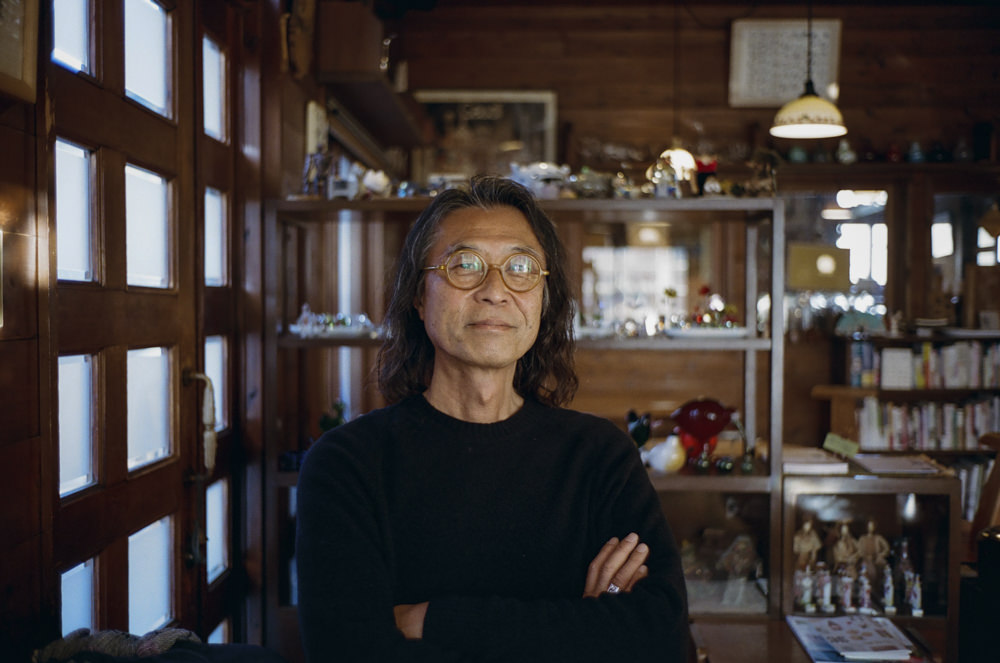
I’ve been reading less voraciously this past month, simply because I’ve been busy. Finished a fabulous Walk and Talk with Kevin Kelly and co, this time along the Kiso-ji in Nagano. I recorded an episode for NHK Radio Japan on jazz with the great Mitsutaka Nagira (coming out in February). I did a KxK JA book event up in Morioka at BOOKNERD with translator and all around mensch, Imai Eiichi (pictured above). And also participated in a panel discussion at the “Tohoku Mirai Genki Project” forum, where Iwate-grown boy Kikuchi Yusei from the Los Angeles Angels (that other LA team with a Japanese player) came and gave the opening talk. Oh, also I was in the hospital for four days with something dumb. Doing much better now, but, uhh, I may have overdone it.
Each night, I’ve been making my way through Sidney Lumet’s incredible Making Movies (1996). I read parts of this 25 years ago at Upenn for a media class, but I don’t remember it having nearly the impact it’s been having on me these past few weeks. It’s a magical kind of document, walking through all the steps and processes of what the tin says: movie making. In a time before digital cruft and distraction. Also, in a time when you could write lines like: “I’m a big kisser myself, a toucher and a hugger as opposed to a groper.” with impunity (!!) and without even a note from an editor. His disdain for teamsters is ongoing and hilarious:
The teamster will have nothing to do from the time he drops the star off at rehearsals until he picks the star up at night to take him home. So the first thing the teamster does is head for the coffee machine. He tries a piece of the coffee cake, then a Danish. A glass of orange juice to wash down the coffee, and then a bagel, heavily buttered to get rid of the taste of the Danish. A little egg salad, a little fruit, and finally he tiptoes back downstairs again, to do whatever it is that teamsters do all day.
But more than anything, it’s a “love letter” to creative work, making, to pushing complex emotional “objects” out into the world, and acknowledging the abject banana-pants convolutions of movie making. (Probably one of the most Byzantine, orchestrated, time-boxed creative undertakings.) I love his matter-of-factness:
I’ve done two movies because I needed the money. I’ve done three because I love to work and couldn’t wait anymore. Because I’m a professional, I worked as hard on those movies as on any I’ve done. Two of them turned out to be good and were hits. Because the truth is that nobody knows what that magic combination is that produces a first-rate piece of work. I’m not being modest. There’s a reason some directors can make first-rate movies and others never will. But all we can do is prepare the groundwork that allows for the “lucky accidents” that make a first-rate movie happen.
I’m left thinking about Terrence Malick’s work, and how films like Days of Heaven (1978) came together as Bilge Ebiri writes about in this great piece, “Terrence Malick’s Disciples”:
Along the way, the director found himself fascinated with the off-the-cuff observations made by another one of his leads, fifteen-year-old Linda Manz, and recorded her describing scenes from the movie in her own words; he eventually shaped that into one of the most indelible voice-over narrations in cinema history, an offbeat series of childlike reflections that provide a poetic counterpoint to the elemental storyline. Everything about Malick’s evolving approach speaks to a heightened sense of possibility, and to a desire to reinvigorate the frustrating rhythm of film production with openness, spontaneity, and discovery.
Days of Heaven without Manz’ voice over would … simply not be Days of Heaven. And yet it was a kind of “found object” on set.
Lumet talks a lot about these accidents, which if anyone has made anything with any kind of rigor, they know the magic of the thing is entirely to be discovered along the way, and if you hold too tightly the initial “image” you have of what you want to make, you very well may lose those fleeting opportunities and diversions to the “real” work. (Which is different from overly preparing — you want to overly prepare precisely to create space for those moments.)
Lumet on Dog Day Afternoon (1975) (which I recently rewatched and is a potent bit of filmmaking; early Pacino was such a controlled force):
I’d estimate that 60 percent of the screenplay was improvised. But we faithfully followed Pierson’s construction scene by scene. He won an Academy Award for the screenplay. And he deserved it. He was selfless and devoted to the subject matter. The actors may not have said exactly what he wrote, but they spoke with his intention.
And on Brando:
I worked with Marlon Brando on The Fugitive Kind. He’s a suspicious fellow. I don’t know if he bothers anymore, but Brando tests the director on the first or second day of shooting. What he does is to give you two apparently identical takes. Except that on one, he is really working from the inside; and on the other, he’s just giving you an indication of what the emotion was like. Then he watches which one you decide to print. If the director prints the wrong one, the “indicated” one, he’s had it. Marlon will either walk through the rest of the performance or make the director’s life hell, or both. Nobody has the right to test people like that, but I can understand why he does that. He doesn’t want to pour out his inner life to someone who can’t see what he’s doing.
It’s a classic, Making Movies, and for good reason. If it doesn’t make you appreciate what you see up on screen more than ever, then your brain’s probably a little loose. And it also lays a general framework for any good collaboration, any good creative project made by humans, in a human way.
Apropos of total dorkery: If you’re looking to end the year with a bit of peak dork, this game (via Kottke via Baio), Dragonsweeper by Daniel Benmergui, may maximally ensorcell you (as it did me). Minesweeper never made much sense; this is a perfect iteration. My best is 325 points in 6:21. Good luck.
Thank you all for such an incredible year. I mean, geez Louise. It couldn’t have been much fuller. I managed to wrap TBOT Random House last-min edits (tense corrections) in January. Shoot OTHER THING in February, publish it in May. Do a Spain Walk and Talk in March as well as a Papersky issue walk in Yamaguchi. Start my Pod Gauntlet in April with Tim Ferriss (part 1, part 2). Fly out to do the amazing Rich Roll show (easily the biggest “impact” single thing I’ve taken part in) at the start of May (grateful to be included in the Best of Rich Roll 2025 roundup). Spend May and June traveling around American to packed bookshops, meeting readers in person and having great conversations with friends I love (all of which were turned into a podcast). (Also: Meeting my half-sister for the first time along the way in Seattle.) Then coming back to Japan in July to “recover” (the tour was intense!!) but failing to do so; moving into my new studio, realizing how … uhhh … unpredictably intense home renovation is. Dealing with school issues with my daughter. Kidney stoning it to the max. Doing a taidan with the mayor of Toyama City in September. Running a two-week, 200 km+ pop-up walk in October. And then all the November / December stuff I outlined above. Phew. I’m ready for some “refactoring” of life, reflection, and finally cleaning up this rats nest of cords in the corner of my studio.
Connected with looking back: I’ll be running my members-only board meetings next Monday, the 29th. One in the morning and one at night, for maximal timezone friendliness. Members have the links to the private YouTube livestream URLs. You can join SPECIAL PROJECTS to watch and ask questions.
Wishing you all a peaceful end of year. A peaceful start of year. Thank you to everyone who bought books, came out to events, wrote thoughtful reviews, and thank you especially to my members, without whom I wouldn’t have done any of the stuff I did this year. Lots of love. Don’t lose your minds. More soon.